cook
cook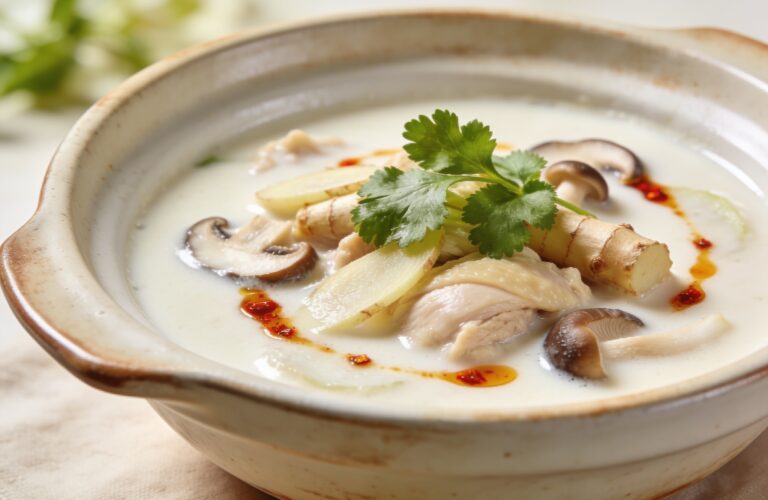
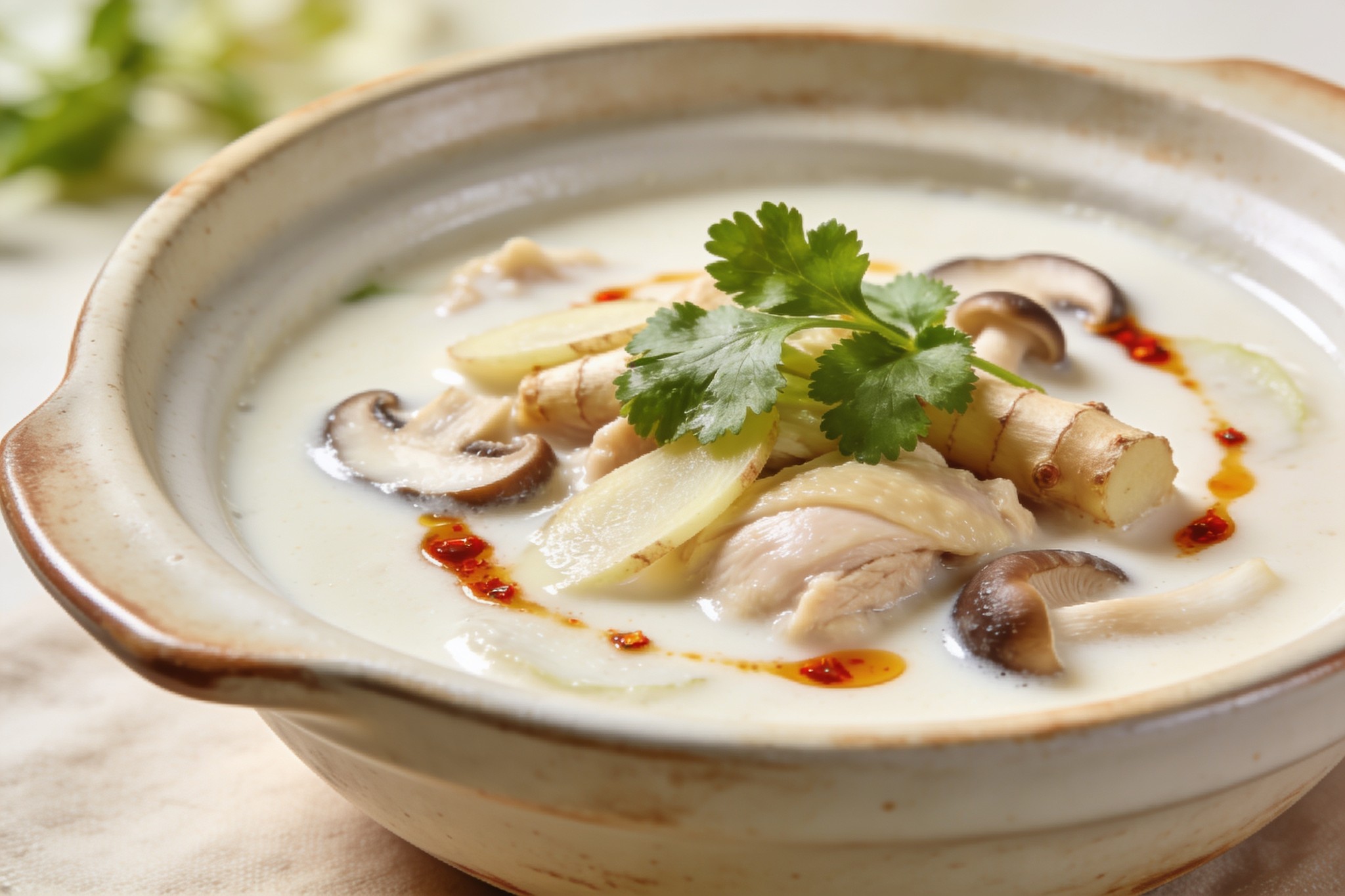
Tom kha gai is Thailand’s gift to soup lovers everywhere—a silky, aromatic coconut broth infused with galangal, lemongrass, and lime, studded with tender chicken pieces. It’s creamy without being heavy, complex without being fussy, and so fragrant your kitchen will smell like a Bangkok street market. Perfect for weeknight dinners or when you crave something both comforting and bright.
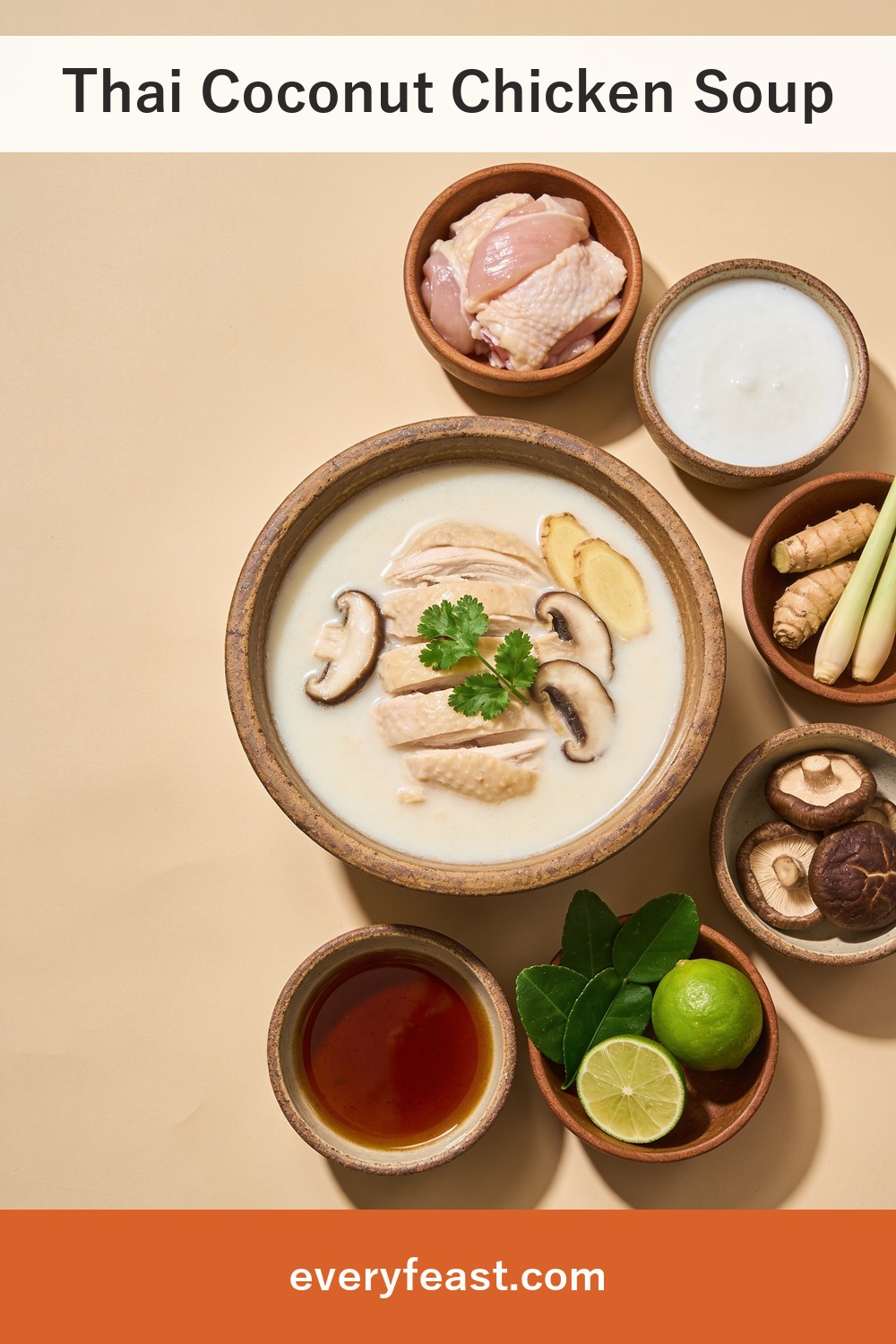
What is tom kha gai?
Tom kha gai is a classic Thai coconut soup built on a foundation of coconut milk, aromatic paste, and fresh herbs. The “tom” means soup, “kha” is coconut, and “gai” is chicken. Each component—galangal’s warm spice, lemongrass’s citrus whisper, and lime’s final brightness—plays a crucial role in the balance of flavors.
Why you’ll love it
- Aromatic and deeply satisfying without being heavy or rich
- Ready in under 40 minutes with minimal active cooking time
- Naturally gluten-free and easily adapted for dietary preferences; one bowl feels like a complete meal
Ingredients (serves 4)
| Ingredient | Amount | Where to find it / Substitutes |
|---|---|---|
| Chicken breast or thigh, cut into bite-sized pieces | 400 g (0.9 lb) | Meat counter; thighs stay more tender than breast |
| Coconut milk (full-fat, canned) | 400 ml (1.7 cups) | Asian aisle; shake well before opening |
| Chicken or vegetable broth | 500 ml (2 cups) | Stock or broth section; or homemade |
| Galangal, sliced into thin rounds | 30 g (about 3 tbsp sliced; 1 oz) | Asian grocery; frozen sliced galangal is fine; ginger is acceptable but not identical |
| Lemongrass, cut into 3-4 cm pieces and bruised | 2 stalks | Asian grocery; white parts only; or 1 tsp lemongrass paste |
| Shallots, thinly sliced | 2 medium | Produce section |
| Fresh Thai chilies (red or green), sliced | 1–2 | Asian aisle or produce; or 0.5 tsp chili flakes for less heat |
| Fish sauce (nam pla) | 2 tbsp | Asian aisle; essential for authenticity |
| Fresh lime juice | 3 tbsp (1 lime) | Produce section; fresh juice only, not bottled |
| Brown or palm sugar | 1 tbsp | Asian aisle or substitute white sugar |
| Fresh cilantro and mint leaves (optional) | For garnish | Fresh herbs section |
Allergens: Dairy (coconut milk); fish (nam pla/fish sauce); shellfish (shrimp paste, if used). Chicken must be fully cooked through with no pink inside; an internal temperature of 74℃ (165℉) is safe.
How to make it
-
Prepare the aromatics: Lightly bruise the lemongrass stalks by crushing them gently with the side of a knife to release their oils. Slice the galangal into thin rounds without peeling (the skin adds flavor). Thinly slice the shallots and chilies, keeping seeds in for more heat or removing them for milder soup.
-
Start the broth: Pour the broth into a large pot and bring to a gentle boil over medium-high heat. Add the bruised lemongrass, galangal slices, and shallots. Simmer for 5–7 minutes to infuse the broth with flavor, then strain out the solids if you prefer a cleaner broth, or leave them in for extra texture.
-
Add the chicken and coconut milk: Return the strained broth (or unseparated broth) to the pot. Add the bite-sized chicken pieces and the full-fat coconut milk. Stir well and bring to a gentle simmer over medium heat. Cook for 8–10 minutes until the chicken is fully cooked through with no pink remaining. Maintain a gentle simmer; vigorous boiling can break apart the coconut milk.
-
Season and finish: Stir in the fish sauce, palm sugar, and sliced chilies. Taste and adjust: add more fish sauce for depth, more sugar for sweetness, or more lime juice for brightness. Simmer for 2–3 minutes to marry the flavors.
-
Add lime and serve: Remove from heat. Squeeze in the fresh lime juice (use real lime, not bottled juice—it makes a difference). Ladle into bowls and garnish with fresh cilantro and mint leaves if desired. Serve hot with jasmine rice on the side.
Tips for success
- Use full-fat coconut milk: Light or reduced-fat versions break easily and taste thin. Shake the can well or stir the cream back in if it has separated.
- Don’t skip the fish sauce: It sounds strong, but a small amount adds umami depth without making the soup taste fishy. Start with 1.5 tbsp and taste as you go.
- Galangal and lemongrass can’t be fully replaced: Ginger is warmer and earthier; galangal is more citrus and bright. If you must substitute, use twice as much ginger and add extra lime juice.
- Keep the heat low: A rolling boil can curdle the coconut milk and make it separate. A gentle simmer is all you need.
- Prep your garnish ahead: Fresh cilantro and mint added just before serving keep the soup looking vibrant and tasting fresh.
Variations / Storage
- With shrimp: Replace the chicken with peeled raw shrimp (200–250 g). Add them in the last 3–4 minutes of cooking until pink and opaque.
- Vegetarian version: Omit the fish sauce and chicken; use vegetable broth and add extra vegetables (mushrooms, bell peppers, carrots, snap peas). Add 1 tbsp of soy sauce for umami depth.
- Spicier version: Add 2–3 fresh Thai bird’s-eye chilies or a pinch of cayenne pepper at the end.
- Storage: Leftover tom kha gai keeps in a sealed container in the refrigerator for up to 3 days — storage life varies with conditions. Reheat gently over low heat or in a microwave. The broth may separate slightly; stir well to recombine. Freeze for up to 1 month, though the texture of the coconut milk may change slightly upon thawing.
FAQ
Q. Can I use canned coconut cream instead of coconut milk?
A. Coconut cream is thicker and richer. You can use it, but dilute it with broth first (1 part cream to 1 part broth) to match the consistency and richness of the original.
Q. What if I can’t find galangal?
A. Galangal is worth seeking out for authenticity, but fresh ginger works in a pinch. Use about 45 g (1.5 oz) of peeled ginger and add an extra squeeze of lime juice to brighten it.
Q. Is fish sauce required?
A. Fish sauce is traditional and adds irreplaceable umami depth. If you’re avoiding it, substitute 1 tbsp of soy sauce, though the flavor will shift slightly.
Q. Can I make this ahead of time?
A. Yes, prepare all components ahead: slice the aromatics, cut the chicken, measure the coconut milk. Assemble and cook just before serving for the freshest flavor and best aroma.
Q. How spicy is tom kha gai?
A. The heat level depends on how many chilies you add and whether you remove the seeds. Start with 1 small chili and taste; you can always add more heat but can’t take it out.