cook
cook
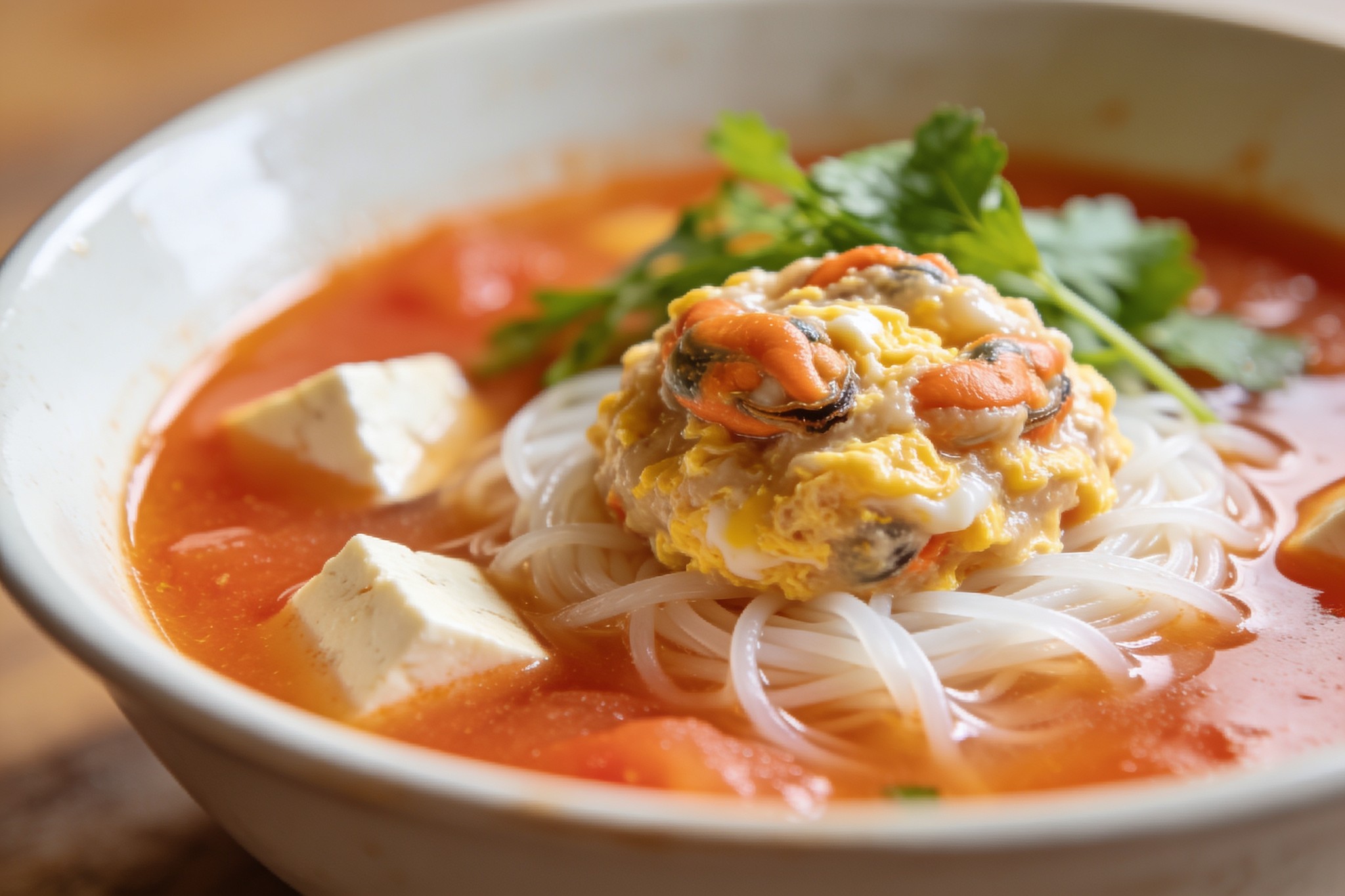
Bun rieu is a beloved Vietnamese soup that balances sweet, sour, and umami flavors in one fragrant bowl. Tender rice noodles swim in a deeply flavored broth enriched with crab paste and tomato, topped with crab meat, crispy fried shallots, and fresh herbs. It’s hearty enough for a main course yet delicate in its complexity—the kind of dish that tastes like it took hours but comes together in less than an hour.

What is bun rieu?
Bun rieu is a classic Vietnamese soup combining a fragrant crab and tomato broth with soft rice noodles. The signature depth comes from crab paste (mam cua), which dissolves into the broth, while tamarind adds a subtle sourness and tomato contributes natural sweetness. It’s typically served with fresh herbs, vegetables, and crispy toppings, and is eaten with chopsticks and a spoon.
Why you’ll love it
- Layered flavors—sweet, sour, savory, and aromatic—that feel restaurant-quality but homemade
- Naturally gluten-free (when using gluten-free fish sauce) and adaptable to dietary needs
- A complete one-bowl meal that’s surprisingly light yet deeply satisfying
Ingredients (serves 4)
| Ingredient | Amount | Where to find it / Substitutes |
|---|---|---|
| Rice noodles (dried, about 3–4 mm wide) | 300 g | Asian aisle; also called “bun” |
| Crab paste (mam cua) | 2 tbsp (about 40 g) | Asian market, refrigerated; or use 1 tbsp shrimp paste + 1 tbsp tomato paste |
| Fresh or canned crab meat | 200 g (about 1 cup) | Seafood counter, or canned in Asian aisle |
| Dried shrimp, rinsed | 30 g | Asian aisle |
| Shallots, thinly sliced | 3 medium | Produce section |
| Garlic, minced | 4 cloves | Fresh produce |
| Fresh tomatoes, quartered | 3 medium (about 400 g) | Produce section; or 1 can (400 g) crushed tomatoes |
| Tamarind paste | 2 tbsp (about 30 g) | Asian market, or 1.5 tbsp tamarind concentrate |
| Fish sauce (nuoc mam) | 2 tbsp (30 ml) | Asian aisle |
| Sugar | 1 tsp | Pantry staples |
| Vegetable or chicken broth | 1.5 liters (6 cups) | Store-bought or homemade |
| Fresh herbs (Thai basil, mint, cilantro) and vegetables (bean sprouts, lettuce) for serving | As desired | Produce section and fresh herbs |
Allergens: Shellfish (crab, shrimp, crab paste); fish (fish sauce). All seafood must be fully cooked through and heated to at least 74℃ (165℉) internal temperature. Thaw frozen seafood completely before cooking.
How to make it
-
Cook the shrimp: In a small bowl, soak the dried shrimp in 60 ml (¼ cup) warm water for 10 minutes. Set aside with the soaking liquid.
-
Crisp the shallots: Heat 3 tbsp oil in a wok or large pan over medium heat. Add half of the sliced shallots and fry until golden and crispy, about 5–7 minutes, stirring occasionally. Transfer to a paper towel to drain; reserve 1 tbsp shallots for garnish. Leave the remaining oil in the pan and set aside.
-
Build the broth: In the same pan with the shallot-infused oil, add the minced garlic and cook for 1 minute until fragrant. Add the crab paste and stir well for 2 minutes to cook out any raw flavor. Pour in the broth and bring to a simmer. Add the fresh tomatoes (or canned), dried shrimp with soaking liquid, tamarind paste, fish sauce, and sugar. Stir until the tamarind paste dissolves. Simmer gently for 15–20 minutes, allowing flavors to meld. Taste and adjust seasoning with more fish sauce or tamarind as needed.
-
Cook the noodles: In a separate pot of boiling water, cook the rice noodles according to package directions (usually 4–6 minutes). Drain and rinse gently with cool water to prevent sticking.
-
Assemble: Divide the cooked noodles among serving bowls. Carefully add the crab meat to the simmering broth and heat through, about 2 minutes. Ladle the hot broth and vegetables over the noodles. Top each bowl with crispy fried shallots, raw vegetables, fresh herbs, and a squeeze of lime. Serve immediately with extra herbs and chili sauce on the side.
Tips for success
- Find quality crab paste: It’s worth seeking out at an Asian market—the depth it adds is irreplaceable. A mix of shrimp and tomato paste is a reasonable substitute but won’t taste identical.
- Balance tamarind carefully: Tamarind varies in intensity; start with 1.5 tbsp and add more to taste. The soup should taste pleasantly sour, not mouth-puckering.
- Keep seafood timing right: Add crab meat at the very end so it stays tender. Overcooking makes it rubbery.
- Make crispy shallots fresh: Prepare them just before serving so they stay crunchy. They soften if left sitting.
- Use fresh herbs generously: The fresh aromatics (basil, mint, cilantro) are essential to bun rieu’s character; don’t skip them.
Variations / Storage
- With shrimp and squid: Add 200 g cooked shrimp and squid in step 5 for extra richness.
- Vegetarian version: Omit the crab paste, dried shrimp, and crab meat; use vegetable broth and add extra mushrooms and a splash of soy sauce for umami.
- With pork belly: Simmer 200 g thinly sliced pork belly in the broth for 10 minutes before assembling bowls.
- Spicier: Stir in 1–2 fresh red chilies, sliced, or add chili paste at the table.
- Storage: Refrigerate the broth in an airtight container for up to 3 days; store noodles separately and reheat both gently before serving — storage life varies with conditions. The broth freezes well for up to 2 months. Don’t freeze noodles; cook fresh when reheating.
FAQ
Q. Can I use frozen crab instead of fresh or canned?
A. Yes—thaw it completely, pat dry, and add it at the end as directed. Frozen crab works just as well.
Q. What if I can’t find tamarind paste?
A. Use fresh lime juice (2–3 tbsp) or rice vinegar (1.5 tbsp) to replicate the sourness, though the flavor will be slightly different.
Q. Is this soup spicy?
A. No—it’s tangy and aromatic rather than spicy. Serve with chili sauce or fresh chilies on the side for heat.
Q. Can I make the broth ahead?
A. Yes—cook the broth through step 3, cool, and refrigerate for up to 2 days. Reheat gently before adding crab and serving over fresh-cooked noodles.
Q. What fish sauce should I buy?
A. Look for bottles labeled “nuoc mam” from Vietnam, with minimal ingredients (ideally just anchovies and salt). Avoid “all-purpose” versions; they’re often too assertive.