cook
cook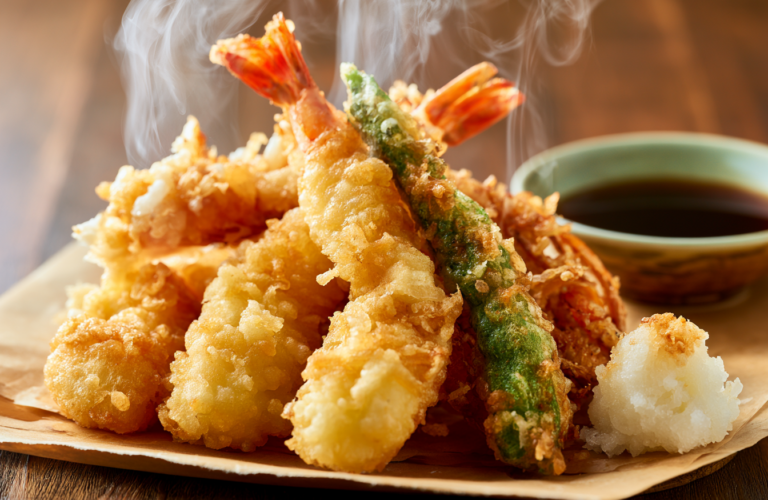
Tempura is one of Japan’s most beloved fried dishes — shrimp and vegetables encased in a paper-thin, impossibly crispy batter and dipped in a lightly sweet sauce. The secret lies in keeping your batter ice-cold and lumpy; a cold, imperfect batter produces the characteristic lacy texture that makes restaurant-quality tempura irresistible. This weeknight-friendly recipe yields shrimp and vegetable tempura that rivals takeout, with clear guidance on oil temperature and doneness.
What is tempura?
Tempura is a Japanese deep-fried preparation in which shrimp, vegetables, or other ingredients are dipped in a light batter and fried until golden and crisp. The batter is traditionally made from cold water, flour, and beaten egg — the cold temperature and minimal mixing are deliberate, as lumps and underdeveloped gluten create the delicate, lacy crust that defines the dish. Tempura is served hot, typically with tentsuyu (a light dipping sauce made from dashi, soy sauce, and mirin) and fresh grated daikon radish.
Why you’ll love it
- Irresistibly crispy: The paper-thin, golden batter shatters with every bite while staying tender inside.
- Quick and elegant: Perfect for weeknight dinner or entertaining — everything fries in minutes once your oil is ready.
Ingredients (serves 4)
| Ingredient | Amount | Where to find it / Substitutes |
|---|---|---|
| Large shrimp, peeled and deveined | 500 g (1 lb) | Any seafood counter; thaw if frozen |
| Vegetables (carrot, zucchini, bell pepper, green beans, mushrooms) | 300 g (10.5 oz) | Cut into thin strips or bite-sized pieces |
| All-purpose flour | 100 g (3.5 oz) | Wheat 🌾 |
| Egg | 1 large | Egg ⚠️ |
| Ice water | 150 ml (2/3 cup) | Keep very cold |
| Tentsuyu (dipping sauce): | ||
| Dashi (kombu and bonito broth) or all-purpose dashi powder | 200 ml (3/4 cup + 1 tbsp) | Asian grocery stores or online; or substitute vegetable broth (mild) |
| Soy sauce | 3 tbsp | Wheat, Soy ⚠️ |
| Mirin (sweet rice wine) | 2 tbsp | Asian grocery stores or online; or substitute 2 tbsp honey + 1/2 tsp vanilla |
| Grated daikon radish | 2 tbsp | Fresh daikon at produce section; grate just before serving |
| Vegetable oil for frying (neutral, high smoke point) | 1 liter (1 quart) | Canola, peanut (Sesame-safe if refined), or vegetable oil |
Food Safety Note: Make sure shrimp is fully cooked through — it should be opaque throughout, with no translucent areas.
How to make it
-
Prepare the tentsuyu. In a small saucepan, combine dashi, soy sauce, and mirin. Warm gently over low heat (do not boil). Keep warm on the side while you fry.
-
Set up your frying station. Pat shrimp dry with paper towels. Cut vegetables into thin strips (carrot, zucchini, bell pepper) or leave whole if small (green beans, mushrooms). Line a plate with paper towels. Place a thermometer in a deep, heavy pot or wok.
-
Heat oil to 170–180℃ (338–356℉). Pour oil to a depth of at least 10 cm (4 inches). Use a thermometer to reach and maintain the correct temperature — oil that is too cool will absorb grease; too hot will burn the outside before cooking the inside.
-
Make the batter just before frying. In a cold bowl, lightly whisk together flour and egg. Add ice water and stir gently 2–3 times with chopsticks or a fork. The batter should be lumpy and barely mixed — do not stir until smooth. Small lumps are desirable.
-
Fry in batches. Dip each piece of shrimp and vegetable into cold batter, then carefully place into hot oil. Do not overcrowd — fry 4–5 pieces at a time, leaving room for them to float and turn. Fry for 2–3 minutes, until pale golden brown and cooked through, turning once halfway. Lift out with chopsticks or a slotted spoon and drain on paper towels.
-
Serve immediately. Arrange tempura on a serving plate. Place warm tentsuyu and grated daikon in small bowls on the side. Guests dip each piece into sauce and eat while hot.
Tips for success
- Cold batter is everything. Use ice water, chill your bowl, and keep ingredients cold. A warm or overworked batter will be heavy and absorb oil.
- Oil temperature matters. A thermometer is worth the investment — tempura cannot be judged by sound or appearance alone. Maintain steady heat.
- Shrimp signs of doneness. Cook until the shrimp turns opaque and pinkish, with no translucent gray areas in the center.
- Fry just before eating. Tempura is best eaten within minutes of frying. Overcrowding the pan or letting cooked pieces sit will soften the crust.
Variations / Storage
- Vegetable-only tempura: Omit shrimp and fry a variety of vegetables — mushrooms, onion rings, kabocha squash, or green onion.
- Dashi substitute: If you don’t have dashi powder, substitute all-purpose vegetable or mild chicken broth.
- Storage: Store leftover tempura and sauce separately in airtight containers in the refrigerator. Tempura is best eaten fresh, though leftovers can be gently reheated in a 180℃ (350℉) oven for 3–5 minutes to re-crisp. Store in a clean airtight container in the refrigerator and enjoy it soon — storage life varies with conditions.
FAQ
Q. Can I make the batter ahead of time?
A. No — batter must be made and used immediately. Mixing it in advance develops gluten, making it heavy rather than light and crispy.
Q. What oil is best for tempura?
A. Use a neutral oil with a high smoke point: vegetable, canola, or peanut oil. Avoid olive oil (low smoke point, distinct flavor that overpowers the delicate batter).
Q. How do I know when the oil is ready?
A. Use a kitchen thermometer to measure 170–180℃ (338–356℉). Without a thermometer, drop a tiny pinch of batter into the oil — it should sizzle and float to the surface within 1–2 seconds.
Q. Can I reuse the frying oil?
A. Yes, strain it through cheesecloth once it has cooled completely, store it in a clean jar away from heat and light, and reuse it once or twice. Discard if it darkens, smells off, or reaches the smoke point too easily.