cook
cook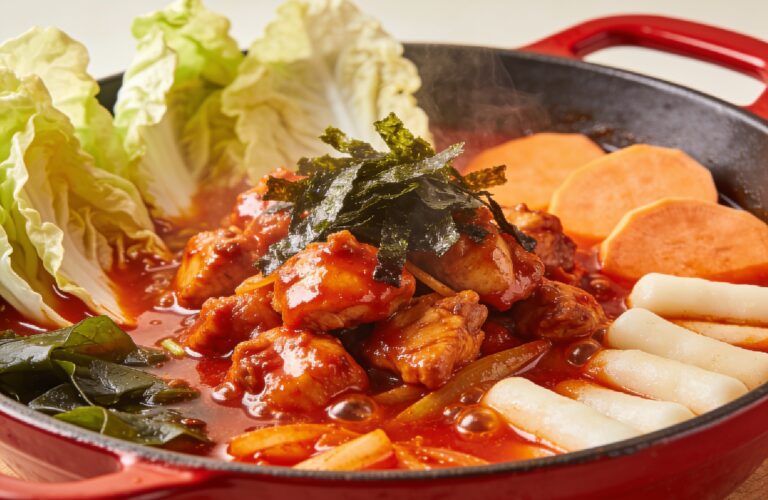
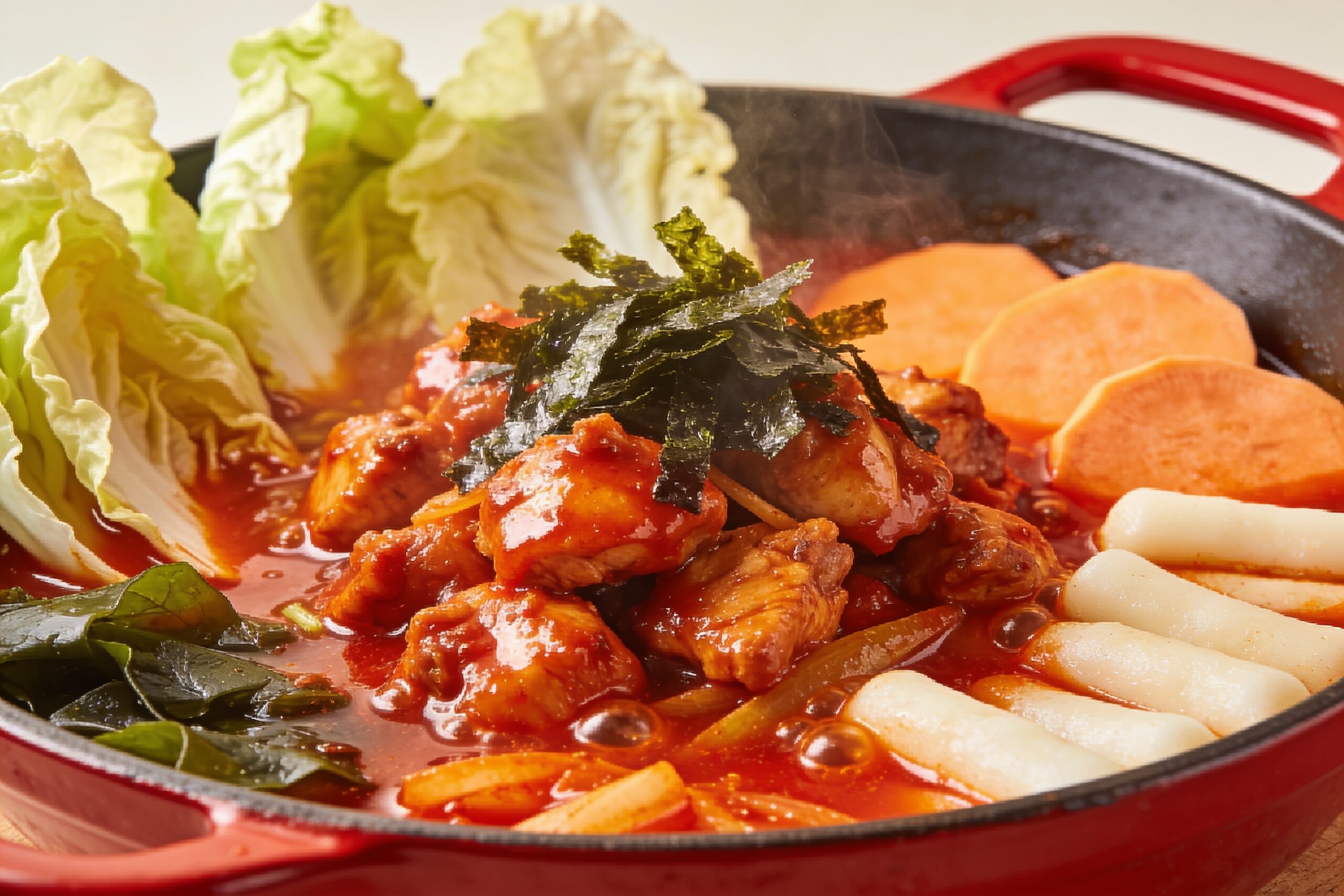
Dak galbi is Korean street food at its finest—tender chunks of chicken and colorful vegetables coated in a spicy-sweet, deeply aromatic gochujang (chili paste) glaze that clings to every piece. It’s the kind of dish that demands extra rice, plenty of sips of cold beer, and a second helping. Fiery, sticky, and absolutely craveable.
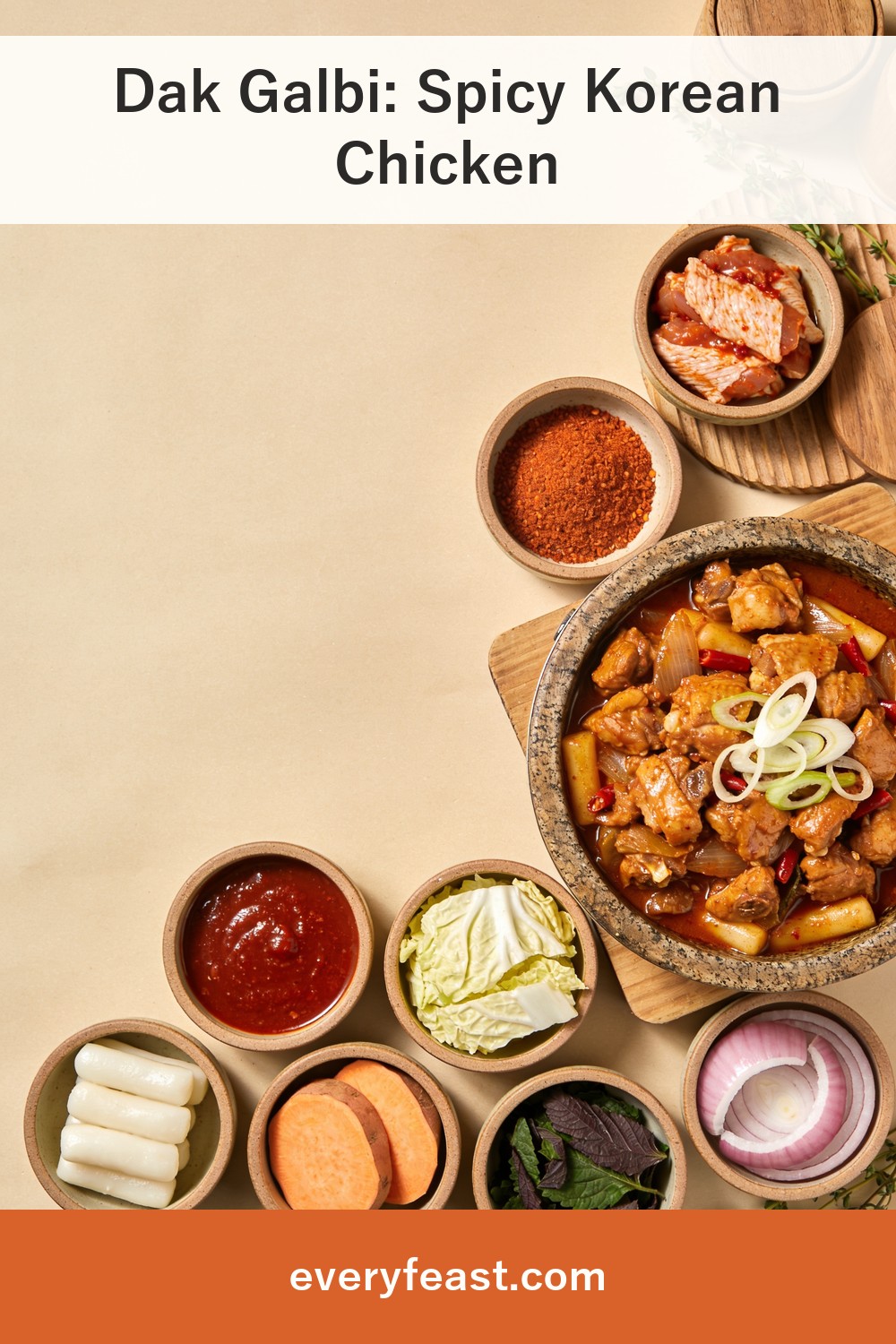
What is dak galbi?
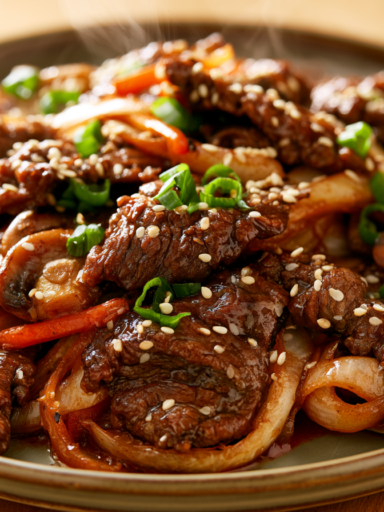
Dak galbi is a Korean stir-fried chicken dish where boneless chicken is diced and cooked with vegetables on a hot griddle or in a skillet until caramelized and slightly charred. The magic is the sauce: a blend of gochujang (fermented red chili paste), soy sauce, mirin or brown sugar, garlic, and sesame oil. The result is a savory-sweet, spicy glaze that coats the chicken and vegetables in burnished, glossy layers. It’s traditionally a shared dish, cooked and eaten at the table.
Why you’ll love it
- Spicy, sweet, and deeply savory—addictive in the best way
- Comes together in 40 minutes with minimal prep
- Cooked in one pan, making cleanup easy and the aroma incredible
- Perfect for rice, noodles, or even lettuce wraps
Ingredients (serves 3)
| Ingredient | Amount | Where to find it / Substitutes |
|---|---|---|
| Boneless, skinless chicken thigh or breast | 500 g (1.1 lb) | Butcher counter; thighs are juicier. Cut into 2.5 cm (1-inch) chunks |
| Gochujang (Korean red chili paste) | 45 g (3 tbsp) | Asian grocery store or specialty section; essential for authentic heat and depth. Substitute: 2 tbsp sriracha + 1 tbsp miso, though flavor differs |
| Soy sauce (shoyu or Korean soy sauce) | 30 ml (2 tbsp) | Asian aisle; provides saltiness and umami |
| Brown sugar or honey | 30 g (2 tbsp) | Pantry staple; balances heat with sweetness |
| Sesame oil (dark) | 10 ml (2 tsp) | Asian aisle; use pure sesame oil for best aroma |
| Rice vinegar or apple cider vinegar | 15 ml (1 tbsp) | Vinegar aisle; adds brightness |
| Garlic, minced | 4 cloves | Produce section |
| Ginger, minced | 10 g (1-inch piece) | Produce section; adds warmth |
| Vegetable oil (for cooking) | 30 ml (2 tbsp) | Neutral oil; for high-heat cooking |
| Sweet potato, cubed (1 cm / 0.4 inch) | 300 g (1 medium) | Produce section; adds sweetness and body |
| Onion, cut into chunks | 0.5 large | Produce section; caramelizes beautifully |
| Bell pepper (red, yellow, or green), cubed | 150 g (1 pepper) | Produce section; adds color and crunch |
| Carrot, cut into bite-sized pieces | 150 g (1 medium) | Produce section; optional but traditional |
| Rice wine (mirin or sake) | 30 ml (2 tbsp) | Liquor section or Asian market; adds depth |
| Sesame seeds (white or black) | 15 g (1 tbsp) | Spice aisle or Asian section; for garnish |
| Green onion (scallion), sliced | 2 stalks | Produce section; fresh garnish |
| Cooked steamed rice | 600 g (3 cups, uncooked yields ~3 cups) | Cook jasmine or short-grain white rice according to package |
Allergens: Chicken, soy (gochujang, soy sauce), sesame (sesame oil and seeds). Chicken must be fully cooked through (internal temperature 74℃ / 165℉). Cut into evenly sized chunks to ensure uniform cooking. Handle raw chicken separately to prevent cross-contamination.
How to make it
-
Prep the ingredients: Cut the chicken into 2.5 cm (1-inch) chunks and ensure the sweet potato, onion, bell pepper, and carrot are all cut into bite-sized pieces of similar size. This ensures even cooking and easy eating. Have all ingredients prepped and within reach—stir-frying happens fast.
-
Make the sauce: In a small bowl, whisk together the gochujang, soy sauce, brown sugar (or honey), sesame oil, rice vinegar, minced garlic, minced ginger, and mirin. Stir until the gochujang is fully dissolved and the mixture is smooth. Taste and adjust—more gochujang for heat, more sugar for sweetness, more vinegar for tang.
-
Heat the pan: Heat the vegetable oil in a large skillet, cast-iron griddle, or wok over medium-high heat until shimmering. Add the chicken chunks and cook for 4–5 minutes, stirring occasionally, until they begin to brown on the outside but are not fully cooked through. They’ll continue to cook as you add vegetables.
-
Add vegetables: Add the sweet potato, onion, bell pepper, and carrot. Stir-fry for 5–7 minutes, allowing the vegetables to soften slightly and the chicken to cook through. The edges should begin to caramelize. Stir occasionally to ensure even cooking and prevent sticking.
-
Add the sauce: Pour the gochujang sauce over the chicken and vegetables. Stir well to coat everything evenly. Continue cooking for 3–5 minutes, stirring frequently, until the sauce thickens, caramelizes, and clings to the chicken and vegetables. The internal temperature of the chicken should reach 74℃ (165℉).
-
Finish and serve: Remove from heat. Taste and adjust seasoning if needed. Transfer to a serving plate or bowl. Garnish generously with sesame seeds and sliced green onion. Serve immediately over steamed rice with extra sauce spooned over the top.
Tips for success
- Cut uniformly: Even-sized chunks cook at the same rate, ensuring juicy chicken and tender vegetables.
- Don’t crowd the pan: If your pan is small, cook the chicken first, remove it, then cook vegetables before combining. Overcrowding lowers the temperature and causes steaming instead of browning.
- Dissolve gochujang properly: Whisk it in the sauce bowl beforehand to avoid lumps in the final dish.
- Char slightly: Don’t be afraid of a little caramelization and slight char on the chicken and vegetables. That’s where the flavor deepens.
- Serve over rice: Dak galbi’s sauce is too good to waste. Spoon every drop over fluffy rice to catch all the flavor.
Variations / Storage
- Cheesy dak galbi: Add 50 g shredded mozzarella or cheddar in the last minute for a creamy, indulgent version (popular in Korea).
- Tteokbokki fusion: Add 150 g cooked tteok (Korean rice cakes) or gnocchi in the last minute for extra chew and comfort.
- Spicier: Add an extra 15 ml gochujang or a pinch of gochugaru (Korean chili flakes) for heat.
- With pineapple: Add chunks of fresh pineapple or 75 ml pineapple juice to the sauce for a sweet-spicy-tangy twist.
- As lettuce wraps: Serve over crisp lettuce leaves (butter lettuce or romaine) for a lighter, hands-on version.
- Storage: Store leftovers in an airtight container in the refrigerator for up to three days. The sauce continues to develop flavor when chilled. Reheat gently on the stovetop over medium heat, adding a splash of water if needed to loosen the sauce — storage life varies with conditions. The dish is less crispy when reheated but remains delicious.
FAQ
Q. Can I use chicken breast instead of thigh?
A. Yes, though breast is leaner and can dry out if overcooked. Cut it slightly thinner and monitor carefully—it will cook faster.
Q. What if I can’t find gochujang?
A. Sriracha mixed with miso or a pinch of wasabi can approximate the heat and umami, though the flavor won’t be identical. Gochujang is worth seeking out at an Asian market for authentic taste.
Q. Is the dish supposed to be this spicy?
A. Dak galbi has a good kick, but you control the heat. Use less gochujang for mild, more for fiery. Add a touch of sugar or mirin to balance the spice if needed.
Q. Can I make this vegetarian?
A. Yes—skip the chicken and use extra vegetables, tofu, or oyster mushrooms instead. The sauce will cling beautifully to plant-based proteins.
Q. How do I know when the chicken is done?
A. The internal temperature should reach 74℃ (165℉). Use an instant-read thermometer in the thickest piece. Visually, there should be no pink inside when you cut into the largest chunk.