cook
cook
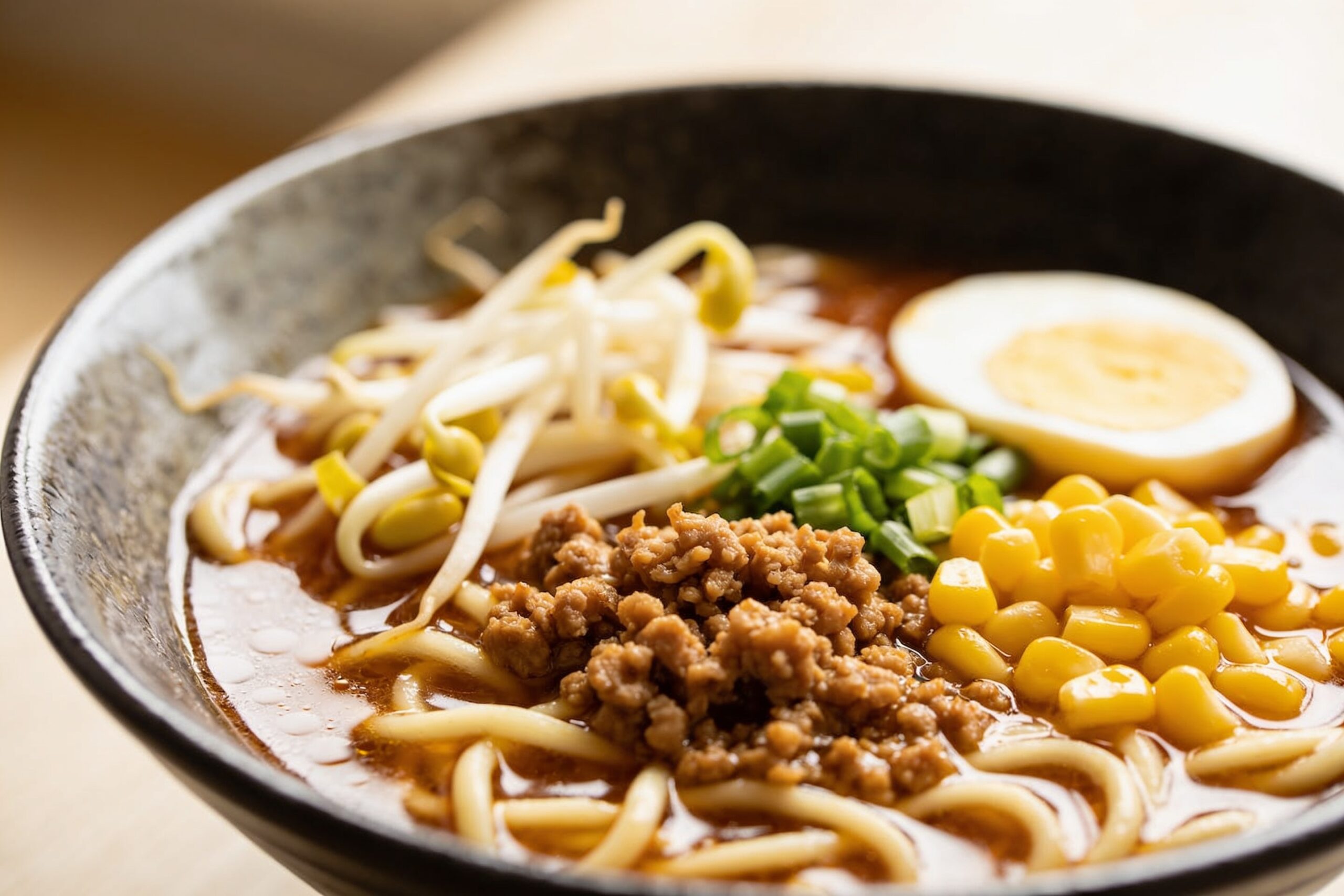
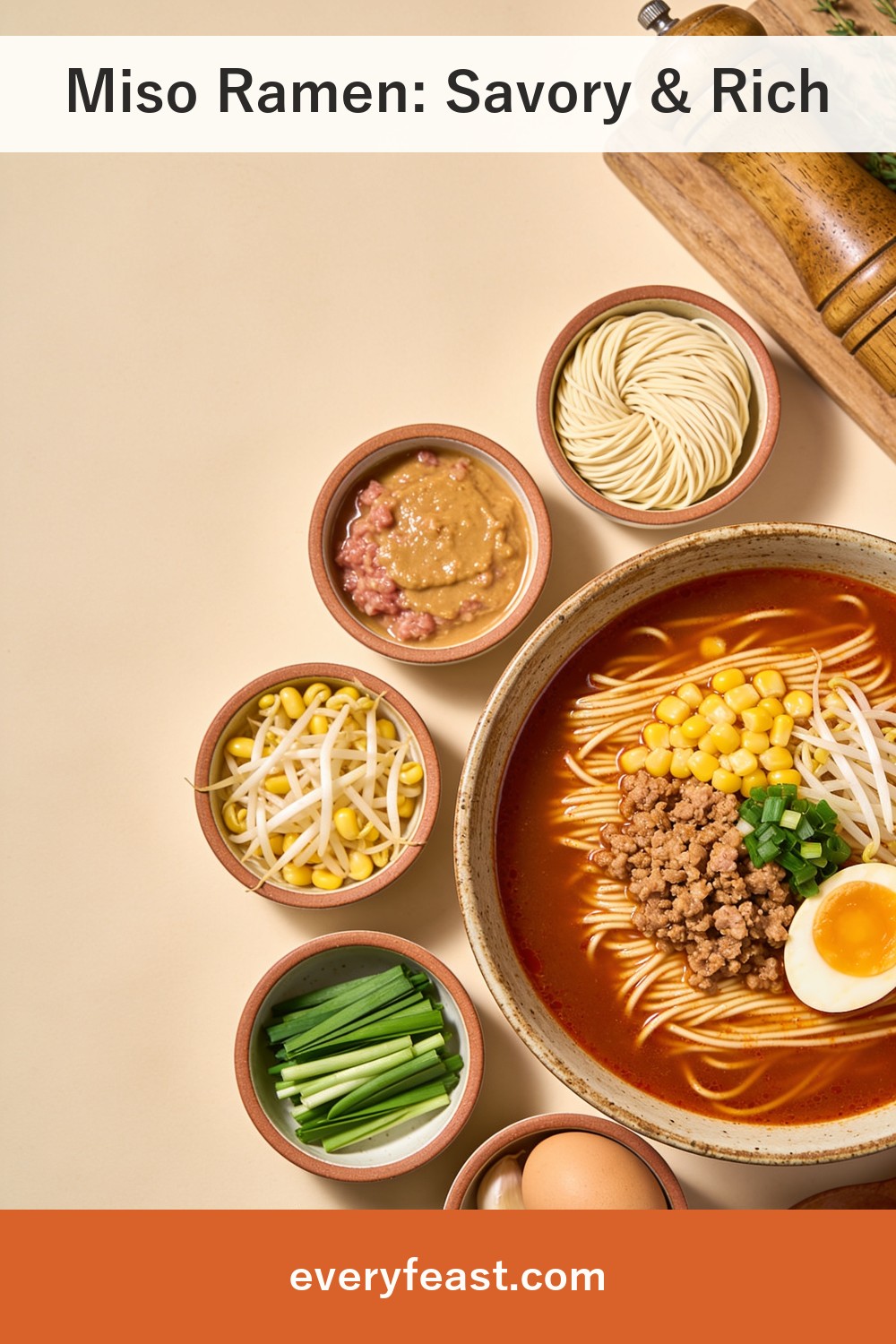
Miso ramen is the ultimate Japanese comfort bowl—a deeply aromatic, umami-rich broth built on miso paste, spiked with garlic and ginger, and topped with tender noodles, crispy vegetables, and a pat of butter that melts into the broth. It’s faster to make than tonkotsu, more forgiving than shoyu, and just as rewarding. One spoonful and you’ll understand why miso ramen is beloved across Japan.
What is miso ramen?
Miso ramen is a Japanese noodle soup where the soul is miso paste—either red (aka) miso for earthiness or white (shiro) miso for sweetness and complexity. The miso is dissolved into a hot pork or chicken broth, enriched with aromatics like garlic, ginger, and sesame, then served with springy noodles, vegetables, and toppings. It’s less creamy than tonkotsu but equally satisfying, with a savory warmth that comes from fermented miso’s deep umami.
Why you’ll love it
- Ready in just 90 minutes—no 12-hour bone broth required
- Aromatic, savory broth that tastes authentic and restaurant-quality
- Endlessly adaptable: swap vegetables, proteins, and miso types to suit your taste
Ingredients (serves 2)
| Ingredient | Amount | Where to find it / Substitutes |
|---|---|---|
| Chicken or pork broth (homemade or quality store-bought) | 1 liter (4.25 cups) | Use low-sodium broth; avoid bouillon cubes if possible for cleaner flavor |
| Red miso paste (aka miso) or white miso (shiro miso) | 60 g (3–4 tbsp) | Asian grocery store or specialty section; look for unpasteurized miso for best flavor |
| Mirin (sweet cooking sake) | 15 ml (1 tbsp) | Asian aisle; adds sweetness and depth |
| Soy sauce (shoyu) | 15 ml (1 tbsp) | Asian aisle; Japanese soy sauce preferred |
| Sesame oil (dark) | 5 ml (1 tsp) | Asian aisle; use sparingly for nutty aroma |
| Garlic, minced | 3 cloves | Produce section |
| Ginger, minced | 15 g (1-inch piece) | Produce section |
| Fresh ramen noodles or Chinese egg noodles | 300 g (6 oz) | Asian market; use fresh or dried as available |
| Pork shoulder or leftover cooked pork | 150 g (0.3 lb) | Butcher counter or leftover from prior meal; or use cooked chicken |
| Bean sprouts (mung bean) | 100 g (1 cup) | Produce section or Asian market; or use blanched broccoli |
| Corn kernels (fresh, frozen, or canned) | 75 g (0.5 cup) | Frozen section or canned vegetable aisle |
| Green onion (scallion), sliced | 2 stalks | Produce section |
| Nori (seaweed sheet), torn into pieces | 0.5 sheet | Asian aisle; optional but adds umami |
| Butter, unsalted | 15 g (1 tbsp) | Dairy section; melts into the broth for richness |
| Water | 250 ml (1 cup) | For ramen cooking |
Allergens: Soy (miso, soy sauce); sesame (sesame oil); possibly pork. If using pork, ensure it is fully cooked through (internal temperature 74℃ / 165℉). Ramen eggs, if soft-boiled (ajitama), carry raw or undercooked yolk risk; fully cook for vulnerable populations (pregnant women, young children, immunocompromised).
How to make it
-
Prepare aromatics: In a small bowl, mix the minced garlic and minced ginger together. Set aside.
-
Build the broth: In a medium pot, bring the chicken or pork broth to a simmer over medium heat. Add the garlic-ginger mixture and cook for 1–2 minutes until fragrant. Do not boil—maintain a gentle simmer.
-
Dissolve the miso: In a separate small bowl, dissolve the red miso (or white miso) in 60 ml of the warm broth, whisking until smooth and free of lumps. Pour this mixture back into the pot and stir gently. Add the mirin, soy sauce, and sesame oil. Taste and adjust seasoning—add more miso for deeper umami, more soy for saltiness, or more mirin for sweetness.
-
Warm the protein: If using raw pork, thinly slice it and add it to the broth, simmering gently for 2–3 minutes until cooked through. If using leftover cooked pork or chicken, add it in the last minute just to warm through.
-
Cook the noodles: Bring a pot of salted water to a rolling boil. Add the fresh ramen noodles and cook for 2–3 minutes (or follow package instructions for dried noodles). Drain well and divide between two bowls.
-
Assemble: Ladle the hot miso broth into each bowl until three-quarters full. Top each with a pat of butter (it will melt into the hot broth), bean sprouts, corn kernels, sliced green onion, torn nori, and the cooked pork or chicken. A squeeze of lemon or lime on the side brightens the flavors. Serve immediately.
Tips for success
- Don’t boil the miso: High heat destroys beneficial bacteria and mellows the miso’s complex flavor. Keep the broth at a gentle simmer after adding miso.
- Dissolve miso properly: Whisking miso into a small amount of warm broth first prevents lumps and ensures even distribution.
- Taste as you go: Miso varies in saltiness and depth. Taste before serving and adjust miso, soy, or mirin to your preference.
- Fresh noodles are worth it: Fresh ramen noodles cook in 2–3 minutes and have a springy, tender bite that dried noodles can’t quite match.
- Butter is magic: A small pat of butter stirred into the hot broth adds creaminess and richness without needing bone marrow or oil.
Variations / Storage
- Tonkotsu-miso fusion: Start with a light pork bone broth (instead of quick broth) and add miso for a creamy-savory hybrid.
- Vegetarian miso ramen: Use vegetable broth and add tofu, mushrooms, spinach, and extra vegetables. The miso provides all the umami you need.
- Spicy miso: Whisk a pinch of red chili flakes or a small squeeze of sriracha into the finished broth.
- Miso butter ramen: After ladling, stir in an extra 10 g butter and a drizzle of truffle oil for a decadent version.
- Storage: Miso broth keeps refrigerated in an airtight container for up to four days. Freeze in portions for up to two months — storage life varies with conditions. Reheat gently on the stovetop (not the microwave, which can heat unevenly). Cook fresh noodles just before serving.
FAQ
Q. Can I use instant miso soup packets?
A. Instant miso packets work in a pinch, but they often contain MSG and lack the complexity of fresh miso paste. For the best flavor, use real miso.
Q. What’s the difference between red miso and white miso?
A. Red miso (aka miso) is fermented longer, deeper, and earthier. White miso (shiro miso) is milder, sweeter, and more delicate. Use whichever you prefer—both work beautifully in ramen.
Q. Can I use store-bought rotisserie chicken?
A. Absolutely—it’s a convenient shortcut. Shred or slice it and add in the last minute to warm through. This keeps prep time short.
Q. Is sesame oil necessary?
A. It’s not essential, but those few drops add a wonderful nutty aroma that makes the ramen taste more authentic. Use sparingly—a little goes a long way.
Q. Can I make this vegetarian?
A. Yes—use vegetable broth instead and skip the pork or chicken. Add extra vegetables like mushrooms, bok choy, carrots, or spinach for substance.