cook
cook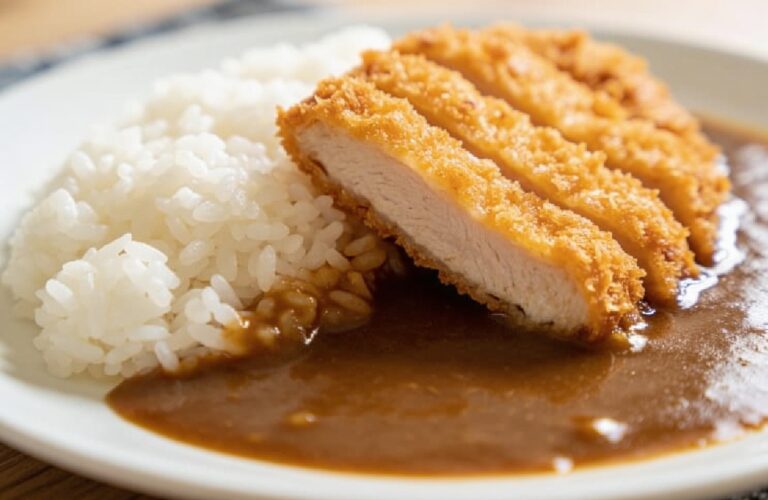
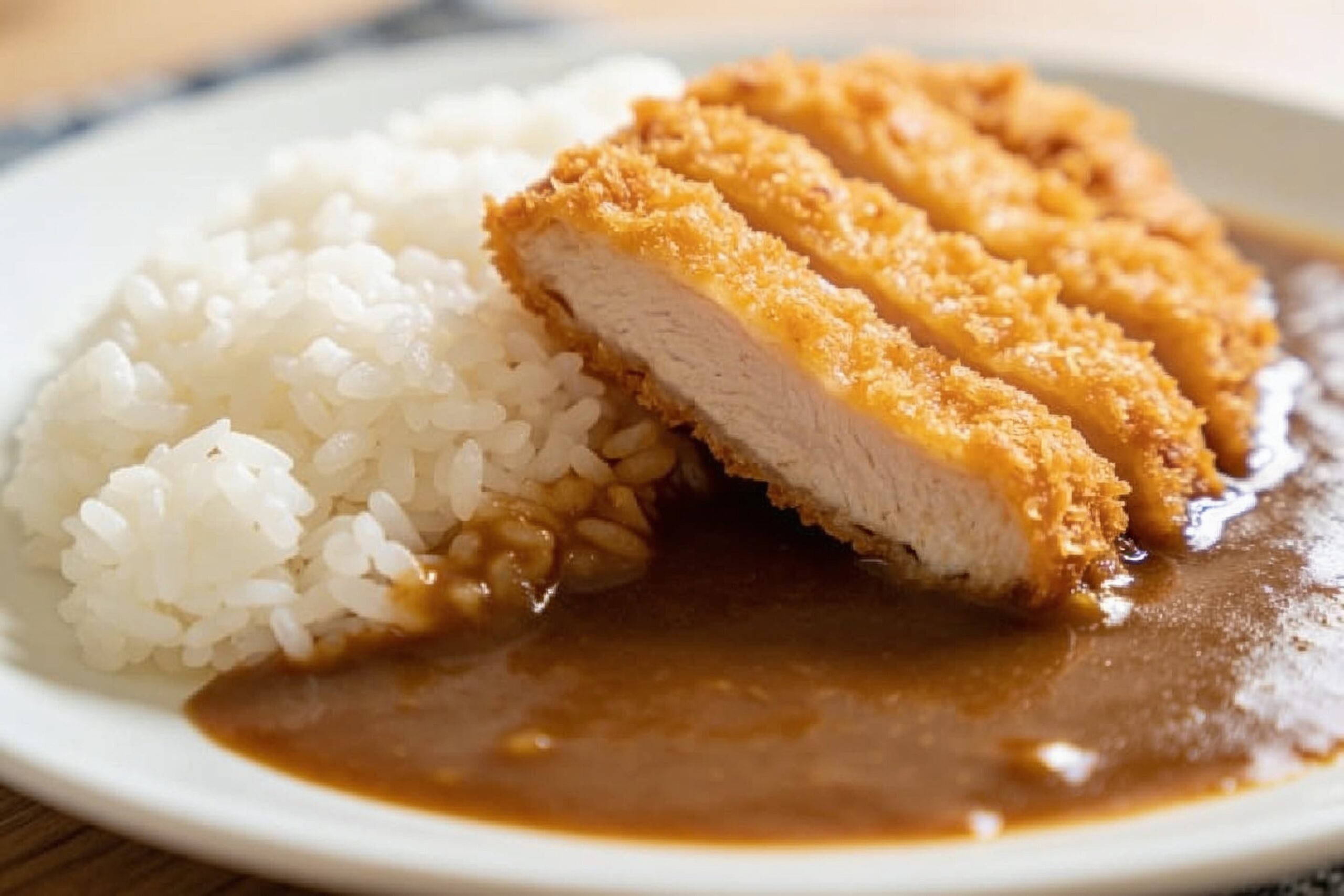
Katsu curry is pure comfort food—a golden, crispy breaded cutlet crowned with velvety, deeply savory Japanese curry sauce that clings to every bite. Served over fluffy white rice, it’s a dish that tastes like it came from a beloved Japanese home kitchen or a busy tonkatsu restaurant, and it’s far simpler to make than you’d think. Crispy. Saucy. Satisfying.

What is katsu curry?
Katsu curry combines two Japanese classics: katsu (a thin, breaded, fried cutlet) and curry (a rich, slightly sweet sauce). The cutlet is pounded thin, coated in panko breadcrumbs, and deep-fried until golden and crackling. It’s then topped with a glossy, umami-rich curry sauce made from Japanese curry roux, broth, and aromatics. The contrast of crispy exterior and tender meat, met with luscious sauce, makes this dish irresistible.
Why you’ll love it
- Crispy, satisfying, and deeply flavorful—restaurant-quality at home
- Uses readily available Japanese curry roux blocks to simplify the sauce
- Comes together in under an hour with minimal fuss
- Converts any dinner night into something celebratory
Ingredients (serves 2)
| Ingredient | Amount | Where to find it / Substitutes |
|---|---|---|
| Boneless, skinless chicken breast or pork loin | 300 g (0.65 lb, 2 cutlets) | Meat counter; choose uniform thickness for even cooking |
| All-purpose flour (for coating) | 30 g (0.25 cup) | Pantry staple |
| Large eggs (for breading) | 1 egg | Dairy section; beat lightly before use |
| Panko breadcrumbs (Japanese-style) | 60 g (0.75 cup) | Baking aisle; provides superior crispness vs. regular breadcrumbs |
| Salt and black pepper | To taste | Pantry staples |
| Vegetable oil (for frying) | 500 ml (2 cups, approximately) | Neutral oil for deep frying; peanut or canola work well |
| Japanese curry roux blocks | 100 g (4 blocks, or 1 package) | Asian grocery store or specialty section; S&B or House brand are standard. Substitute: curry paste + butter, though texture differs |
| Onion, sliced thin | 0.5 medium | Produce section |
| Carrot, sliced thin or diced | 0.5 medium | Produce section; adds sweetness and color |
| Potato, diced small | 1 medium | Produce section; optional but traditional |
| Water or chicken broth | 500 ml (2.1 cups) | For the curry sauce; use low-sodium broth for better flavor |
| Butter | 10 g (0.5 tbsp) | Dairy section; adds richness |
| White rice, cooked | 300 g (1.5 cups, uncooked yields ~3 cups) | Cook jasmine or short-grain white rice according to package directions |
Allergens: Eggs (in breading), wheat (flour and panko), soy (curry roux), possibly sesame. Chicken or pork must be fully cooked through (internal temperature 74℃ / 165℉). Handle raw protein separately to prevent cross-contamination. The breading egg is fully cooked during frying.
How to make it
-
Pound the cutlets: Place each piece of chicken or pork on a cutting board. Using a meat mallet or the bottom of a heavy pan, gently pound the meat until it’s about 0.5 cm (0.2 inch) thick and even throughout. This ensures quick, even cooking. Season both sides with salt and black pepper.
-
Bread the cutlets: Set up three shallow bowls: one with flour, one with beaten egg, one with panko breadcrumbs. Working one cutlet at a time, coat lightly in flour, shaking off excess. Dip into the beaten egg, then coat thoroughly in panko, pressing gently so the breadcrumbs adhere. Place on a clean plate and let rest for 5 minutes—this helps the coating stick during frying.
-
Fry the cutlets: Heat the vegetable oil in a deep pan or wok to 180℃ (350℉)—use a thermometer or test with a small piece of bread; it should brown in about 15 seconds. Carefully slide a cutlet into the hot oil and fry for 2–3 minutes per side, until golden brown and cooked through. The internal temperature should reach 74℃ (165℉). Transfer to paper towels to drain. Repeat with the second cutlet.
-
Make the curry sauce: In a separate pot, melt the butter over medium heat. Add the sliced onion, carrot, and potato (if using). Sauté for 3–4 minutes until softened. Pour in the water or broth and bring to a gentle simmer. Break the curry roux blocks into chunks and drop them into the simmering broth, stirring occasionally until completely dissolved, about 3–5 minutes. The sauce should thicken and deepen in color. Taste and adjust seasoning (add a pinch of salt or soy sauce if needed).
-
Assemble: Divide the cooked white rice between two serving bowls or plates. Place a fried cutlet on top or beside the rice. Pour the hot curry sauce generously over the cutlet, letting it cascade onto the rice. Serve immediately while everything is hot.
Tips for success
- Pound evenly: An even thickness cooks faster and more uniformly. Don’t pound so hard you tear the meat.
- Use quality panko: Regular breadcrumbs don’t crisp up like panko. It’s worth seeking out Japanese-style panko for the signature texture.
- Oil temperature is key: Too cool, and the cutlet absorbs oil and becomes greasy. Too hot, and the outside burns before the inside cooks. Use a thermometer if you have one.
- Don’t skip the panko rest: Five minutes allows the coating to set, reducing breading loss during frying.
- Serve immediately: Fried food is best eaten hot and fresh. Have rice and sauce ready before frying.
Variations / Storage
- Pork tonkatsu curry: Use pork loin or shoulder for a richer, fattier version that pairs beautifully with the sweet curry sauce.
- Beef katsu curry: Thin-sliced beef tenderloin or sirloin works equally well.
- Spicy curry: Add a pinch of red chili flakes, sriracha, or a small squeeze of wasabi to the sauce.
- Vegetarian katsu curry: Substitute the meat with thick slices of eggplant, sweet potato, or firm tofu, breaded and fried the same way.
- Katsu curry rice bowl: Ladle everything onto rice in a single bowl for a more casual presentation.
- Storage: Store leftover fried cutlets in an airtight container in the refrigerator for up to two days. Store curry sauce separately for up to three days. Reheat the cutlet gently in a 160℃ (320℉) oven for 5–10 minutes to restore crispness; reheat sauce on the stovetop. Note that storage life varies with conditions, especially for fried items.
FAQ
Q. Can I make this without deep frying?
A. You can shallow-fry in a skillet with 2–3 cm of oil, though you’ll need to be more careful flipping. Pan-frying works but lacks the full crispness of a deep fry.
Q. What if I can’t find Japanese curry roux blocks?
A. Use quality curry paste mixed with a bit of butter for creaminess, or make your own curry sauce from scratch with curry powder, ginger, garlic, and coconut milk—though the flavor will differ.
Q. Can I use chicken thigh instead of breast?
A. Yes—thighs are juicier and more forgiving. Pound them to even thickness as you would breasts.
Q. Is panko really that much better?
A. Yes—panko’s larger flakes crisp up spectacularly, creating that iconic crunch. Regular breadcrumbs compact into a denser, less appealing coating.
Q. How do I know when the oil is hot enough?
A. A thermometer reads 180℃ (350℉). Without one, drop a small cube of bread into the oil; it should sizzle immediately and brown in about 15 seconds.