cook
cook
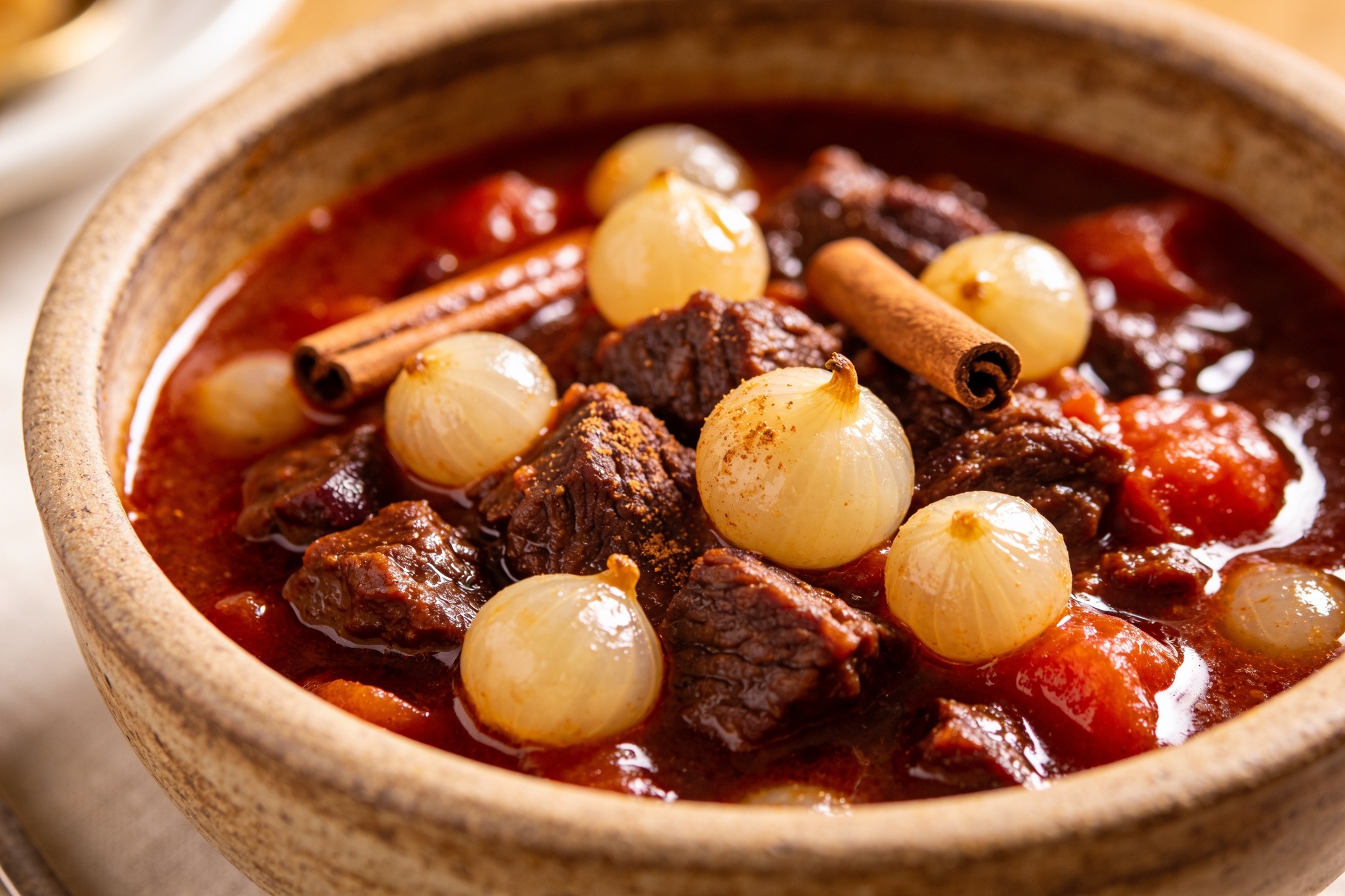
Stifado is Greece’s answer to French beef stew—a deeply aromatic, wine-braised beef and onion dish enriched with warm spices like cinnamon and clove. The beef becomes fall-apart tender after hours of gentle simmering, while the pearl onions melt into the rich tomato and wine sauce. It’s the kind of dish that fills your kitchen with an irresistible aroma and rewards patience with profound, layered flavors. Serve it over rice, pasta, or crusty bread.
What is stifado?
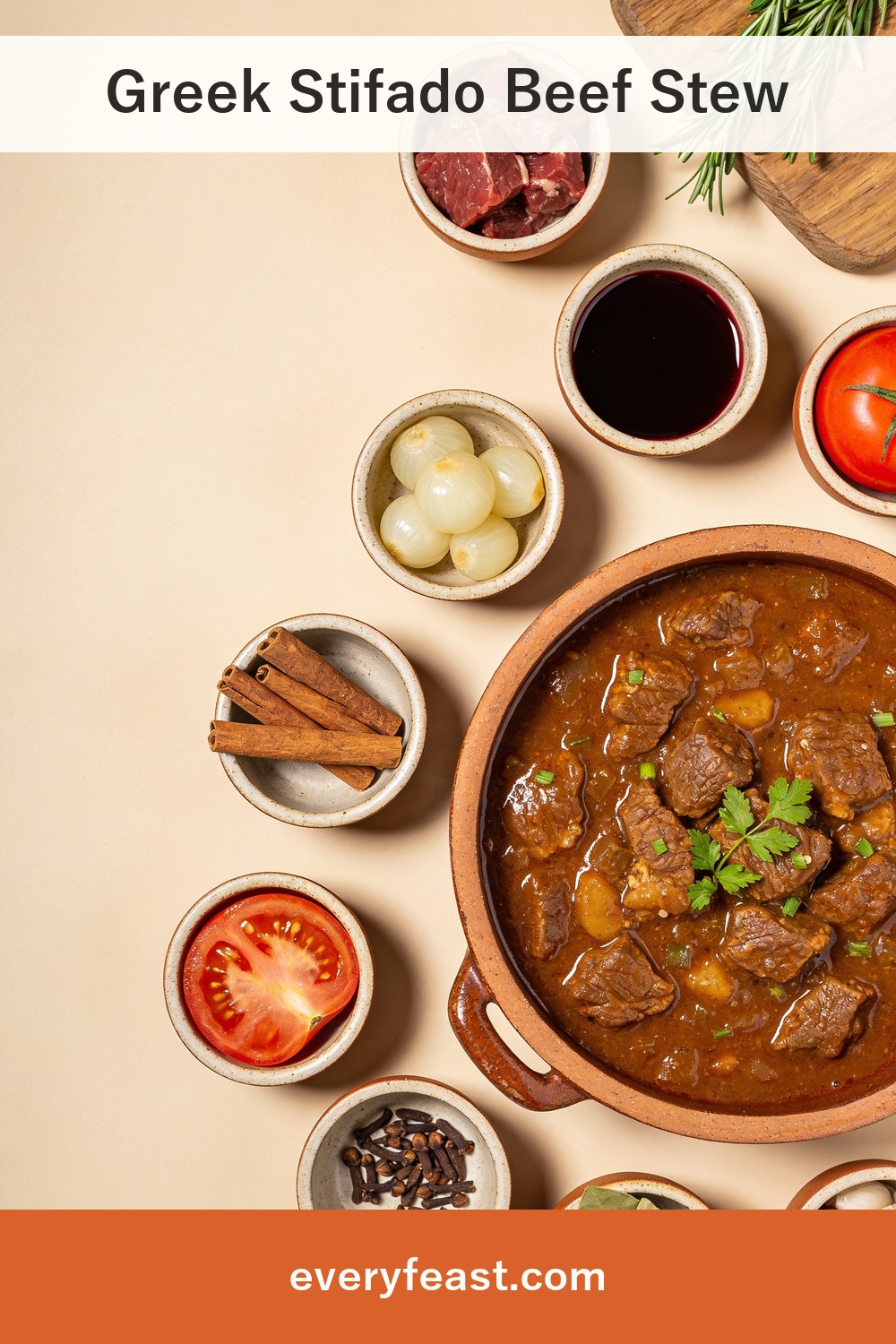
Stifado is a traditional Greek braise that brings together beef, whole pearl onions, red wine, and tomatoes in a slow-cooked symphony of flavors. Warm spices—typically cinnamon, clove, and bay leaf—add depth and complexity to the sauce, while garlic and balsamic vinegar round out the taste. Unlike many Mediterranean stews, stifado relies on long, low-temperature cooking to develop its rich, glossy sauce and render the beef incredibly tender. It’s a celebration of simplicity and patience, and a signature dish in Greek home cooking.
Why you’ll love it
- Complex, aromatic flavors develop beautifully during slow cooking; the spice profile is addictive and warming
- Minimal active cooking time—once assembled, it braises unattended, freeing you to tend to other tasks
- Tastes even better the next day; flavors deepen and meld overnight, making it ideal for advance preparation
Ingredients (serves 6)
| Ingredient | Amount | Where to find it / Substitutes |
|---|---|---|
| Beef chuck or stewing beef, cut into 4 cm (1.5 inch) cubes | 1 kg (2.2 lb) | Meat counter; ask the butcher to cut it uniformly |
| Pearl onions (canned or frozen), peeled | 400 g (14 oz) | Frozen or canned vegetable aisle; fresh pearl onions are seasonal and require manual peeling |
| Garlic, minced | 4 cloves | Fresh produce; or 1.5 tsp garlic paste |
| Tomato paste | 2 tbsp | Canned goods aisle; adds depth and acidity |
| Crushed tomatoes (canned) | 400 g (14 oz can) | Canned goods aisle |
| Dry red wine (such as Xinomavro or Cabernet Sauvignon) | 250 ml (1 cup) | Wine aisle; avoid very cheap wine |
| Beef stock or broth | 250 ml (1 cup) | Canned or carton in broth aisle; or use water with a bouillon cube |
| Balsamic vinegar | 2 tbsp | Condiment aisle |
| Cinnamon stick (or ground cinnamon) | 1 whole (or 0.5 tsp ground) | Spice aisle; Ceylon or cassia cinnamon both work |
| Whole cloves | 4–5 | Spice aisle |
| Bay leaves | 2 | Spice aisle |
| Olive oil | 3 tbsp | Oil aisle |
| Salt and black pepper | To taste | Pantry staples |
Allergens: Beef (meat product) must be fully cooked through. No pink remains in the thickest pieces when cut. Contains wine (alcohol mostly cooks off during braising but trace amounts remain).
How to make it
-
Sear the beef: Heat the olive oil in a large, heavy-bottomed pot or Dutch oven over medium-high heat. Working in batches to avoid crowding the pan, sear the beef cubes for 3–4 minutes per side until deeply browned on all sides. Transfer the browned beef to a plate and set aside. Do not skip this step—it builds the foundational flavors of the stew.
-
Build the aromatics: Add the minced garlic to the pot and cook for 1 minute, stirring constantly, until fragrant. Stir in the tomato paste and cook for another 2 minutes, allowing it to caramelize slightly.
-
Deglaze and add wine: Pour the red wine into the pot, scraping up any brown bits stuck to the bottom with a wooden spoon (this is flavorful fond). Let the wine reduce slightly for 2–3 minutes, simmering off some of the raw alcohol flavor.
-
Add beef and spices: Return the seared beef to the pot along with any accumulated juices. Add the crushed tomatoes, beef stock, balsamic vinegar, cinnamon stick, whole cloves, and bay leaves. Stir well to combine. Bring the mixture to a simmer.
-
Braise low and slow: Reduce the heat to low, cover the pot with a lid, and braise gently for 2 to 2.5 hours, stirring occasionally, until the beef is very tender and easily breaks apart with a spoon.
-
Add the onions: About 20 minutes before the end of cooking, add the pearl onions to the pot. If using frozen onions, they’ll need about 15–20 minutes to heat through and absorb the sauce flavors.
-
Taste and adjust: After the onions are heated through, taste the stew and adjust the salt and pepper as needed. The sauce should be rich, glossy, and coat the back of a spoon. If too thin, increase the heat and simmer uncovered for 5–10 minutes to reduce. Serve hot.
Tips for success
- Don’t rush the searing: Deep browning is essential for building layers of flavor. Don’t skip this step or hurry through it.
- Use whole spices when possible: Cinnamon sticks and whole cloves infuse more nuanced flavor than ground spices, which can taste dusty if overcooked.
- Pearl onions matter: Canned or frozen pearl onions are more convenient than fresh and they’re already sized uniformly. If using fresh, you’ll spend considerable time peeling.
- Low and slow is key: Stifado is not a quick braise. The long, gentle cooking renders tough cuts of beef perfectly tender and allows spices to meld.
- Chill overnight for deeper flavor: Make stifado a day ahead if possible. The flavors continue to develop and deepen as it rests. Reheat gently before serving.
Variations / Storage
- Lighter version: Replace half the red wine with beef broth or water, or omit wine entirely and use all broth for an alcohol-free stew.
- Extra spice: Add a pinch of nutmeg or a small dried chili pepper for additional warmth and complexity.
- Vegetarian stifado: Omit the beef and double the pearl onions, adding 300 g of mushrooms (cremini or portobello, halved) for heartiness.
- Rabbit or venison: Use the same method with game meats in place of beef for a more delicate, aromatic version.
- Storage: Stifado keeps beautifully and is even better on day two. Store in an airtight container in the refrigerator and enjoy it soon, or freeze — storage life varies with conditions. Reheat gently on the stovetop over low heat, adding a splash of water or broth if the sauce has thickened too much.
FAQ
Q. Can I use a slow cooker instead of the stovetop?
A. Yes—sear the beef on the stovetop first, then transfer everything to a slow cooker and cook on low for 6–8 hours, adding the pearl onions in the last 30 minutes.
Q. What’s the best wine to use?
A. Xinomavro (a Greek red wine) is traditional and authentic, but any dry red wine works—Cabernet Sauvignon, Syrah, or even Pinot Noir. Avoid very cheap wines or anything too sweet.
Q. Can I make stifado without alcohol?
A. Absolutely—replace the red wine with additional beef broth or water. The stew will be less complex but still delicious. Add a touch of balsamic vinegar to compensate for the depth lost by omitting wine.
Q. What if my pearl onions are still firm after braising?
A. They’re perfect—they should stay intact and only slightly softened, holding the sauce. If they’re falling apart, the stew has been cooked too long.
Q. Can I use different cuts of beef?
A. Yes—chuck, shoulder, and stewing beef all work beautifully. Avoid lean cuts like sirloin; they become tough and dry with long cooking. Fatty, well-marbled cuts are ideal.