 cook
cook
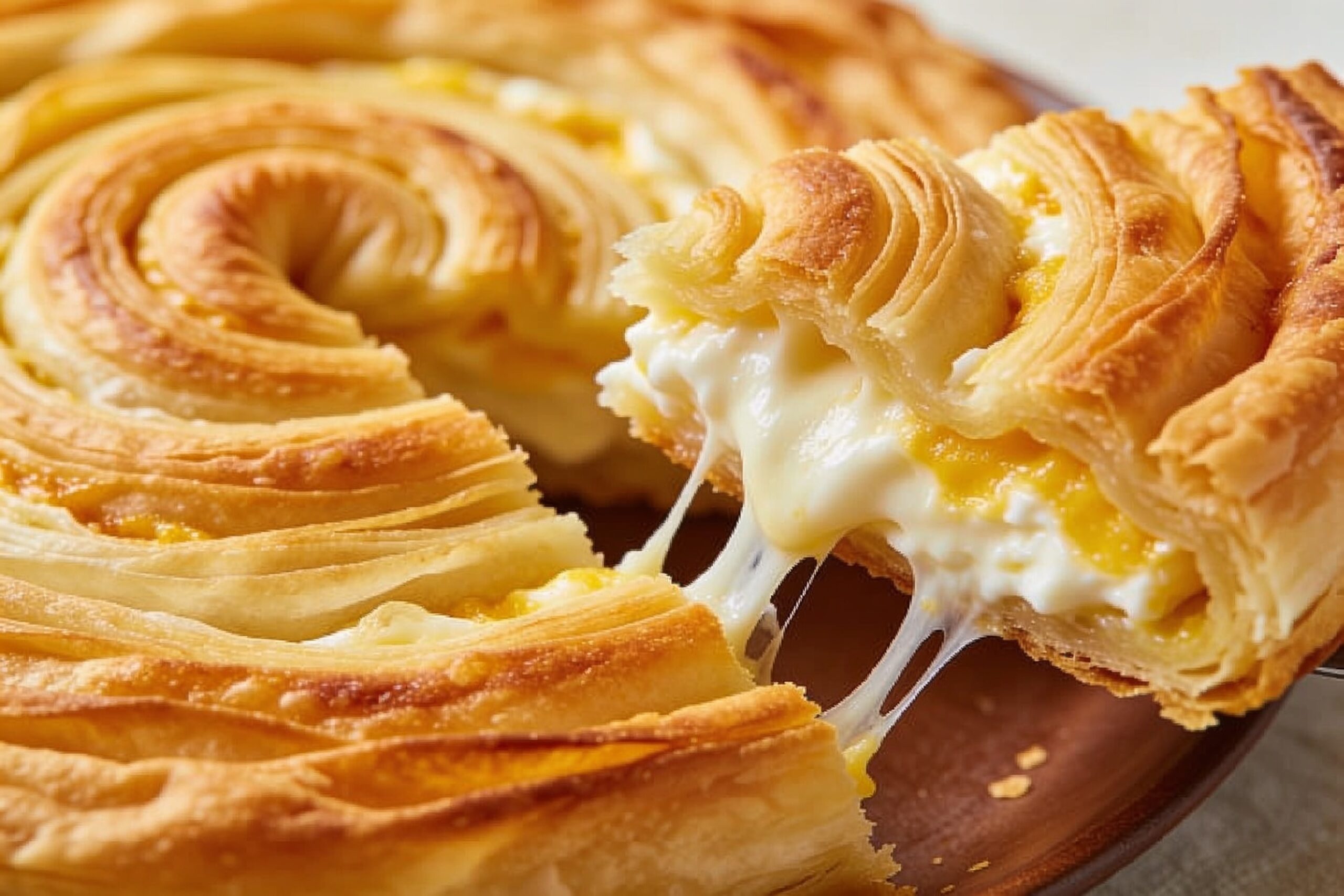
Banitsa is Bulgaria’s beloved savory pastry—layers of delicate, paper-thin phyllo dough wrapped around a rich filling of feta cheese and eggs, baked until the pastry is shatteringly crisp and golden. It’s simple, elegant, and absolutely craveable, whether enjoyed warm from the oven or at room temperature. Serve it for breakfast, lunch, or an afternoon snack with a cup of strong coffee or yogurt.
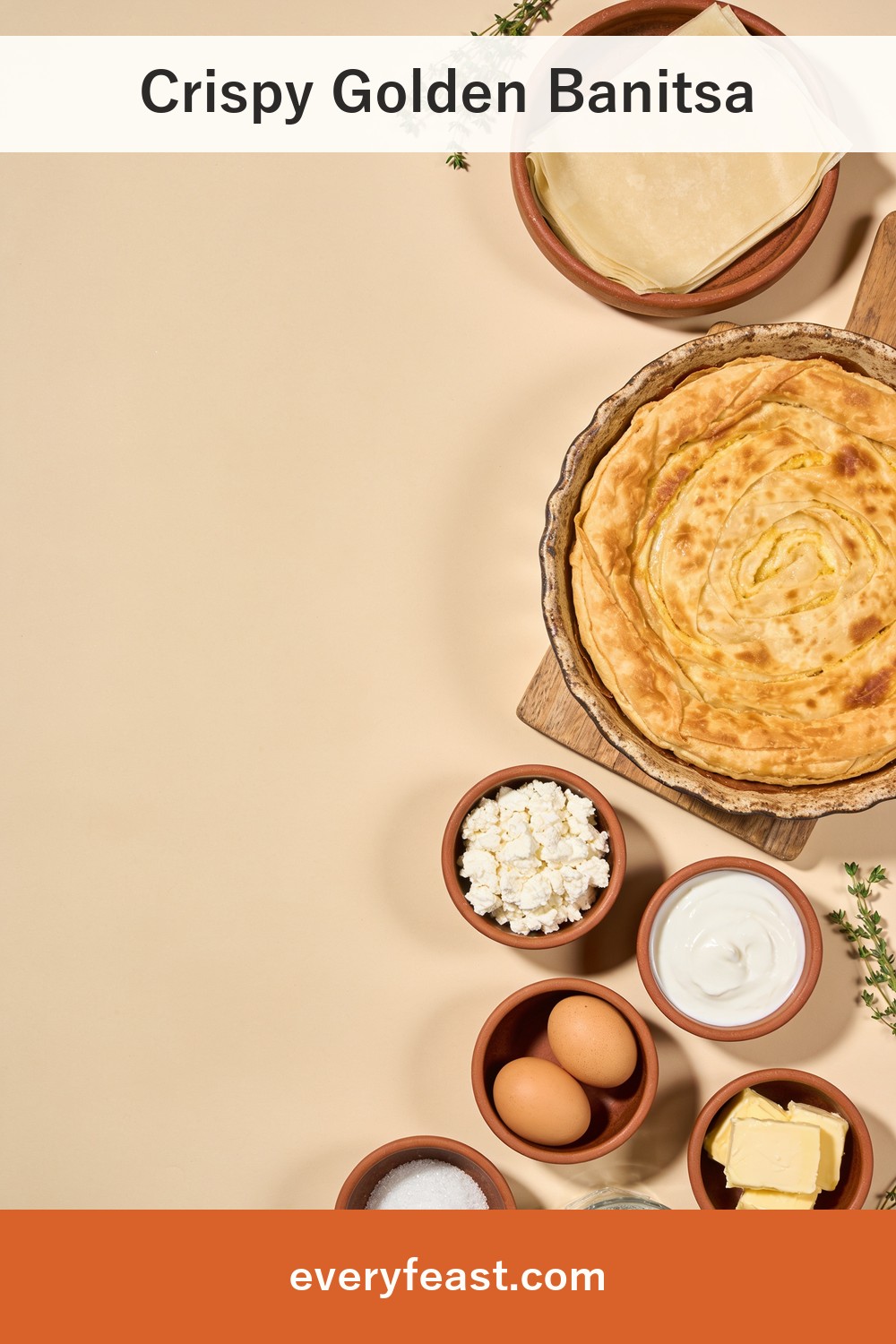
What is banitsa?
Banitsa is a traditional Bulgarian pastry that appears on tables throughout Bulgaria and the broader Balkans. The dish consists of phyllo dough (also called filo pastry)—tissue-thin sheets of dough—coiled in a spiral or layered flat and filled with a simple but satisfying mixture of crumbled feta cheese and beaten eggs. After assembly, it’s baked until the phyllo becomes golden, crispy, and shatteringly delicate, while the filling inside remains creamy and moist. It’s a staple comfort food, enjoyed at all hours and suitable for any occasion.
Why you’ll love it
- Surprisingly simple to make; most of the work is just unrolling and layering—no special skills needed
- The contrast of crispy, buttery phyllo and soft, savory cheese filling is deeply satisfying
- Inexpensive to prepare with basic pantry ingredients; feeds many people from a small amount of filling
Ingredients (serves 6)
| Ingredient | Amount | Where to find it / Substitutes |
|---|---|---|
| Phyllo pastry (filo dough) | 250 g (9 oz, about 12–16 sheets) | Frozen pastry section; thaw according to package directions. Substitute: crispy puff pastry for similar texture |
| Feta cheese, crumbled | 250 g (9 oz) | Dairy aisle; slightly salty is fine, as it seasons the filling |
| Eggs | 4 large | Refrigerated section; or use 200 ml (0.8 cup) beaten egg |
| Plain yogurt | 100 g (0.5 cup) | Dairy aisle; full-fat or plain Greek yogurt works |
| Salt and black pepper | To taste | Pantry staples |
| Butter, melted | 100 g (7 tbsp) | Dairy aisle; or use olive oil for a lighter version |
| Water or milk | 2–3 tbsp | For brushing between layers |
| Optional: fresh dill or parsley, finely chopped | 1 tbsp | Fresh herbs; adds brightness but not essential |
Allergens: Eggs (dairy filling) and feta cheese (dairy); gluten (phyllo dough). Eggs must be fully cooked through—no liquid yolk remains when the pastry is baked.
How to make it
-
Prepare the filling: In a medium mixing bowl, combine the crumbled feta cheese, beaten eggs, yogurt, salt, black pepper, and fresh dill or parsley if using. Stir gently until just combined. The mixture should be creamy but not smooth; small feta lumps are fine. Set aside.
-
Prepare the phyllo: Remove the phyllo from the freezer and let it thaw completely (about 2 hours at room temperature or overnight in the refrigerator, depending on package instructions). This prevents the delicate sheets from tearing. Preheat the oven to 190℃ (375℉). Brush a 9-inch (23 cm) square or round baking dish with melted butter or oil.
-
Assemble the banitsa (layered method): Unroll the phyllo sheets carefully. Place one sheet in the bottom of your prepared baking dish, brush lightly with melted butter or a mixture of butter and water, and repeat, layering about half of the phyllo sheets (about 6–8 sheets), brushing each with butter. Spread the cheese filling evenly over the top layer, then continue layering the remaining phyllo sheets on top, brushing each with butter as you go.
-
Finish the top: Brush the final top layer generously with melted butter. Using a sharp knife, cut the banitsa into 6 equal squares or diamond shapes, cutting all the way through to the bottom (this helps it bake evenly and makes serving easier).
-
Bake: Place the baking dish in the preheated oven and bake for 25–35 minutes, until the phyllo is golden brown and crispy, and the filling is set (a knife inserted in the center should come out clean, with no liquid egg remaining). The top should be shatteringly crisp.
-
Cool and serve: Remove from the oven and let rest for 5–10 minutes before serving. This allows the filling to firm up slightly. Serve warm, at room temperature, or even cold.
Tips for success
- Thaw phyllo properly: Frozen phyllo dough should thaw slowly in the refrigerator or at room temperature. Rush thawing can make the sheets sticky and difficult to work with. If thawed sheets seem stuck together, gently separate them with a dull knife and dust lightly with cornstarch.
- Butter as you go: Don’t try to butter all the sheets at once before assembling. Phyllo dries out quickly. Brush each sheet as you lay it down for the best texture.
- Don’t skip the final cut: Cutting all the way through to the bottom before baking helps the pastry puff evenly and makes serving cleaner.
- Watch for golden, not brown: Phyllo can go from golden to burned quickly. Start checking at 25 minutes and remove when deep golden, not dark brown.
- Keep leftovers crispy: Store banitsa uncovered in a cool place or in a paper bag (not plastic), which traps steam and makes the pastry soggy.
Variations / Storage
- Spinach and cheese version: Mix 200 g cooked, cooled spinach (squeezed dry) with the feta filling for spanakopita-style banitsa.
- Kashkaval version: Replace half the feta with crumbled kashkaval cheese (a traditional Balkan yellow cheese) for a richer, nuttier flavor.
- Mini banitsa squares: Cut the assembly into smaller pieces before baking and serve as appetizers or breakfast bites.
- Herb-forward: Add 2 tbsp fresh chopped dill or 1 tbsp fresh mint to the filling for extra brightness.
- Storage: Banitsa keeps well and can be enjoyed fresh, warm, or at room temperature. Store in an airtight container at room temperature or in the refrigerator and enjoy it soon — storage life varies with conditions. Reheat gently in a 160℃ (320℉) oven for 8–10 minutes to restore crispness (the refrigerator can soften phyllo slightly).
FAQ
Q. Can I use store-bought phyllo instead of homemade?
A. Absolutely—this recipe is designed for store-bought phyllo, which is perfect for banitsa. Most grocery stores carry it frozen in the pastry section.
Q. Can I make banitsa ahead and freeze it?
A. Yes—assemble the unbaked banitsa, cover tightly with plastic wrap and foil, and freeze. Bake from frozen, adding 10–15 minutes to the cooking time.
Q. What’s kashkaval and where do I find it?
A. Kashkaval is a traditional Balkan hard cheese similar to cheddar. Look for it in Eastern European or Balkan markets. If unavailable, substitute with aged cheddar or Emmental.
Q. Can I use olive oil instead of butter?
A. Yes—extra-virgin olive oil works, though the flavor will be slightly different (more Mediterranean, less rich). The texture and crispness will be nearly identical.
Q. Why is my phyllo tearing?
A. Phyllo is delicate and tears easily if too dry, too cold, or handled roughly. Make sure it’s thawed completely and keep unused sheets covered with a damp towel to prevent drying. Handle each sheet gently.


