cook
cook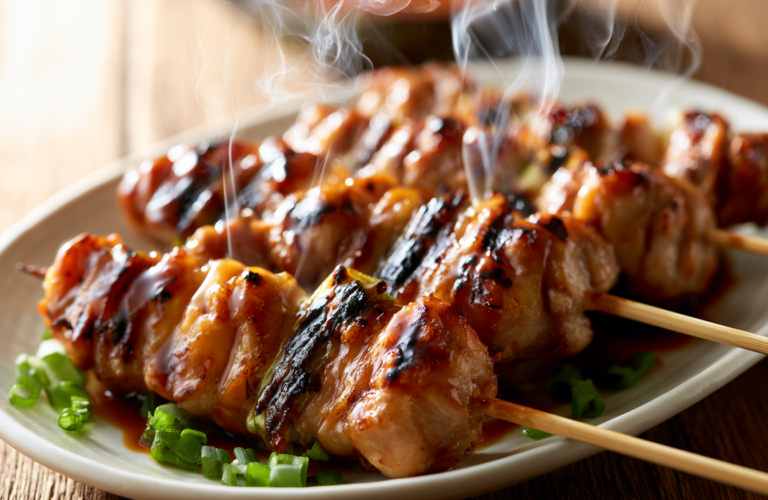
Yakitori — grilled chicken skewers glazed with a savory-sweet sauce — is comfort food at its best. Tender chicken thighs and sweet scallions are threaded onto skewers, grilled until golden, and basted with a glossy tare (a reduction of soy sauce, mirin, sake, and sugar). Whether you grill over charcoal, gas, or a stovetop grill pan, yakitori comes together in under 30 minutes and feeds a crowd. This recipe walks you through making tare from scratch and timing the grill perfectly.
What is yakitori?
Yakitori is a Japanese grilled chicken skewer dish in which bite-sized pieces of chicken (traditionally thigh) are alternated with segments of scallion (negi), grilled over high heat, and basted with tare — a glossy, salty-sweet sauce made from soy sauce, mirin, sake, and sugar. The name literally means “grilled chicken” (yaki = grill, tori = chicken). Yakitori is served hot off the grill and is equally at home as a weeknight main, a bar snack, or a centerpiece of a casual feast.
Why you’ll love it
- Juicy and flavorful: Chicken thighs stay moist and tender on the grill, and the glaze caramelizes into a rich, savory crust.
- Quick and fun: Skewers grill in minutes, making yakitori perfect for weeknight dinner or entertaining.
Ingredients (serves 4)
| Ingredient | Amount | Where to find it / Substitutes |
|---|---|---|
| Boneless, skinless chicken thighs, cut into bite-sized pieces | 800 g (1.75 lbs) | Any chicken counter; thigh is juicier than breast |
| Scallions (green onions), cut into 5 cm (2 inch) pieces | 3–4 bunches (about 150 g / 5.3 oz) | Produce section |
| Tare (glaze sauce): | ||
| Soy sauce | 100 ml (6.5 tbsp) | Wheat, Soy ⚠️ |
| Mirin (sweet rice wine) | 50 ml (3.5 tbsp) | Asian grocery stores or online; or substitute 2 tbsp honey + 1 tbsp water |
| Sake (rice wine) or dry sherry | 50 ml (3.5 tbsp) | Asian grocery stores or online; or substitute 50 ml water + 1 tsp sugar |
| Brown sugar or caster sugar | 1.5 tbsp | Helps sauce reduce and caramelize |
| Vegetable oil for grill/pan | 1 tbsp | Canola or vegetable oil |
| Coarse sea salt (for plain yakitori option) | To taste | Optional; allows serving some skewers with just salt instead of glaze |
Food Safety Note: Make sure chicken is fully cooked through — it should show no pink in the center and reach an internal temperature of 75℃ (165℉).
How to make it
-
Make the tare. In a small saucepan, combine soy sauce, mirin, sake, and sugar. Bring to a gentle boil, then reduce heat to medium and simmer for 5–7 minutes, stirring occasionally, until the sauce thickens slightly and turns glossy. It should coat the back of a spoon. Set aside and keep warm.
-
Prepare skewers and grill. If using wooden skewers, soak them in water for 30 minutes to prevent burning. Pat chicken pieces dry with paper towels. Thread chicken and scallion pieces alternately onto skewers, starting and ending with chicken — aim for 4–5 pieces of chicken per skewer.
-
Oil and heat the grill. If grilling outdoors, oil the grill grates and heat to medium-high (charcoal should be medium-hot, not flaming). If using a stovetop grill pan, heat it over medium-high heat and lightly oil the surface. You want hot enough to caramelize but not burn the exterior before the chicken cooks through.
-
Grill the skewers. Place skewers on the hot grill or pan. Grill for 3–4 minutes on the first side without moving — you want caramelization and grill marks. Flip and grill the second side for 2–3 minutes, until the chicken is cooked through (opaque throughout, no pink).
-
Glaze and finish. In the final minute of cooking, brush both sides with warm tare, turn the skewers, brush again, and cook for another 30 seconds. The glaze should caramelize into a glossy coating. Transfer skewers to a serving plate immediately.
-
Serve. Drizzle with extra tare if desired. Serve hot, with lemon wedges or lime if you like a squeeze of brightness.
Tips for success
- Chicken thigh over breast. Thigh is fattier and stays juicy on high-heat grilling. Breast tends to dry out quickly.
- Thread tightly. Skewers should feel snug so pieces don’t slide around during flipping.
- Don’t rush the first side. Let chicken sit on the grill without moving for 3–4 minutes so caramelization develops. Flip only once.
- Tare glaze timing. Brush tare in the last minute only, after the chicken is mostly cooked. Early brushing will char the sauce before the chicken is done inside.
- Doneness by look. Chicken should show no pink in the center. If unsure, cut the thickest piece open to confirm it is cooked through.
Variations / Storage
- Negima (scallion-heavy): Use more scallion and less chicken — the scallions caramelize beautifully and provide contrast.
- Shio yakitori (salt version): Skip the tare and sprinkle skewers with coarse salt and a squeeze of lemon after grilling for a lighter option.
- Indoor stovetop method: Use a grill pan or cast-iron skillet over medium-high heat indoors. The result is less charred but still delicious.
- Storage: Store leftover yakitori and tare separately in airtight containers in the refrigerator. Reheat gently in a low oven (160℃ / 320℉) or on a grill pan over medium heat for 5 minutes. Store in a clean airtight container in the refrigerator and enjoy it soon — storage life varies with conditions.
FAQ
Q. Can I make tare ahead?
A. Yes — tare can be made up to 3 days ahead and refrigerated. Reheat gently before brushing onto skewers.
Q. Do I need a charcoal grill?
A. No — gas grill, grill pan, or even a cast-iron skillet over high stovetop heat works well. Charcoal adds smokiness, but the sauce and technique matter most.
Q. What if I don’t have mirin?
A. Substitute 2 tbsp honey + 1 tbsp water to mimic mirin’s sweetness and body. The glaze will be slightly less authentic but still delicious.
Q. How do I know the chicken is done?
A. Cut the thickest piece open — the center should be opaque with no pink, and juices should run clear. If using a meat thermometer, aim for 75℃ (165℉) in the thickest part.