cook
cook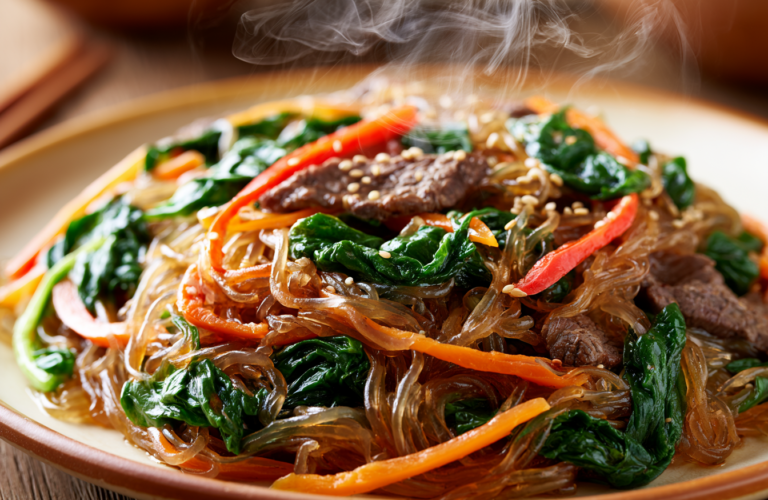
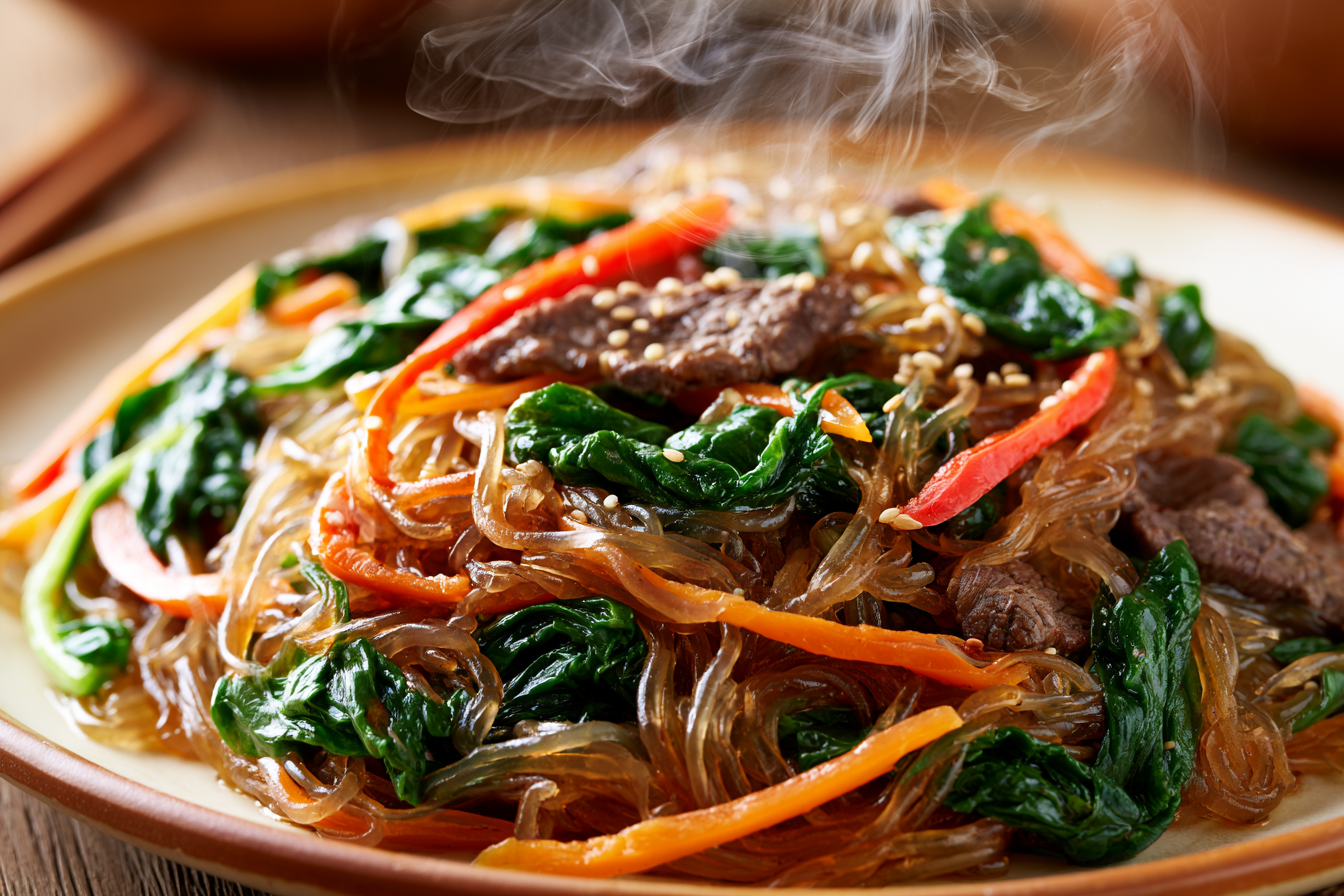
Japchae is a colorful Korean dish of springy, translucent glass noodles tossed with beef and a rainbow of vegetables in a savory-sweet sesame-soy sauce. It’s a staple at Korean celebrations and just as good as a weeknight dinner — delicious warm or at room temperature, which makes it perfect for meal prep and potlucks.
What is japchae?
Japchae is a Korean stir-fry of dangmyeon — chewy glass noodles made from sweet potato starch — with thinly sliced beef and vegetables, seasoned with soy sauce, sugar and sesame oil. The noodles stay pleasantly bouncy and soak up the savory-sweet sauce.
Why you’ll love it
- Chewy, glossy noodles with sweet-savory depth and lots of color.
- Great warm or at room temperature — ideal for making ahead.
- Easy to load up with vegetables for a satisfying, balanced meal.
Ingredients (serves 4)
| Ingredient | Amount | Where to find it / Substitutes |
|---|---|---|
| Korean glass noodles (dangmyeon) | 200 g (7 oz) | Sweet potato starch noodles; Asian grocery stores or online |
| Beef sirloin, thinly sliced | 200 g (7 oz) | Optional; leave out for vegetarian |
| Spinach | 100 g (3.5 oz) | Blanched and squeezed |
| Carrot, julienned | 1 | |
| Onion, sliced | 1/2 | |
| Mushrooms, sliced | 100 g (3.5 oz) | Shiitake are traditional |
| Soy sauce (wheat, soy) | 4 tbsp | Tamari for gluten-free |
| Sugar | 2 tbsp | |
| Toasted sesame oil (sesame) | 2 tbsp | |
| Garlic, grated | 2 cloves | |
| Toasted sesame seeds | 1 tbsp | To finish |
| Neutral oil | for the pan |
Dual units always: g (oz), ml (cups), ℃ (℉), tbsp/tsp.
How to make it
- Cook the noodles. Boil the glass noodles according to the package, until chewy and translucent (usually 6–7 minutes). Drain, rinse briefly, and toss with a little sesame oil so they don’t stick. Snip a few times with scissors for easier eating.
- Season the beef. Toss the beef with 1 tbsp each of the soy sauce and sesame oil and the garlic.
- Cook the components. In a hot pan with a little oil, stir-fry the vegetables separately or in quick batches, just until crisp-tender. Cook the beef until fully cooked through with no pink remaining. Blanch the spinach briefly, then squeeze dry.
- Combine. In a large bowl or the pan off the heat, toss the noodles, beef and vegetables with the remaining soy sauce, sugar and sesame oil until everything is glossy and evenly coated.
- Finish. Scatter with sesame seeds and serve warm or at room temperature.
Tips for success
- Don’t overcook the noodles — they should be chewy, not mushy. Rinse to stop the cooking.
- Cooking the vegetables separately keeps their colors bright and textures distinct.
- Taste and adjust the soy-sugar balance at the end; the noodles absorb a lot as they sit.
Variations / Storage
- Storage: Store in a clean airtight container in the refrigerator and enjoy it soon — storage life varies with conditions. Loosen with a few drops of sesame oil when serving.
- Variations: Make it vegetarian by skipping the beef and adding more mushrooms; add bell peppers for extra color.
FAQ
Q. What noodles are used in japchae?
A. Dangmyeon — Korean glass noodles made from sweet potato starch. They’re chewier and more translucent than mung bean or rice noodles.
Q. Can I make japchae ahead?
A. Yes. It’s traditionally served at room temperature and keeps well, making it a great make-ahead or potluck dish.
Q. Is japchae gluten-free?
A. The noodles are, but soy sauce usually isn’t — use tamari to keep the whole dish gluten-free.