cook
cook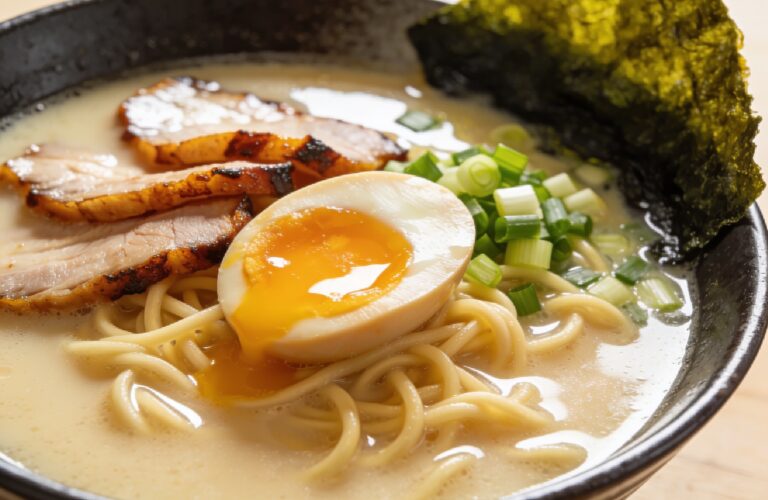
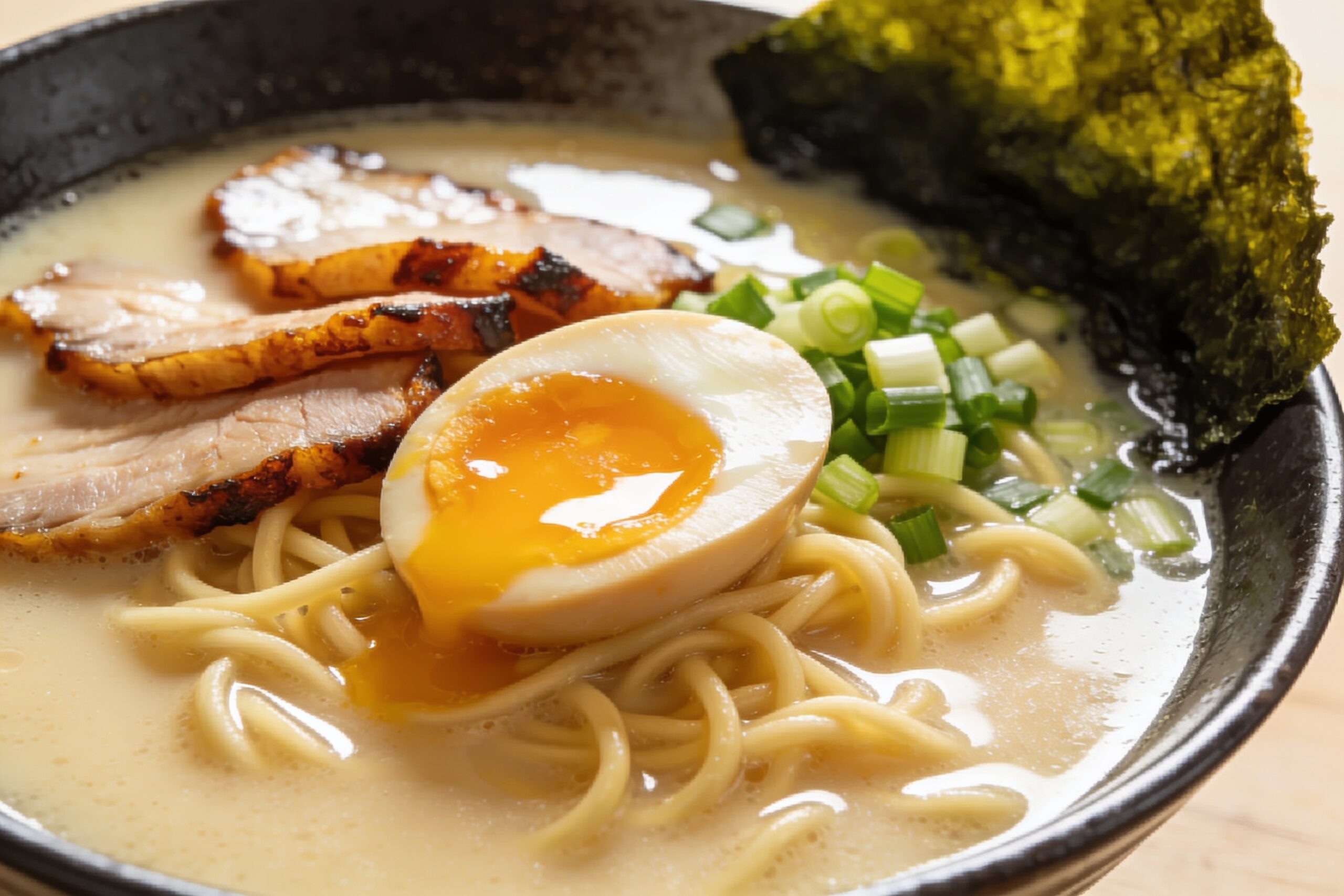
Tonkotsu ramen is Japan’s most beloved comfort bowl—a rich, creamy pork bone broth that simmers for hours until every ounce of flavor is drawn from the bones and marrow. Topped with tender chashu pork, a soft-boiled egg, fresh vegetables, and silky noodles, it’s a warm, deeply satisfying meal that tastes like it came straight from a Tokyo ramen shop.
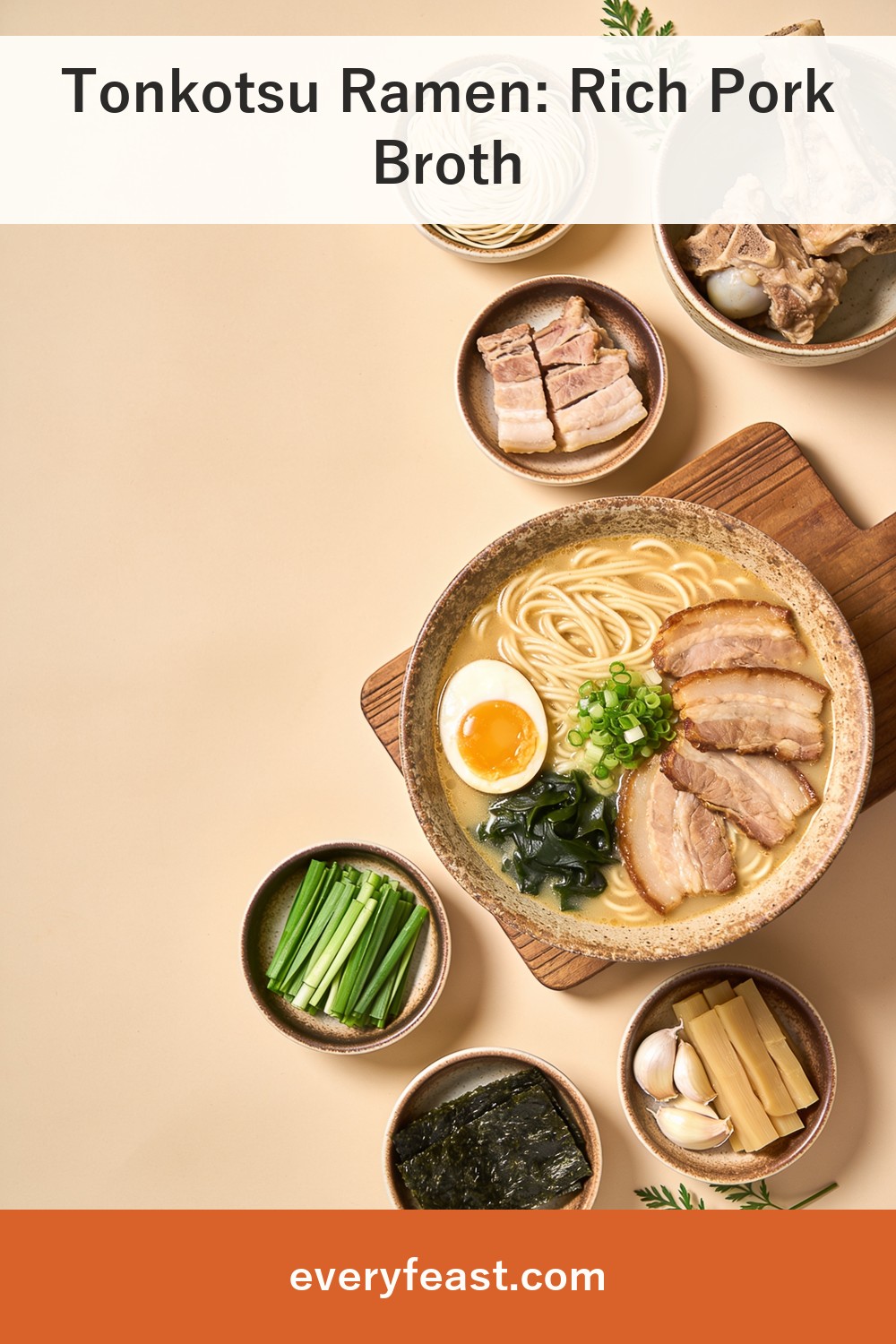
What is tonkotsu ramen?
Tonkotsu is a pork-based ramen originating from Fukuoka in southern Japan. The broth is made by simmering pork bones, pork neck, and chicken bones for 8–12 hours at a gentle boil, which breaks down collagen and fat into a creamy, milky emulsion. The result is a silky, rich broth that’s more filling than lighter broths. It’s served with springy, thin noodles and classic toppings like chashu (braised pork), eggs, bamboo shoots, and green onions.
Why you’ll love it
- Deep, umami-rich broth that tastes authentic yet achievable at home
- Customizable toppings let you build your own perfect bowl
- A warming, complete meal that feels luxurious but forgiving to make
Ingredients (serves 4)
| Ingredient | Amount | Where to find it / Substitutes |
|---|---|---|
| Pork bones (neck, spine, leg bones) | 800 g (1.75 lb) | Butcher counter; ask for bones with some meat attached for extra flavor |
| Whole chicken (or chicken bones/wings) | 500 g (1.1 lb) | Butcher or grocery store; adds depth to the broth |
| Pork shoulder or belly (for chashu) | 600 g (1.3 lb) | Meat counter; choose a cut with fat marbling |
| Ginger, sliced (1-inch pieces) | 30 g (3–4 slices) | Produce section |
| Garlic cloves, lightly crushed | 6 cloves | Fresh produce |
| Green onions (scallions) | 4 stalks | Produce section |
| Mirin (sweet cooking sake) | 60 ml (0.25 cup) | Asian grocery store or condiment aisle; use a quality mirin |
| Soy sauce (shoyu) | 45 ml (3 tbsp) | Asian aisle; use Japanese soy sauce |
| Sake (dry rice wine) | 60 ml (0.25 cup) | Liquor section or Asian market; or use water |
| Fresh ramen noodles | 400 g (4 portions) | Asian market or specialty store; essential for authentic texture. Substitutes: if unavailable, use dried egg noodles or Chinese wheat noodles |
| Water | 3 liters (12.75 cups) | Filtered or tap water |
| Salt and white pepper | To taste | Pantry staples |
| For toppings: Ramen eggs (soft-boiled), thinly sliced chashu pork, fresh bamboo shoots (menma), nori (seaweed sheet), white miso paste (shiro miso), butter, garlic oil | As desired | Asian market or specialty grocer |
Allergens: Pork, soy, possibly sesame (if using miso). Pork must be fully cooked through (internal temperature 74℃ / 165℉). For soft-boiled ramen eggs (ajitama), note that soft/runny yolks pose a risk for vulnerable populations (pregnant women, young children, immunocompromised). Fully cook eggs for safety if serving to vulnerable guests.
How to make it
-
Prep the bones: Rinse the pork bones and chicken thoroughly under cold water to remove any blood or impurities. Place them in a large pot and cover with cold water. Bring to a boil over high heat, then boil for 2 minutes. Drain, rinse the bones again under cold water, and rinse out the pot. This step removes impurities and helps create a clearer, cleaner-tasting broth.
-
Build the broth base: Return the cleaned bones and chicken to the pot. Add 3 liters of fresh cold water, the ginger slices, crushed garlic cloves, and green onion stalks. Bring to a gentle boil over high heat, then reduce to a low, steady simmer. Do not boil rapidly—maintain just a few small bubbles breaking the surface. Simmer for 8–12 hours, occasionally skimming any foam or impurities that float to the top in the first hour. The longer you simmer, the creamier the broth becomes.
-
Braise the chashu pork: While the broth simmers, prepare the pork. In a separate pot, heat a little oil over medium-high heat and sear the pork shoulder on all sides until golden brown, about 2 minutes per side. Remove and set aside. In the same pot, whisk together 60 ml mirin, 45 ml soy sauce, 60 ml sake, and 250 ml broth from the tonkotsu pot. Return the pork to the pot, cover, and simmer gently for 1.5–2 hours until very tender. Cool, then refrigerate; slice thinly to serve.
-
Finish the broth: After 8–12 hours of simmering, strain the broth through a fine-mesh strainer lined with cheesecloth into a clean pot. Discard the solids. Taste the broth and season gently with salt and white pepper. You want the natural pork umami to shine—don’t oversalt. If the broth tastes weak, you can simmer it further or add a splash of soy sauce and mirin for depth.
-
Cook the ramen: Bring a pot of salted water to a rolling boil. Add the fresh ramen noodles and cook for 2–3 minutes (follow package directions), stirring gently to separate them. Drain well.
-
Assemble: Heat the tonkotsu broth to a gentle simmer. Divide the cooked noodles among four large bowls. Ladle hot broth into each bowl until three-quarters full. Top each with sliced chashu pork, a soft-boiled ramen egg (halved), a few bamboo shoots, a strip of nori, a pat of butter, and a pinch of white pepper. Serve immediately with extra green onion and a small bowl of condiments (soy sauce, mirin, white miso) on the side for guests to adjust flavor.
Tips for success
- Low and slow wins: Rapid boiling creates a cloudy broth with a less refined taste. A gentle, steady simmer extracts more flavor without bitterness.
- Skim the first hour: Impurities float to the surface early. Skim them off to keep the broth clear and clean-tasting.
- Use quality bones: Bones with meat attached and good marrow give richer flavor. Ask your butcher for soup bones specifically.
- Make it ahead: Tonkotsu broth freezes beautifully for up to three months. Make a big batch and use portions as needed.
- Noodle timing: Fresh ramen noodles cook very quickly. Add them only when you’re ready to serve so they stay springy.
Variations / Storage
- Lighter version: Use only chicken bones and less pork for a cleaner, lighter broth while keeping the tonkotsu name.
- Miso tonkotsu: Whisk 45 ml white miso (shiro miso) into each bowl before serving for a savory-sweet depth.
- Vegetarian: Skip the pork entirely and make a vegetable-based broth with mushrooms, kombu (seaweed), and aromatics—it won’t be traditional but will still be delicious.
- Richer: Add a pat of butter and a splash of sesame oil to the hot broth for extra richness and aroma.
- Storage: Tonkotsu broth keeps refrigerated in an airtight container for up to five days. Skim any solidified fat from the top before reheating. For longer storage, freeze in ice cube trays or freezer bags for up to three months — storage life varies with conditions. Thaw and reheat gently on the stovetop.
FAQ
Q. Do I really need to simmer for 8–12 hours?
A. The longer you simmer, the creamier and richer the broth. A minimum of 6 hours gives decent results, but 8–12 hours produces that signature tonkotsu richness.
Q. Can I use instant broth or canned chicken broth?
A. Homemade broth is worth the time, but in a pinch, enriching canned broth with a small amount of bone marrow or pork fat will add creaminess. It won’t match the real thing.
Q. Where do I find fresh ramen noodles?
A. Most Asian grocery stores stock them in the refrigerated section. Dried egg noodles or Chinese wheat noodles work if fresh ramen is unavailable, though the texture differs.
Q. Can I use a pressure cooker to speed up the broth?
A. Yes—a pressure cooker can reduce simmering time to 2–3 hours, though many say the broth lacks the depth of a slow simmer. Experiment to find what works for you.
Q. What’s the best way to soften the egg yolk?
A. Boil eggs for exactly 6.5–7 minutes for a jammy yolk. Immediately plunge into ice water to stop cooking. Peel and halve just before serving.