cook
cook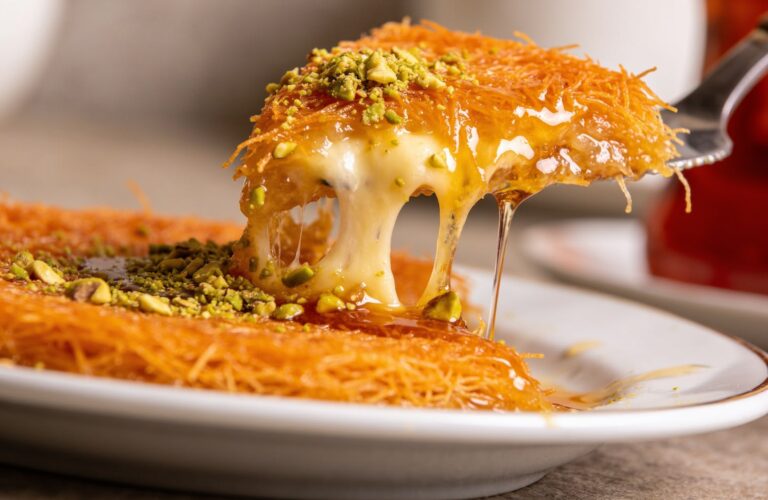
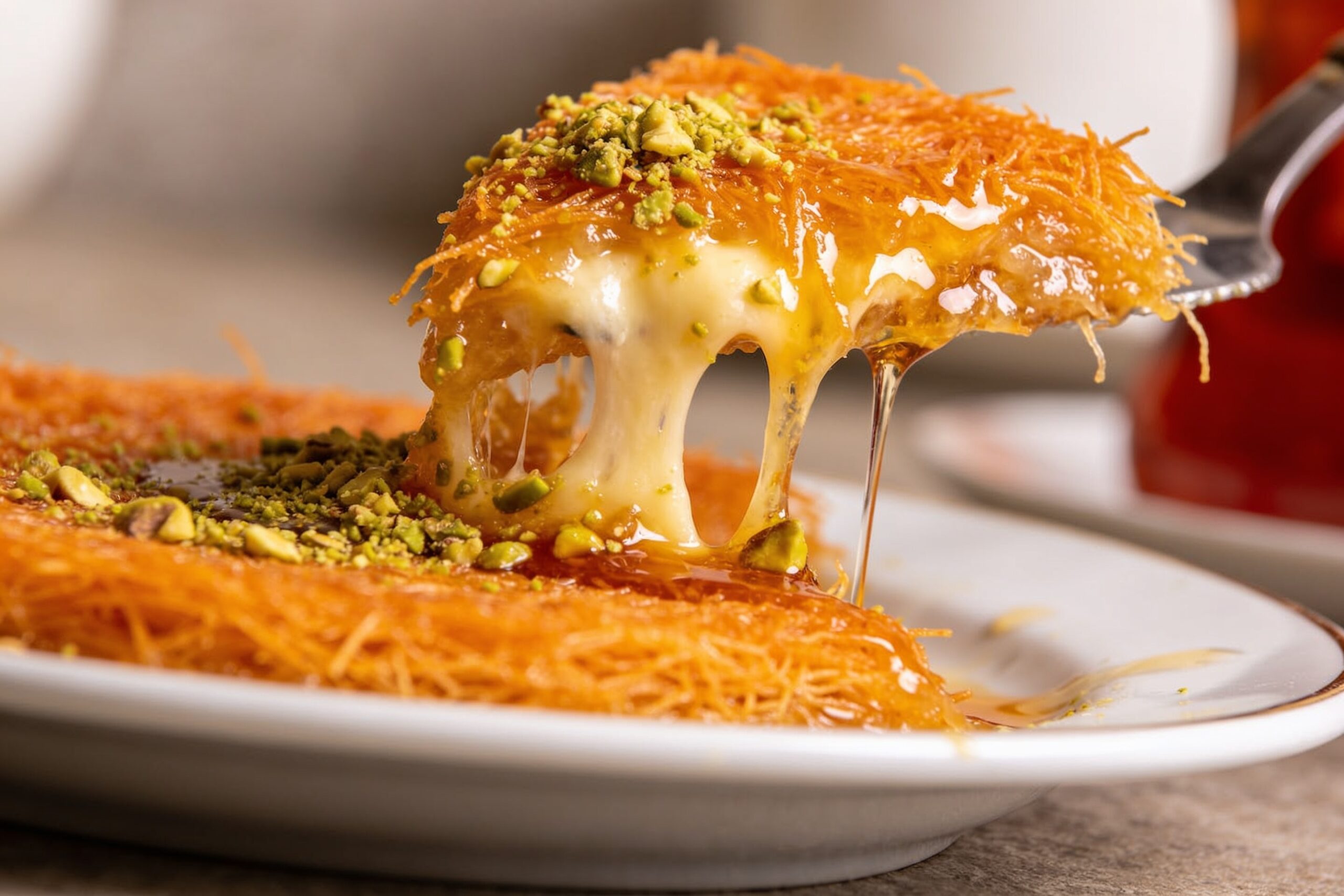
Knafeh is a stunning Levantine dessert that hits all the senses: crispy golden vermicelli pastry, stretchy melted cheese, and a sweet honey syrup perfumed with rose or orange blossom water. It’s baked until the pastry edges turn deep golden, then immediately drizzled with warm syrup so it soaks in while the cheese is still gooey. Serve it hot with crushed pistachios on top—it’s pure indulgence.
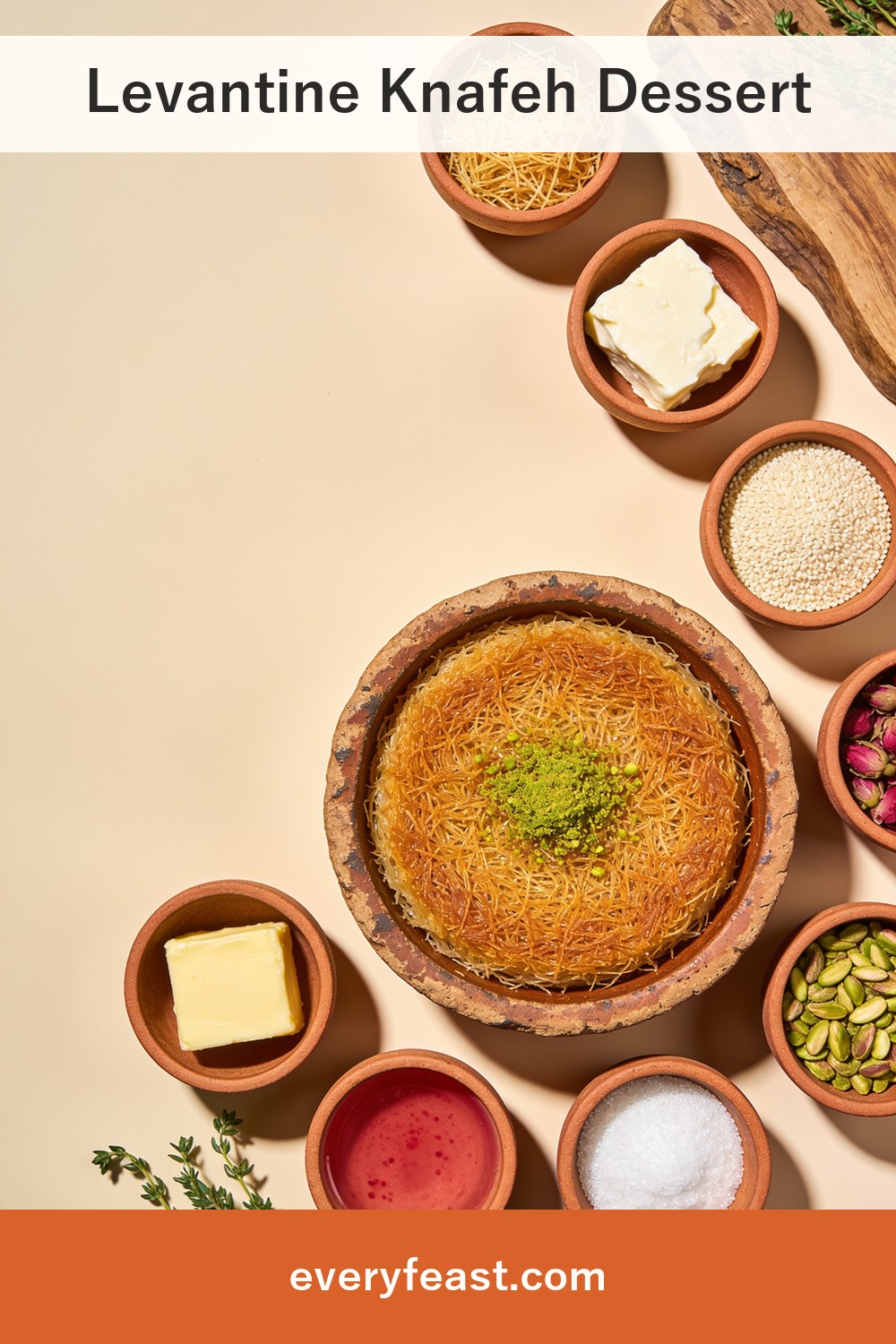
What is knafeh?
Knafeh is a traditional Levantine pastry dessert with a reputation for drama and deliciousness. Shredded crispy pastry (called kataifi or kunafa) forms a crust on the bottom and top, with a layer of stretchy white cheese—traditionally akkawi—melted in the center. The whole thing is baked until the pastry is golden and crunchy, then immediately drenched with warm sugar syrup infused with rose or orange blossom water. It’s best eaten warm with your hands or a fork, savored bite by crispy, cheesy, sweet bite.
Why you’ll love it
- Dramatically delicious: the contrast of crispy pastry, warm melted cheese, and fragrant syrup is unforgettable
- Looks impressive and tastes fancy, but the technique is surprisingly straightforward
- A show-stopping dessert that finishes a meal on a memorable note
Ingredients (serves 8)
| Ingredient | Amount | Where to find it / Substitutes |
|---|---|---|
| Kataifi (kunafa) pastry, shredded | 400 g (about 5 cups) | Frozen at Middle Eastern or specialty markets; thaw before use. Substitute: shredded filo pastry |
| Akkawi cheese (or similar mild white cheese), shredded | 250 g (2 cups) | Middle Eastern markets; or use fresh mozzarella, halloumi, or ricotta |
| Butter, melted | 150 g (0.75 cup) | Dairy aisle |
| Sugar | 200 g (1 cup) | Pantry |
| Water | 300 ml (1.25 cups) | Tap water |
| Lemon juice, fresh | 1 tbsp (15 ml) | Produce section |
| Rose water or orange blossom water | 2 tbsp (30 ml) | Specialty or Middle Eastern aisle; or vanilla extract as substitute |
| Crushed pistachios, for garnish | 50 g (0.5 cup) | Produce or nuts section; or use chopped almonds |
| Pinch of ground cardamom (optional) | — | Spice aisle |
Allergens: Wheat — kataifi is shredded phyllo dough, so this is not gluten-free. Dairy (akkawi or alternative cheese, butter). Tree nuts (pistachios).
How to make it
-
Prepare the syrup ahead: In a medium saucepan, combine sugar, water, and lemon juice. Bring to a boil over medium-high heat, stirring occasionally until sugar dissolves. Once boiling, remove from heat and stir in rose water and a pinch of cardamom (if using). Set aside to cool completely—the syrup must be cool or at room temperature when you pour it over the hot pastry.
-
Preheat and prepare: Preheat the oven to 180℃ (350℉). Butter a 23 × 33 cm (9 × 13 inch) baking pan or similar (about 2 L / 2 quart capacity).
-
Layer the base: In a large bowl, toss the thawed, shredded kataifi with half of the melted butter until all strands are coated. Spread half of this buttered kataifi evenly across the bottom of the prepared pan, pressing gently to create a compact layer.
-
Add the cheese: Spread the shredded akkawi cheese (or your cheese substitute) evenly over the kataifi base, leaving about 1 cm (0.5 inch) border on all sides.
-
Top crust: Toss the remaining kataifi with the remaining melted butter and spread evenly over the cheese layer, again pressing gently. Make sure the edges are tucked in so they crisp up nicely.
-
Bake: Place in the preheated oven and bake for 25–30 minutes until the top is golden-brown and the edges are deep caramel-brown. The cheese should be melted and slightly visible at the edges when you lift a corner.
-
Drench immediately: Remove from the oven and immediately pour the cooled syrup evenly over the hot knafeh. You’ll hear it sizzle—this is good. Let it rest for 5 minutes to absorb the syrup. Top with crushed pistachios.
-
Serve: Cut into squares or diamonds and serve warm, ideally within 10 minutes of coming out of the oven.
Tips for success
- Cool syrup, hot pastry: This is the golden rule. Hot syrup poured on hot pastry results in mushy, greasy knafeh. Cool syrup on hot pastry creates the perfect texture contrast.
- Use melted butter, not oil: Butter gives a richer flavor and better browning than neutral oil.
- Don’t skip the lemon juice in the syrup: It balances the sweetness and brightens the flavor profile.
- Shred the cheese finely: This helps it melt evenly and distribute throughout the pastry.
- Watch the edges: The edges brown faster than the center. If the pan’s edges are browning too quickly, loosely tent with foil for the last 10 minutes.
- Eat it hot: Knafeh is best enjoyed warm. As it cools, it hardens and loses its gooey charm.
Variations / Storage
- With pistachios inside: Layer half the shredded pistachios over the cheese layer before topping with the second kataifi layer.
- Extra floral: Use more rose or orange blossom water in the syrup (up to 3 tbsp / 45 ml) for a more aromatic version.
- Savory version: Omit the sugar and rose water, use a savory cheese filling, and drizzle with olive oil and za’atar for a different take.
- Individual servings: Use a muffin tin or small tartlet pans and reduce baking time to 15–18 minutes.
- Storage: Knafeh is best eaten the day it’s made. Store leftovers in an airtight container at room temperature and enjoy it soon; reheat gently in a 160℃ (320℉) oven for 5–8 minutes—storage life varies with conditions. Not recommended for freezing as the texture and syrup separation are poor.
FAQ
Q. Can I find kataifi pastry at regular grocery stores?
A. It’s less common but some supermarkets with good international sections carry frozen kataifi. Middle Eastern markets are your best bet. Call ahead to confirm availability.
Q. What if I can’t find akkawi cheese?
A. Fresh mozzarella, halloumi, or even ricotta work. Akkawi is mild and semi-firm; aim for something that won’t separate too aggressively when heated. Avoid sharp cheddars.
Q. Can I make this ahead?
A. The syrup can be made 2–3 days ahead and chilled. Assemble and bake just before serving for the best texture—assembled raw knafeh should be baked within a few hours.
Q. What’s the difference between knafeh and baklava?
A. Baklava uses sheets of filo pastry layered with nuts; knafeh uses shredded pastry with a cheese layer. Knafeh is typically served hot and wet with syrup; baklava can be served at room temperature.
Q. Why is my knafeh greasy?
A. Likely too much butter in the pastry, or the oven temperature was too low (the pastry didn’t crisp). Use the amount specified and verify your oven temperature with a thermometer. Also ensure the syrup is cool before pouring.