cook
cook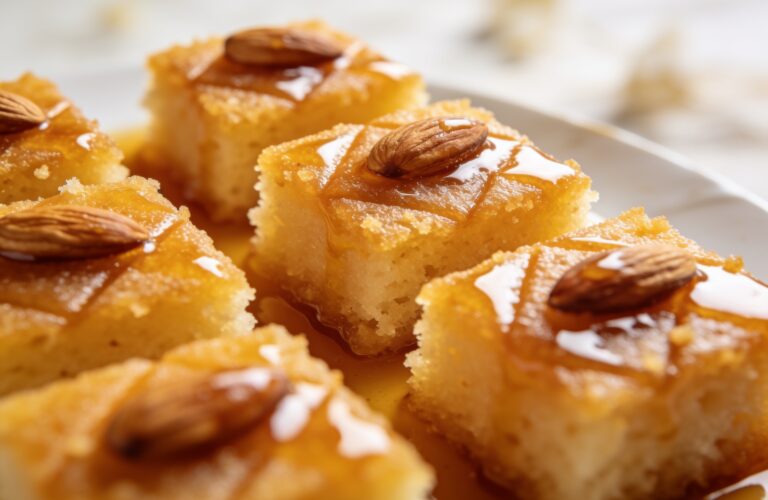
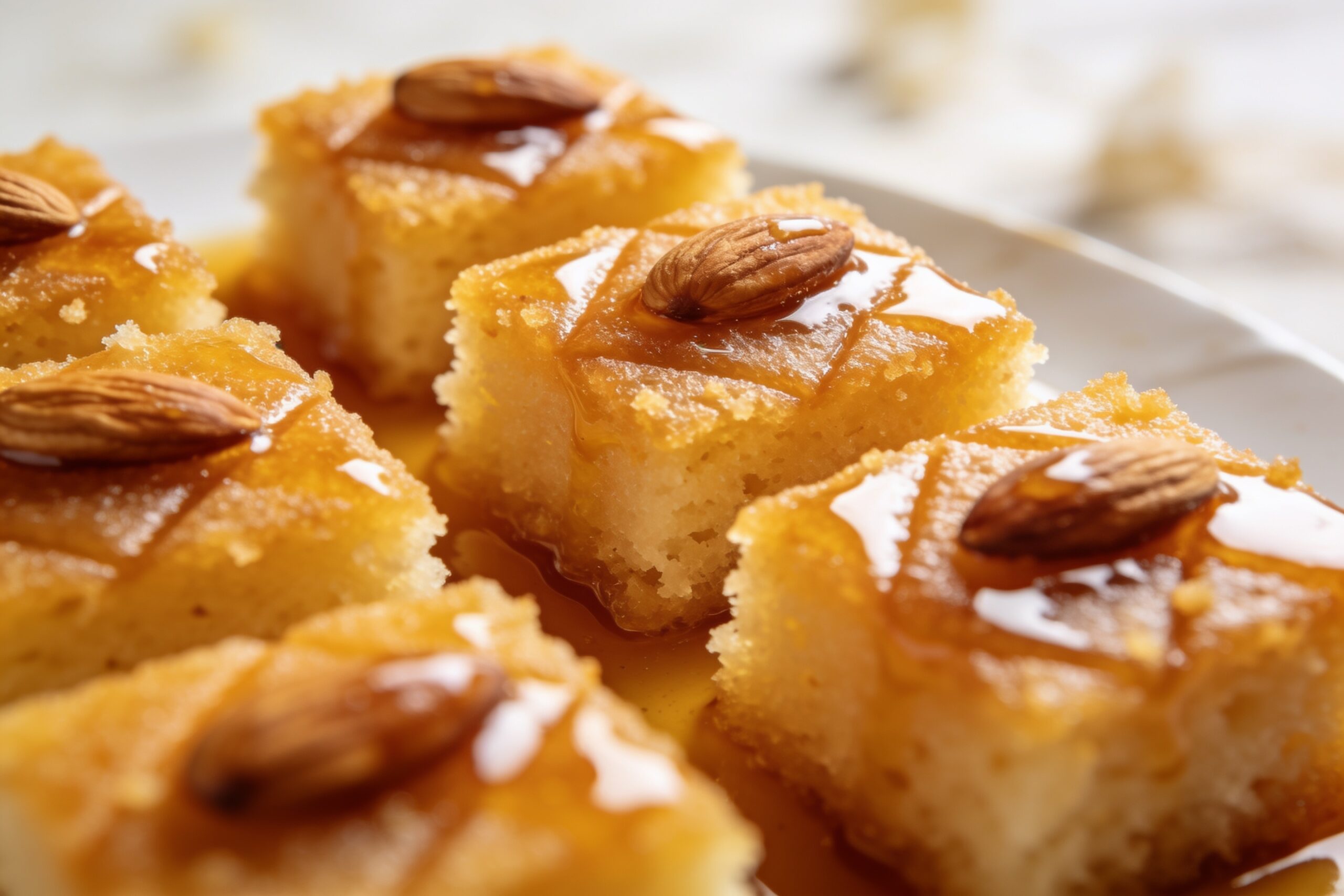
Basbousa is an easy Egyptian cake that comes together in minutes and tastes utterly luxurious. A tender crumb of semolina and coconut is baked until golden, then immediately drenched with warm simple syrup so it soaks into every bite. Topped with a single almond and cut into diamond or square shapes, it’s a classic sweet that appears on tables throughout the Levant and North Africa.
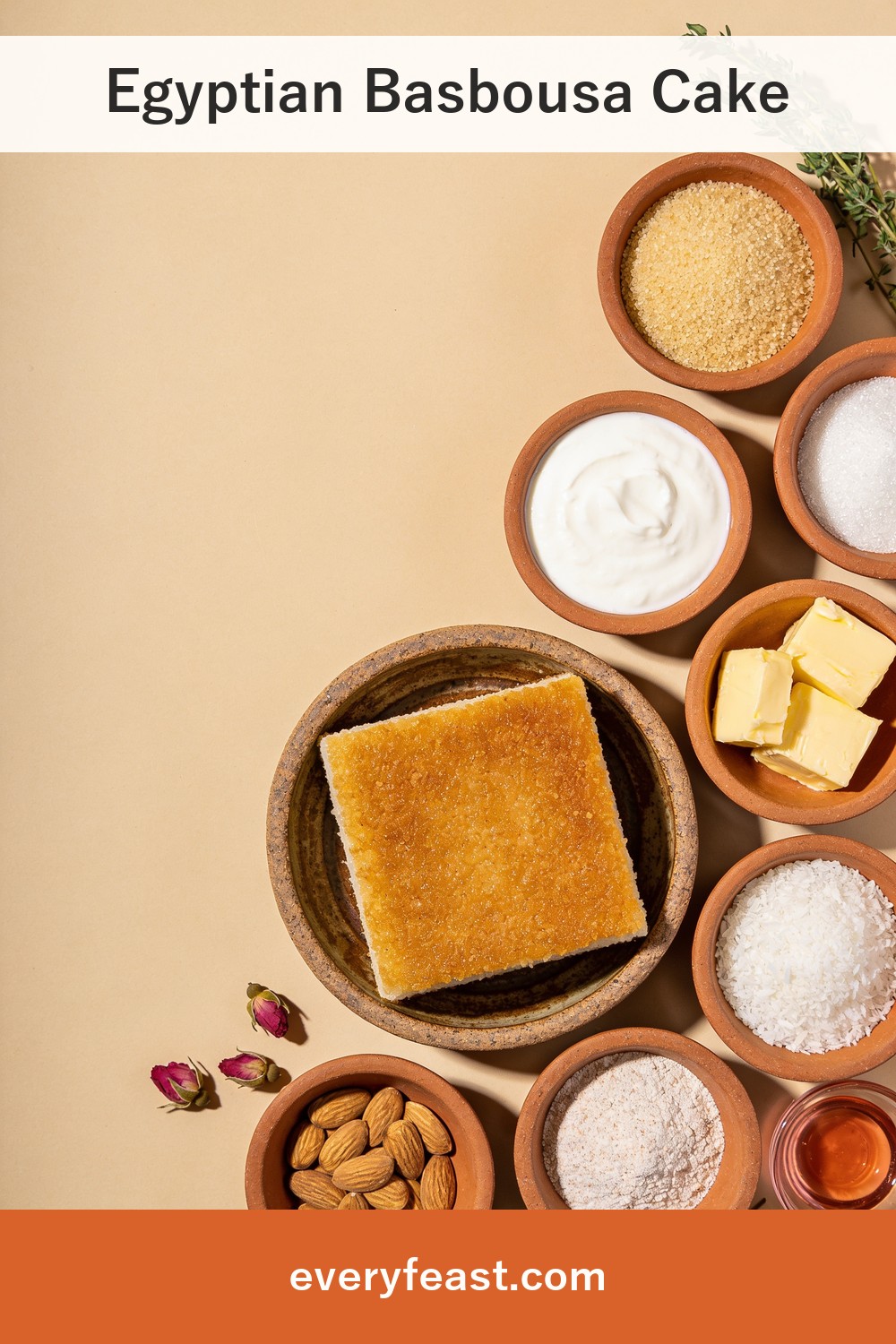
What is basbousa?
Basbousa (also spelled basboussa) is a traditional Egyptian and Middle Eastern dessert—a soft, dense cake made from semolina flour, shredded coconut, and yogurt. The dough is pressed into a pan, cut into pieces, topped with a whole almond or pine nut, baked until light golden, and then immediately soaked in cool simple syrup or honey. The result is a moist, slightly chewy cake with a complex sweetness that’s neither too rich nor too heavy.
Why you’ll love it
- Surprisingly easy to make with simple pantry ingredients; no mixer required
- Tender, moist, and crave-worthy; flavored with coconut and subtle sweetness
- Makes a big batch, freezes well, and improves as it sits—perfect for entertaining or meal prep
Ingredients (serves 12)
| Ingredient | Amount | Where to find it / Substitutes |
|---|---|---|
| Fine semolina flour | 200 g (1.75 cups) | Specialty, international, or baking aisle; or use polenta but adjust texture |
| Shredded unsweetened coconut | 150 g (1.5 cups) | Baking aisle or bulk section; or use sweetened coconut (reduce sugar slightly) |
| Plain yogurt | 150 g (0.75 cup) | Dairy aisle; full-fat works best |
| Granulated sugar | 100 g (0.5 cup) | Pantry |
| Baking powder | 1.5 tsp (7 g) | Baking aisle |
| Salt | 0.25 tsp | Pantry |
| Whole blanched almonds, for topping | 12 (40 g) | Nuts section; or use pine nuts, cashews, or candied cherries |
| Butter, melted | 30 g (2 tbsp) | Dairy aisle |
| For the syrup: Granulated sugar | 150 g (0.75 cup) | Pantry |
| For the syrup: Water | 150 ml (0.75 cup) | Tap water |
| For the syrup: Lemon juice | 1 tbsp (15 ml) | Produce section |
| For the syrup: Rose water or vanilla | 0.5 tsp (2.5 ml) | Specialty aisle or pantry |
Allergens: Wheat — semolina is durum wheat, so this is not gluten-free. Dairy (yogurt, butter). Tree nuts (almonds). Coconut.
How to make it
-
Make the syrup first: In a saucepan, combine 150 g sugar, 150 ml water, and 1 tbsp lemon juice. Bring to a boil over medium heat, stirring until sugar dissolves. Once boiling, remove from heat, stir in rose water or vanilla, and let cool completely at room temperature or in the refrigerator—the syrup must be cool.
-
Preheat and prepare: Preheat the oven to 190℃ (375℉). Lightly butter an 20 × 25 cm (8 × 10 inch) rectangular baking pan or similar (about 1.5 L / 1.5 quart capacity).
-
Mix the dough: In a large bowl, combine the semolina, shredded coconut, yogurt, 100 g sugar, baking powder, and salt. Stir until well combined—it will look like wet sand. The mixture should hold together when pressed. If too dry, add 1–2 tbsp more yogurt. Drizzle in the melted butter and stir until evenly distributed.
-
Press into the pan: Transfer the dough to the prepared pan and press firmly and evenly across the bottom with damp hands or the back of a spoon. Aim for an even thickness of about 1.5 cm (0.5 inch).
-
Score and top: Using a sharp knife, cut the dough into 12 diamond or square shapes. Place a whole almond or alternative topping on the center of each piece.
-
Bake: Place in the preheated oven and bake for 25–30 minutes until the top is light golden and the edges are slightly darker. The center should look set when you gently shake the pan.
-
Soak with syrup: Remove from the oven. Using a spoon, drizzle the cool syrup generously over the hot basbousa—it will sizzle and absorb quickly. Pour slowly so the syrup seeps into all the cuts and corners. Use all the syrup.
-
Cool and serve: Allow to cool at room temperature for at least 30 minutes before serving. Basbousa can be enjoyed warm or at room temperature.
Tips for success
- Use fine semolina, not coarse: Coarse semolina gives a gritty texture. If you can only find coarse, pulse it briefly in a food processor.
- Cool syrup is essential: Hot syrup on hot cake makes it soggy. Cool syrup is absorbed properly, creating the ideal texture.
- Don’t over-bake: Basbousa should be light golden, not brown. Over-baking dries it out.
- Press the dough firmly: A loose, airy cake will fall apart. Press evenly so it holds together after cutting.
- Use full-fat yogurt: Low-fat yogurt results in a drier cake.
- Plan ahead for the best flavor: Basbousa improves as it sits—make it a day or two ahead if possible.
Variations / Storage
- With pine nuts: Substitute pine nuts for almonds; they’re traditional in some regions.
- Vegan version: Replace yogurt with coconut yogurt or oat milk mixed with a pinch of vinegar, and skip the butter or use coconut oil.
- Pistachio version: Top with shelled pistachios instead of almonds.
- Extra coconut: Increase coconut to 200 g (2 cups) for a more coconut-forward flavor.
- Orange blossom syrup: Replace rose water with orange blossom water for a different floral note.
- Storage: Store basbousa in an airtight container at room temperature and enjoy it soon—storage life varies with conditions. It also freezes beautifully; thaw at room temperature. Refrigerate if your kitchen is very warm.
FAQ
Q. Is basbousa the same as basboussa or basboosa?
A. All three spellings are correct transliterations from Arabic. They refer to the same cake.
Q. Can I use self-rising flour instead of semolina?
A. Not ideal—the texture will be different. Semolina gives basbousa its characteristic tender crumb. If you must substitute, use all-purpose flour and increase baking powder to 2 tsp.
Q. Why is my basbousa dry?
A. Likely baked too long, or yogurt was too low-fat. Also ensure you’re soaking it with enough syrup—don’t be shy with the pour.
Q. Can I make this vegan?
A. Yes, use coconut yogurt or milk mixed with a squeeze of lemon juice in place of yogurt. Use coconut oil instead of butter. The texture will be slightly different but still delicious.
Q. How long does basbousa keep?
A. It’s best within a few days and keeps well in an airtight container at room temperature. The texture softens over time, which some prefer. Freezes well.