cook
cook
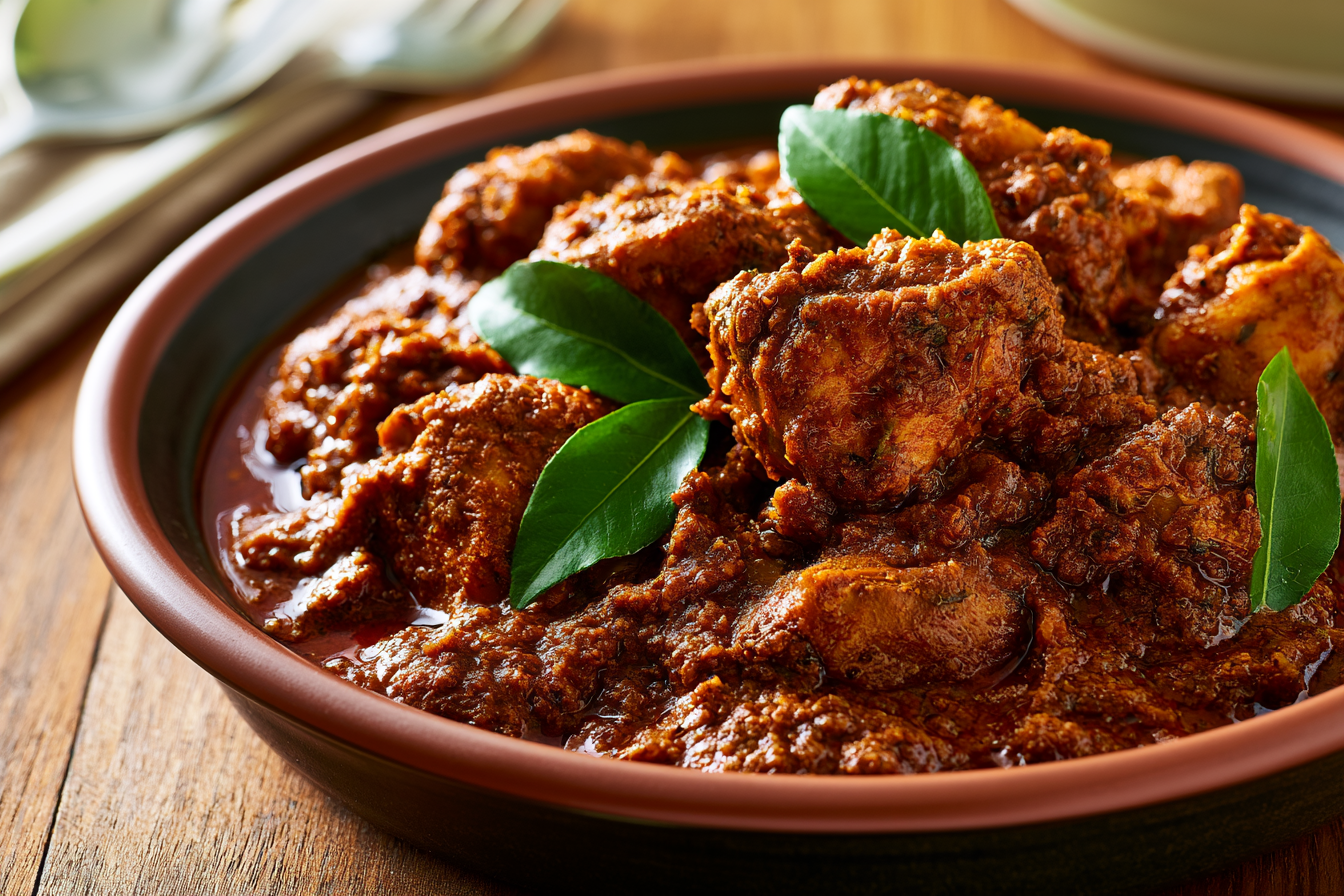
Chicken Chettinad is a legendary South Indian curry that showcases the bold, aromatic spices of the Chettinad region. Tender chicken pieces are cooked in a fragrant paste of roasted black pepper, fennel, star anise, and coconut, creating a dish that’s peppery, complex, and deeply aromatic. This is comfort food with character—serve it over rice or with flatbread, and watch your guests return for seconds.
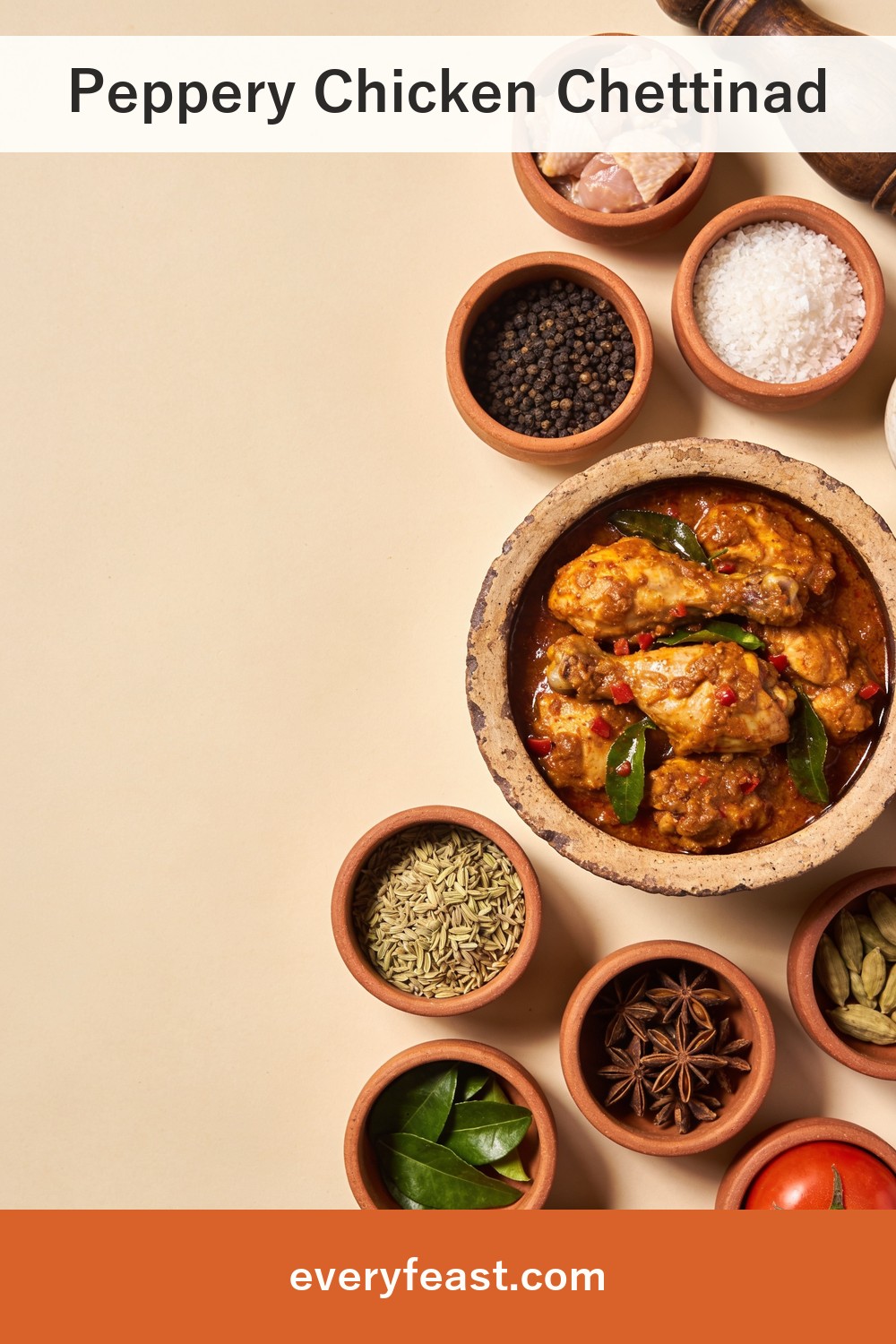
What is chicken chettinad?
Chicken Chettinad is a traditional curry from the Chettinad region of Tamil Nadu in South India. It’s made by cooking chicken pieces in a spice paste built on roasted black pepper, fennel seeds, star anise, and fresh coconut, balanced with the acidity of tomatoes and the sweetness of onions. The curry is aromatic, moderately spiced (though peppery rather than fiery), and rich with coconut flavor. Unlike some milder curries, Chettinad celebrates peppery heat and bold seasoning.
Why you’ll love it
- Deeply aromatic and complex, with toasted spices that smell incredible as it cooks
- Tender chicken in a creamy-yet-light coconut sauce; satisfying without being heavy
- Restaurant-quality dish that comes together at home in under an hour
Ingredients (serves 4)
| Ingredient | Amount | Where to find it / Substitutes |
|---|---|---|
| Boneless, skinless chicken thighs or breasts, cut into 1½-inch pieces | 750 g (1.5 lb) | Meat counter; thighs are juicier and more forgiving |
| Black peppercorns | 2 tbsp (about 20 g) | Spice aisle; freshly ground is essential |
| Fennel seeds | 1.5 tsp | Spice aisle; anise-like flavor, slightly sweet |
| Star anise | 3–4 pods | Spice aisle; warm, licorice-like note |
| Coriander seeds | 1 tsp | Spice aisle |
| Cumin seeds | 0.5 tsp | Spice aisle |
| Dried red chili | 2–3 | Spice aisle; adjust for heat preference |
| Fresh or frozen grated coconut | 100 g (¾ cup) | Asian grocery, frozen section; or use unsweetened coconut powder rehydrated with 4 tbsp water |
| Yellow onions, finely diced | 2 large (about 300 g) | Produce section |
| Garlic cloves, minced | 6 cloves | Fresh produce; or 2 tsp garlic paste |
| Fresh ginger, minced | 1 tbsp (about 15 g) | Produce section; or 1.5 tsp ginger paste |
| Tomatoes, diced (fresh or canned) | 400 g (about 1¾ cups) | Produce or canned aisle; use San Marzano if canned |
| Turmeric powder | 0.75 tsp | Spice aisle |
| Salt | To taste | Pantry |
| Sesame oil or neutral oil | 2 tbsp | Grocery or Asian market; ghee as alternative |
| Curry leaves (fresh or frozen) | 8–10 leaves | Asian produce or frozen section; optional but aromatic |
| Water | 250 ml (1 cup) | Tap water |
Allergens: Sesame oil (cooked), coconut. Chicken must be cooked fully through, no longer pink at the center. Dried chili may cause irritation; adjust quantity to preference.
How to make it
-
Roast and grind the spices: In a dry skillet over medium heat, add the black peppercorns, fennel seeds, star anise, coriander seeds, cumin seeds, and dried red chili. Toast for 2–3 minutes, stirring constantly, until fragrant and slightly darkened. Be careful not to burn. Transfer to a plate and let cool for 1 minute. Using a spice grinder, mortar and pestle, or high-powered blender, grind the cooled spices into a fine powder. You should have roughly 3–4 tablespoons of spice powder. Set aside.
-
Make the spice paste: In a blender or food processor, combine the grated coconut, ground spices, minced ginger, minced garlic, and 4–5 tablespoons water. Blend into a smooth, fragrant paste. If the paste is too thick to move, add water 1 tablespoon at a time. Set aside.
-
Cook the base: Heat the sesame oil in a large heavy-bottomed pot or deep skillet over medium heat. Add the diced onions and cook for 6–8 minutes, stirring frequently, until golden and softened. This develops sweetness and creates the flavor base. Add the tomatoes (with their juice if canned) and cook for 3–4 minutes, stirring occasionally, until the tomatoes begin to break down and release their liquid. Add the turmeric powder and stir well.
-
Add the spice paste: Pour the prepared coconut and spice paste into the pot, stirring well to combine. Cook over medium heat for 3–4 minutes, stirring constantly, until the paste loses its raw smell and the oil begins to separate slightly at the edges. The mixture should smell deeply aromatic.
-
Cook the chicken: Add the chicken pieces to the pot, stirring to coat them thoroughly with the spice paste. Increase the heat to medium-high and cook for 3–4 minutes, stirring occasionally, until the chicken is lightly browned on the outside (it doesn’t need to be fully cooked at this stage). Pour in the 250 ml water and the curry leaves (if using). Stir well, bring to a gentle simmer, and reduce heat to medium-low.
-
Simmer: Cover the pot partially (leave the lid slightly ajar) and simmer for 20–25 minutes, stirring occasionally, until the chicken is fully cooked through, no longer pink at the center, and tender. The sauce should reduce slightly and cling to the chicken pieces. If the sauce seems too thin after cooking, increase the heat to medium and simmer uncovered for a few more minutes. If too thick, add a little water. Taste and adjust salt.
-
Finish and serve: Taste the curry and adjust salt and spice level as desired. If you prefer a spicier sauce, add a pinch more chili powder. Serve hot over steamed white rice, with flatbread (naan or paratha), or alongside a cucumber salad to balance the heat.
Tips for success
- Roast the spices fresh: Toasting whole spices just before grinding unlocks their essential oils and creates a more vibrant flavor than pre-ground spice powder.
- Don’t skip the onion-and-tomato base: This creates the foundation of sweetness and acidity that balances the peppery spices.
- Use chicken thighs: Thighs are more forgiving than breast meat and stay moist even with slightly longer cooking. If using breast meat, check for doneness after 15 minutes.
- Cook the spice paste in oil: This step, called blooming the spices, ensures the flavors meld into the sauce rather than remaining separate.
- Adjust heat gradually: Add extra dried chili or chili powder at the end, after tasting. This gives you more control than adding it at the beginning.
Variations / Storage
- Vegetarian version: Replace chicken with 750 g firm tofu (pressed and cubed) or 500 g mushrooms. Reduce cooking time to 10–15 minutes since tofu and vegetables cook faster.
- Coconut-rich version: Stir in 100 ml coconut milk in the last 5 minutes of cooking for a creamier curry.
- With cashew paste: Soak 50 g raw cashews in hot water for 10 minutes, then blend into a paste. Add to the spice paste for creaminess and richness.
- Chettinad seafood: Substitute 600 g medium shrimp or firm white fish (cod, halibut). Reduce simmering time to 8–10 minutes, cooking only until seafood is opaque and cooked through.
- Storage: Transfer cooled curry to an airtight container and refrigerate for up to 3 days — storage life varies with conditions. The curry also freezes well for up to 2 months. Reheat gently over medium-low heat, adding a splash of water if the sauce has thickened, and stir in fresh curry leaves for maximum aroma.
FAQ
Q. How spicy is Chettinad chicken?
A. Chettinad is peppery and aromatic rather than fiery. The heat comes from black pepper, which is more gentle than chili powder. You control the spice level by adjusting the number of dried red chilies in step 1.
Q. Can I use store-bought curry paste?
A. Homemade is better, but yes—use 4–5 tablespoons of a good-quality curry paste in place of the ground spices and coconut paste. Adjust salt and taste after cooking.
Q. What if I can’t find fresh coconut?
A. Unsweetened frozen coconut works well. You can also use unsweetened coconut powder: measure ¾ cup powder and add 4 tablespoons water to rehydrate before blending into the paste.
Q. Can I make this in an Instant Pot?
A. Yes—follow steps 1–4 on the stovetop to build flavors. Then add the chicken and water, close the lid, and pressure cook on high for 8–10 minutes. Quick release, stir, and serve. Flavor may be slightly less developed due to shorter cooking time.
Q. Is Chettinad the same as other South Indian curries?
A. No—Chettinad is distinct for its use of roasted black pepper, fennel, and star anise, which give it a warmer, more aromatic character than other curries like korma or sambar.