cook
cook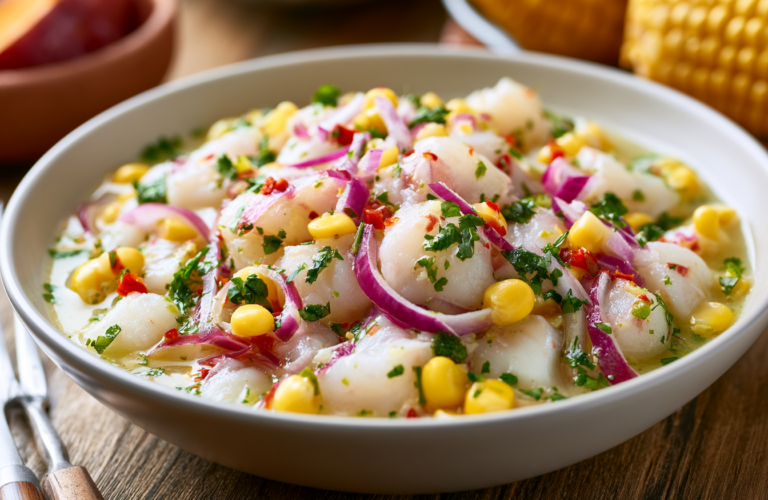
Ceviche is the pride of Peruvian coastal cooking — fresh, raw white fish “cured” not by heat but by the acidity of fresh lime juice, creating a dish that is bright, refreshing, and perfect for warm weather. Tender fish is combined with red onion, cilantro, and chili, then served with sweet potato and corn for a complete, balanced meal. While this dish is technically a raw-fish preparation, it is safe to eat when made with very fresh, sashimi-grade fish, kept thoroughly chilled, and understood as a dish where the fish remains technically raw (cured by acid, not heat). This recipe is for readers comfortable with raw fish preparations; those in vulnerable populations should skip ceviche entirely.
What is ceviche?
Ceviche is a Peruvian dish in which fresh raw fish is cured (not cooked) in fresh lime juice, combined with red onion, cilantro, ají (chili pepper), and salt, and typically served with sweet potato and corn. The lime juice denatures the protein in the fish, creating a texture similar to cooked fish, but the fish remains technically raw (not heat-cooked). Ceviche is light, acidic, and refreshing, and is one of Peru’s most iconic dishes. It is a staple of seaside restaurants and is equally popular as a restaurant dish and home meal in Peru and throughout South America.
Why you’ll love it
- Bright and refreshing: Lime juice, cilantro, and chili create a vibrant, zesty flavor profile that feels light and summery.
- Simple but impressive: Minimal ingredients and technique yield restaurant-quality results; a starter or light meal that tastes like you spent hours.
⚠️ Critical Food Safety Information
Ceviche is a raw fish dish. The fish is NOT cooked by heat — it is “cooked” by the acidity of lime juice. This means:
- Use only sashimi-grade or sushi-grade white fish from a trusted fishmonger or grocery seafood counter. Ask your fishmonger explicitly which fish is suitable for raw consumption. Ordinary grocery store fish is NOT safe for raw eating.
- Keep everything thoroughly chilled. Work with cold fish, cold equipment, and keep finished ceviche cold until serving. Serve immediately after assembly.
- Do NOT keep leftovers overnight. Ceviche is best eaten the day it is made.
- Pregnant people, very young children, elderly people, and immunocompromised individuals should NOT eat raw fish ceviche, as the risk of foodborne illness from raw seafood is higher for these groups. Consult a doctor if unsure.
If you are not comfortable working with raw fish, or if the above does not apply to your household, skip this recipe and consider cooked seafood dishes instead.
Ingredients (serves 4)
| Ingredient | Amount | Where to find it / Substitutes |
|---|---|---|
| CRITICAL: Sashimi-grade / sushi-grade white fish (mahi-mahi, snapper, halibut, or sea bass), diced into 1 cm (0.4 inch) pieces | 600 g (1.3 lbs) | Specialty seafood market or very fresh grocery seafood counter; ask explicitly for sashimi-grade; keep cold |
| Fresh lime juice (about 6–8 limes) | 180 ml (3/4 cup) | Fresh limes, juiced just before using (not bottled) |
| Red onion, thinly sliced | 1 small (about 100 g / 3.5 oz) | Produce section |
| Fresh cilantro, roughly chopped | 30 g (1 oz / 1 cup lightly packed) | Produce section; or parsley if cilantro is unavailable |
| Fresh ají or hot chili pepper (such as scotch bonnet or jalapeño), minced | 1–2 peppers | Produce section; adjust to your heat preference |
| Sea salt | 1 tsp | To taste; adjust as needed |
| Sweet potato, cooked and cut into cubes | 2 small (about 300 g / 10.5 oz) | Boil or roast before serving |
| Corn (fresh or frozen), cooked | 1 cup | Fresh corn kernels (from 1–2 ears) or frozen, thawed |
| Avocado, sliced (optional) | 1 ripe | Produce section; add just before serving if using |
Fish ⚠️: This dish requires sashimi-grade raw fish. Do NOT attempt with ordinary grocery fish.
Allergen: Fish
How to make it
-
Prepare the fish — fresh, cold, and just diced. About 30 minutes before assembling ceviche, purchase sashimi-grade fish from a trusted counter. Ask your fishmonger to confirm it is suitable for raw consumption. Dice into 1 cm (0.4 inch) cubes and place in a clean bowl on ice.
-
Juice fresh limes. Squeeze lime juice into a separate bowl (do not use bottled juice). You need enough juice to submerge the fish.
-
Cure the fish in lime juice (key step). Add diced cold fish to fresh lime juice. Stir gently and place the bowl on ice. Let sit for 5–10 minutes — the lime juice will denature the protein and the fish will turn opaque. The texture should become firm, similar to cooked fish. Do NOT let sit longer than 15 minutes or the texture becomes mushy.
-
Add onion, cilantro, chili. Drain most (but not all) of the lime juice from the fish, leaving just enough to keep it moist. Add thinly sliced red onion, chopped cilantro, minced chili, and sea salt to taste. Fold gently to combine. Taste and adjust salt and chili heat if needed.
-
Prepare sides. If you haven’t already, cook and cube sweet potato, and cook corn. Arrange on serving plates or a platter.
-
Serve immediately. Divide ceviche into serving bowls or onto plates alongside sweet potato and corn. If using avocado, slice and add just before serving. Eat immediately — ceviche does not keep and is best eaten fresh.
Tips for success
- Sashimi grade is non-negotiable. This fish has been handled and stored to standards that make it safe to eat raw. Regular supermarket fish has not and will cause foodborne illness.
- Work fast and keep cold. Assemble this dish as close to serving time as possible. Every minute the fish spends at room temperature increases risk.
- Fresh lime juice only. Bottled lime juice lacks the brightness and acidity of fresh; the result will taste flat.
- Don’t over-cure. 5–10 minutes in lime juice is enough to denature the fish. Longer times result in mushy texture and off flavors.
- Taste as you go. Add salt and chili gradually — you can always add more, and ceviche flavors are bright and should not be masked.
Variations / Storage
- Shrimp ceviche: Substitute cooked shrimp (thawed if frozen, cooked to firm) for raw fish. Shrimp does not require raw-fish handling precautions.
- Mixed seafood: Combine fish with cooked octopus or scallops for variety.
- Leche de tigre (Tiger’s Milk): A spiced lime broth made by curing fish briefly, then straining the liquid and re-flavoring with extra aromatics and spices. Advanced technique for next-level flavor.
- Storage: Do NOT store leftovers. Ceviche must be eaten the day it is made. The lime juice cure is not a preservation method and does not keep the fish safe after assembly. If you have leftover cooked sweet potato or corn, store separately.
FAQ
Q. Is ceviche really cooked if the fish is raw?
A. The lime juice denatures the protein, creating a texture and appearance similar to cooked fish. However, the fish is still technically raw — it is not heat-cooked. People who are uncomfortable eating raw fish should not eat ceviche.
Q. What if I can’t find sashimi-grade fish?
A. Do not attempt to make ceviche with ordinary grocery fish. Either find a trusted fishmonger with sashimi-grade fish, order online from a specialty supplier, or choose a different recipe.
Q. Can I make ceviche ahead?
A. No. Ceviche must be assembled and eaten the same day. The lime juice cure is not a preservation method. Prepare sides ahead, but assemble ceviche minutes before serving.
Q. How do I know if the fish is fresh enough?
A. Ask your fishmonger directly. Fresh fish for raw consumption should smell briny and clean (not “fishy”), have clear eyes, and firm flesh. When in doubt, do not buy it.
Q. Can I substitute bottled lime juice?
A. Fresh lime juice is essential for flavor and texture. Bottled juice lacks the acidity and brightness; the result will taste dull and over-cured.