cook
cook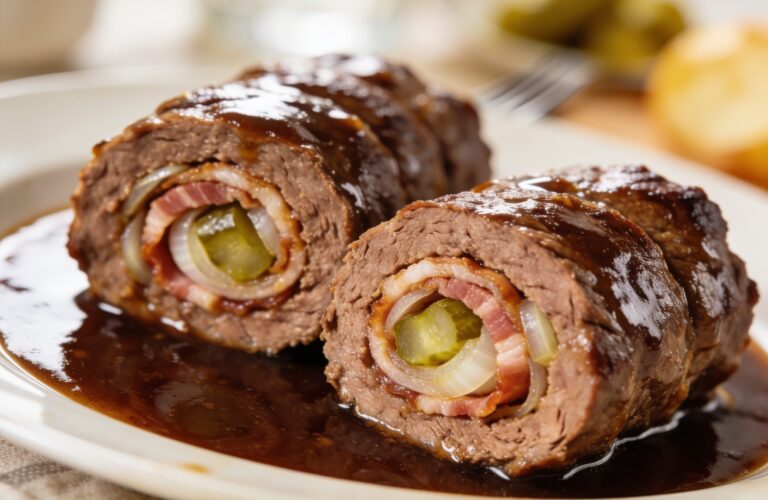

Rouladen are German beef rolls—thin slices of tender beef wrapped tightly around bacon, caramelized onions, and tangy pickles, then braised low and slow until the beef is fork-tender and the sauce is rich and glossy. This is soul-satisfying German comfort food: elegant enough for a special dinner, but deeply homey and approachable. Serve with egg noodles, mashed potatoes, or red cabbage.

What are rouladen?
Rouladen (or “Roulade” in English) are a traditional German main course of beef rolls. Thin slices of beef—typically round steak or sirloin—are pounded thin, spread with mustard, then layered with bacon, onions, and a dill pickle. The slices are rolled tightly, secured with string or toothpicks, then braised in broth and red wine until the meat is tender and the sauce is deeply savory. It’s an elegant presentation that’s easier to execute than it looks.
Why you’ll love it
- Impressive plated presentation: individual rolls are elegant and restaurant-quality
- Layered flavors: savory bacon, pickled tang, caramelized onions, and tender beef create complexity
- Makes its own sauce while braising—no extra work, maximum flavor
Ingredients (serves 4)
| Ingredient | Amount | Where to find it / Substitutes |
|---|---|---|
| Beef round or sirloin steak (thin-cut) | 800 g (1.75 lb) | Meat counter; ask the butcher to slice thin or pound for you |
| Bacon slices | 8 slices (200 g / 7 oz) | Meat counter; or use pancetta |
| Yellow onions, thinly sliced | 2 medium | Produce section |
| Dill pickle spears | 8 spears (about 100 g / 3.5 oz) | Condiment aisle; use sour dill for authentic flavor |
| Yellow mustard | 4 tbsp | Condiment aisle |
| Butter or oil | 2 tbsp | Pantry staples |
| Beef broth | 500 ml (2 cups) | Broth aisle; or use half broth and half red wine |
| Red wine (optional but recommended) | 250 ml (1 cup) | Wine section; or use additional broth |
| Tomato paste | 1 tbsp | Canned vegetable aisle |
| Salt, black pepper, paprika | To taste | Pantry staples |
| Flour (for dusting) | 2 tbsp | Pantry staples |
Allergens: Beef, pork (bacon); may contain mustard, dill. Beef must be fully cooked through, no pink in the center.
How to make it
-
Prep the beef: If the beef slices are thick, pound them between two pieces of plastic wrap until about 5 mm (¼ inch) thick. Lay the slices out on a work surface, and season lightly with salt and pepper.
-
Caramelize the onions: Heat butter in a large skillet over medium heat. Add the sliced onions and cook for 12–15 minutes, stirring occasionally, until soft and deeply golden. Set aside.
-
Assemble the rolls: Spread about 1 tbsp of mustard on each beef slice. Layer with 1 slice of bacon, a small handful of caramelized onions, and 1 pickle spear. Roll tightly from one short end, tucking in the sides as you go. Secure each roll with kitchen string or 2–3 toothpicks to hold the filling in place.
-
Sear the rolls: Dust the rouladen lightly with flour. Heat a large, heavy skillet (preferably one that can go in the oven) over medium-high heat. Working in batches if necessary, sear the rouladen on all sides for about 2 minutes per side, until golden brown. Remove and set aside.
-
Build the sauce and braise: Reduce heat to medium. Add the tomato paste to the skillet and stir for 1 minute. Pour in the beef broth and red wine (if using), scraping up any browned bits from the bottom. Return the rouladen to the skillet, nestling them into the liquid. Season with salt, pepper, and paprika. Bring to a simmer, then cover partially or transfer to a 160℃ (320℉) oven.
-
Braise until tender: Braise for 40–50 minutes, turning the rouladen halfway through, until the beef is very tender when pierced with a fork. The internal temperature should reach 70℃ (160℉). Remove the string or toothpicks and serve hot with the braising sauce spooned over.
Tips for success
- Pound the beef thin: Thin, even slices cook quickly and make rolling easier. Ask your butcher to do this, or use a meat mallet between plastic wrap.
- Don’t overstuff: A modest filling (bacon, onions, one pickle spear) is enough. Overstuffing makes rolling difficult and may cause filling to escape.
- Caramelize the onions first: Deep golden onions contribute sweetness and body to the braise. Don’t skip this step or rush it.
- Secure the rolls properly: Use kitchen string or toothpicks to hold the filling in place during searing and braising. This ensures even cooking and keeps the filling intact.
- Braise low and slow: Gentle, simmering heat keeps the beef tender. Rapid boiling can toughen the meat.
Variations / Storage
- With horseradish: Add a touch of prepared horseradish to the mustard spread for extra sharpness.
- Vegetarian rouladen: Omit the bacon and fill with sautéed mushrooms, caramelized onions, and pickle for a meatless version.
- With capers: Replace or supplement the pickle spear with brined capers for a different brine flavor.
- Creamy sauce: Finish the braise by stirring in 100 ml (0.4 cup) of sour cream or crème fraîche off the heat for a silky, rich sauce.
- Storage: Cover and refrigerate leftover rouladen and sauce in an airtight container for up to 3 days — storage life varies with conditions. Reheat gently in a 160℃ (320℉) oven with a little added broth, covered, for 15–20 minutes until warmed through.
FAQ
Q. Can I make rouladen ahead of time?
A. Yes—assemble and refrigerate the uncooked rolls for up to 12 hours, then sear and braise as directed. The braise also freezes well for up to 3 months.
Q. What if my beef rolls come undone while braising?
A. Secure them more tightly with string, or use toothpicks in addition. Ensure the broth is simmering gently, not boiling rapidly, which can agitate the rolls.
Q. Can I use a different cut of beef?
A. Yes—any thin, tender cut works: flank steak, skirt steak, or thin slices of sirloin. Avoid very lean cuts, which can dry out. Ask your butcher for a tender, thin-sliceable cut.
Q. What should I serve with rouladen?
A. Egg noodles tossed with butter and parsley, mashed potatoes, or tangy red cabbage are classic. Serve the braising sauce over everything.
Q. Why is my sauce thin and watery?
A. If the braise liquid hasn’t reduced enough, simmer uncovered for a few minutes after the meat is cooked to concentrate the sauce. Alternatively, whisk together a slurry of 1 tbsp cornstarch and 2 tbsp cold water, stir into the simmering sauce, and cook for 1–2 minutes until thickened.