cook
cook
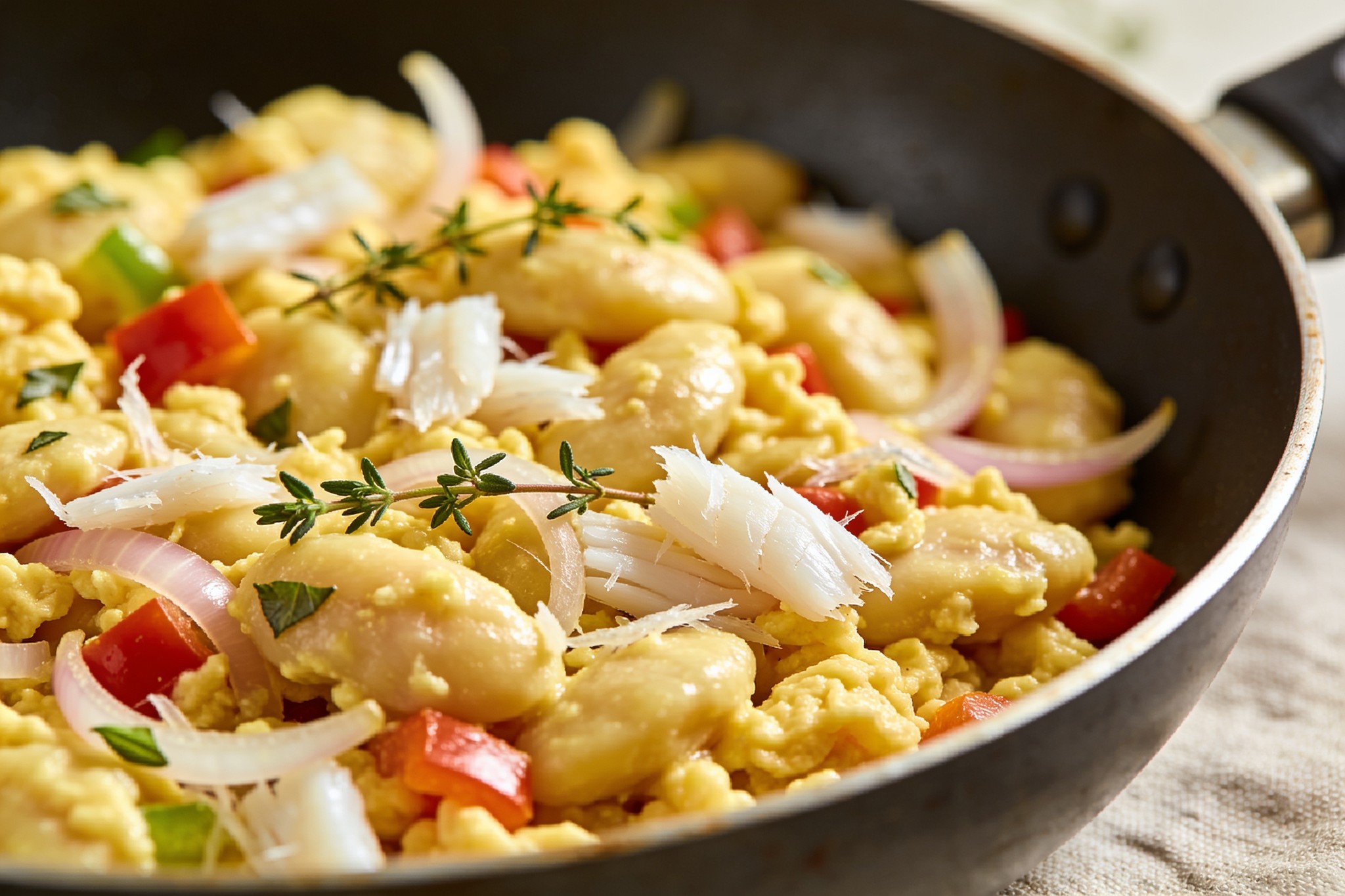
Ackee and saltfish is Jamaica’s national dish and the country’s most iconic breakfast. Salt cod is desalted and sautéed with onions, tomatoes, and peppers until savory and tender, then topped with soft, buttery ackee fruit—a tropical wonder with a custard-like texture. It’s rich, it’s aromatic, it’s a taste of the Caribbean, and it’s simpler to make at home than you might think.

What is ackee and saltfish?
Ackee and saltfish is a classic Jamaican dish that pairs preserved salt cod with ackee, a tropical fruit native to West Africa but deeply embedded in Jamaican culture. The salt cod brings umami and a subtle briny depth; the ackee adds a delicate, buttery richness. Together, they’re typically served for breakfast alongside fried plantain, boiled dumplings, and a cup of cocoa tea. It’s comfort food with Caribbean roots.
Why you’ll love it
- Uniquely flavorful: the combination of briny salt cod and creamy ackee is like nothing else
- A complete breakfast or light dinner with pantry staples that keep for months
- Authentic Caribbean cuisine that feels restaurant-quality but comes together in 40 minutes
Ingredients (serves 4)
| Ingredient | Amount | Where to find it / Substitutes |
|---|---|---|
| Salt cod (dried, whole or fillets) | 350 g (0.75 lb) | Latin/Caribbean aisle or specialty fish market; soak to desalt overnight or use canned/bottled pre-desalted |
| Canned ackee (MUST be canned or fully ripened fresh fruit) | 400 g (1 can) | Latin/Caribbean aisle or online; NEVER use unripe or unprocessed ackee |
| Yellow onions, finely diced | 2 medium | Produce section |
| Garlic, minced | 3 cloves | Fresh produce |
| Tomatoes (fresh, diced, or canned) | 300 g (2 medium fresh or 1 can diced) | Produce section or canned vegetable aisle |
| Red or yellow bell peppers, diced | 1 large | Produce section |
| Scallions (green onions), chopped | 2–3 stalks | Produce section |
| Fresh thyme sprigs (or dried) | 2–3 sprigs (or 0.5 tsp dried) | Fresh herbs or dried spice aisle |
| Vegetable oil or coconut oil | 3 tbsp | Pantry staples |
| Black pepper and salt (to taste) | To taste | Pantry staples |
| Hot peppers or Scotch bonnet (optional, for heat) | 1 small | Produce section or dried in international aisle; optional but traditional |
Allergens: Fish (salt cod); shellfish (if using shrimp paste in some regional variations). CRITICAL SAFETY WARNING: Ackee must always be canned or from a fully ripened fruit that has opened naturally on the tree. Unripe or force-opened ackee contains toxins (hypoglycins A and B) that can cause severe hypoglycemia and serious illness. Do NOT use raw, unripe, or improperly processed ackee under any circumstances. When purchasing fresh ackee, ensure it is from a reputable Caribbean market and has split naturally. Salt cod must be fully desalted through soaking with multiple water changes to remove excess salt.
How to make it
-
Desalt the salt cod (start the night before or 8 hours ahead): Place the dried salt cod in a large bowl and cover completely with cold water. Let soak for 8–12 hours at room temperature, changing the water 3–4 times (every 2–3 hours). Drain well. The flesh should be soft and taste mildly salty, not intensely briny. If using pre-desalted canned or bottled salt cod, skip this step.
-
Prepare the salt cod: Drain the desalted salt cod thoroughly. Place it in a pot of fresh cold water and bring to a gentle simmer over medium heat. Cook for 10–12 minutes until the flesh flakes easily. Drain, let cool slightly, and carefully remove any small bones or skin. Flake the meat into bite-sized pieces and set aside.
-
Sauté the aromatics: Heat the oil in a large skillet or sauté pan over medium heat. Add the diced onions and cook, stirring occasionally, for 4–5 minutes until softened and golden. Add the minced garlic and cook for 1 minute until fragrant.
-
Build the sauce: Add the diced bell peppers and cook for 3–4 minutes until just tender. Stir in the diced tomatoes (fresh or canned) and fresh thyme. Cook for 3–5 minutes, stirring occasionally, to develop the flavors. The sauce should be warm and slightly reduced.
-
Add the salt cod: Fold the flaked salt cod gently into the tomato mixture. Stir carefully to combine, cooking for 2–3 minutes until the salt cod is warmed through. Taste and season with black pepper; add salt sparingly since salt cod retains some saltiness even after desalting.
-
Fold in the ackee: Remove the pan from heat or reduce to very low heat. Open the can of ackee carefully and gently fold the fruit into the warm salt cod mixture using a light hand—ackee is delicate and will break apart easily. Do not stir vigorously; a few gentle folds are enough to distribute it. The ackee should warm through but remain intact. If you’re using fresh ripe ackee, prepare it the same way: handle very gently and fold in at the last moment.
-
Finish and serve: Transfer to a serving platter or individual plates. Garnish with chopped scallions and a grinding of fresh black pepper. Serve hot with fried plantain, boiled dumplings, or a simple green salad on the side. A cup of hot cocoa tea or sorrel is the traditional accompaniment.
Tips for success
- Desalting is not optional: Inadequately desalted salt cod will make the entire dish unpalatably salty. Change the water frequently and taste it at each stage.
- Handle ackee with extreme gentleness: The fruit’s delicate, custard-like texture breaks apart if stirred vigorously. Fold it in with a light hand, aiming for a few distinct pieces rather than a uniform mash.
- Canned ackee is safest: While fresh ripe ackee is traditional, canned ackee is reliably safe, readily available, and already cooked. Fresh ackee must be fully ripened and naturally split—never force-open an ackee fruit, as unripe fruit is toxic.
- Taste as you build: Different salt cod brands vary in residual saltiness. Taste the flaked fish before combining with the sauce, and adjust salt and pepper accordingly.
- Use a gentle simmer: High heat can break down the ackee and overcook the delicate fish. Keep temperatures moderate.
Variations / Storage
- With shrimp: Add 200 g (0.5 lb) of peeled raw shrimp to the pan in step 4, cooking until opaque before adding the salt cod.
- Spicier version: Add 1 finely diced Scotch bonnet or habanero pepper with the onions (remove it before serving if you prefer milder heat).
- With butter and thyme: Finish by swirling in 1 tbsp of butter and a fresh squeeze of lime juice for extra richness.
- Storage: Ackee and saltfish is best enjoyed fresh and hot. Leftovers can be stored in an airtight container in the refrigerator for up to 2 days — storage life varies with conditions. Reheat gently over low heat or in a microwave, being careful not to break apart the ackee. Do not freeze; freezing damages the ackee’s texture irreversibly.
FAQ
Q. Where do I buy canned ackee?
A. Caribbean markets, international grocery stores, and online retailers carry canned ackee. Brands like Grace and Caribbean Choice are widely available and reliable.
Q. Can I use fresh ackee instead of canned?
A. Only if the fresh ackee is fully ripened and has split open naturally on the tree. Never use unripe, canned-unripe, or force-opened ackee—it contains toxins that cause serious illness. When in doubt, use canned ackee, which is always safe.
Q. How do I know if my salt cod is desalted enough?
A. Taste a small piece of the flaked fish after cooking. It should taste gently salty, like a mild ocean breeze, not aggressively briny. If it’s still too salty, soak it a bit longer and change the water again.
Q. What’s a good substitute for ackee?
A. There is no true substitute for ackee’s texture and mild flavor. Soft scrambled eggs are sometimes used as a substitute dish in Jamaica (called “eggs and saltfish”), but it’s a different dish altogether.
Q. Can I prepare the salt cod ahead?
A. Yes, desalt and cook the salt cod up to 1 day ahead; store it in an airtight container in the refrigerator. Reheat gently before combining with the tomato sauce and ackee.