cook
cook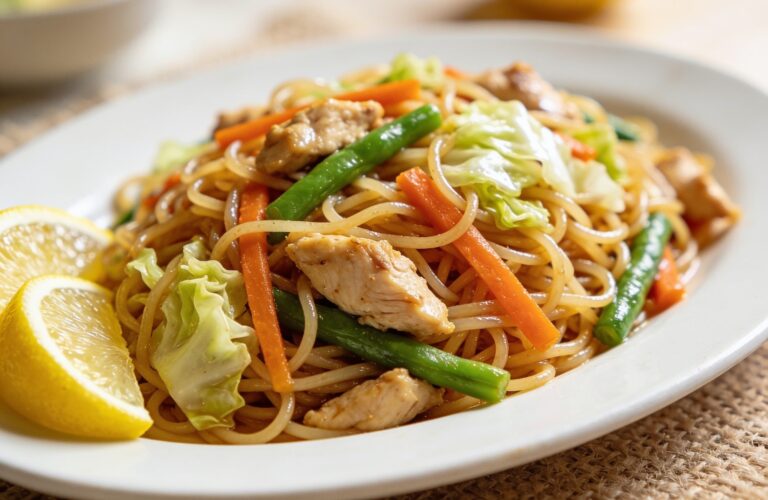

Pancit is Filipino comfort food at its finest—a simple, satisfying stir-fry of noodles, protein, and vegetables brought together with salty, savory seasoning. Whether it’s rice noodles (pancit bihon) or wheat noodles (pancit canton), this one-pan dinner is ready in under 30 minutes and tastes like it came from a bustling street vendor. It’s the kind of dish that tastes even better when made ahead, making it perfect for meal prep and leftovers that actually improve overnight.

What is pancit?
Pancit is an umbrella term for Filipino noodle dishes, but the most common home version—pancit canton (wheat noodles) or pancit bihon (rice noodles)—is a stir-fry where pre-cooked noodles are tossed with protein (pork, shrimp, or chicken), vegetables, and a light sauce flavored with soy sauce and oyster sauce. Unlike Asian noodle soups, pancit is dry and meant to be eaten with your hands or a spoon and fork. It appears at celebrations, gatherings, and weeknight dinners alike, and Filipino tradition holds that eating the longest unbroken noodle brings long life.
Why you’ll love it
- One-pan, under 30 minutes; minimal prep and maximum flavor
- Naturally flexible—use whatever vegetables and proteins you have on hand
- Even better as leftovers; store in the fridge and reheat for a quick lunch or dinner
Ingredients (serves 4)
| Ingredient | Amount | Where to find it / Substitutes |
|---|---|---|
| Fresh or dried egg noodles (pancit canton) or rice noodles (pancit bihon) | 300 g (10 oz) | Asian aisle or noodle section; or use any thin wheat or rice noodle |
| Pork shoulder or loin, thinly sliced | 250 g (0.5 lb) | Meat counter; or use chicken breast |
| Large shrimp, peeled and deveined | 150 g (about 12 pieces) | Fish counter or frozen seafood; or omit and double the pork |
| Yellow onion, thinly sliced | 1 medium | Produce section |
| Garlic, minced | 3 cloves | Fresh produce; or 1 tsp garlic paste |
| Carrots, julienned (matchstick-cut) | 1 medium | Produce section; or use sliced snap peas |
| Cabbage (green or napa), thinly sliced | 200 g (about 2 cups) | Produce section |
| Green onions (scallions), cut into 3 cm (1.25 inch) pieces | 3 stalks | Produce section; save some for garnish |
| Soy sauce | 3 tbsp | Pantry staples |
| Oyster sauce | 1 tbsp | Asian aisle |
| Vegetable oil | 3 tbsp | Pantry staples |
| Lemon wedges (for serving) | 1 lemon | Produce section |
| Salt and black pepper | To taste | Pantry staples |
Allergens: Wheat (in egg noodles); soy and soy sauce; shrimp. Pork and shrimp must be fully cooked through—pork until no longer pink at the center, shrimp until fully opaque and firm. Check soy sauce for wheat and other allergens.
How to make it
-
Cook the noodles: Bring a large pot of water to boil and cook the noodles according to package directions until just tender. Drain and set aside. If using dried noodles, you can boil them 1 hour ahead and lightly oil them to prevent sticking.
-
Prepare the pan: Heat 1.5 tbsp of the vegetable oil in a large skillet or wok over medium-high heat. Once hot, add the minced garlic and cook for 30 seconds until fragrant.
-
Cook the protein: Add the sliced pork and cook for 5–7 minutes, stirring frequently, until fully cooked through and no longer pink. Add the shrimp and cook for another 3–4 minutes, stirring constantly, until the shrimp are fully opaque and firm. The internal temperature of pork should reach 63℃ (145℉) and shrimp should reach 60℃ (140℉).
-
Sauté the vegetables: Push the cooked pork and shrimp to the side. Add the remaining 1.5 tbsp oil to the empty side of the pan. Add the sliced onion and cook for 3–4 minutes until softened. Add the julienned carrots and sliced cabbage, and cook for another 4–5 minutes, stirring occasionally, until the cabbage is tender but still slightly crisp.
-
Combine and season: Add the cooked noodles to the pan with the vegetables and protein. Pour the soy sauce and oyster sauce over top and toss everything together vigorously for 2–3 minutes, breaking apart any clumps and ensuring even distribution of sauce. Add the green onion pieces and toss once more. Taste and adjust salt and black pepper as needed—be careful with salt since soy sauce is already salty.
-
Serve: Transfer to serving plates or a large platter. Garnish with extra sliced green onion and serve with lemon wedges on the side for squeezing over individual portions.
Tips for success
- Cook noodles al dente: Slightly undercooked noodles hold up better to stir-frying. They’ll soften more as they toss in the pan.
- Slice pork thinly: Thin slices cook quickly and evenly. If your pork is thick, place it in the freezer for 15 minutes, then slice against the grain.
- Don’t crowd the pan: Work in batches if necessary. Overcrowded pans steam rather than sear, and proteins won’t brown.
- Toss vigorously: The more you toss the noodles, the more evenly the sauce distributes and the better the texture. Don’t be gentle.
- Serve immediately: Pancit is best hot and fresh. If making ahead, reheat gently in a skillet or wok with a splash of water.
Variations / Storage
- Vegetarian pancit: Omit the meat and shrimp; add extra vegetables like mushrooms, bell peppers, broccoli, or tofu (fried or pressed).
- Chicken pancit: Replace pork and shrimp with 400 g (0.75 lb) diced chicken breast; cook until no longer pink.
- Seafood-heavy: Add 150 g (0.75 cup) cooked squid rings or mussels along with the shrimp.
- Brown sauce version: Add 2 tbsp oyster sauce and 1 tbsp soy sauce with a splash of water for a wetter, glossier finish.
- Storage: Store in an airtight container in the refrigerator for up to 3 days — storage life varies with conditions. Reheat in a skillet over medium heat, adding a splash of water or soy sauce to restore moisture. Pancit actually tastes richer the next day as flavors meld.
FAQ
Q. What’s the difference between pancit canton and pancit bihon?
A. Canton uses wheat egg noodles (thicker and chewier); bihon uses thin rice noodles (lighter and more delicate). Both work beautifully in this recipe—it’s a personal preference.
Q. Can I use already-cooked rotisserie chicken?
A. Yes—shred 1.5 cups (about 300 g) of cooked rotisserie chicken and add it at step 5 to warm through. This saves time.
Q. Is pancit supposed to be wet or dry?
A. Dry or mostly dry—the noodles should be coated with sauce but not swimming in liquid. If your pancit is too wet, cook uncovered for another minute or two to let excess moisture evaporate.
Q. Can I make pancit ahead and reheat it?
A. Yes—it reheats beautifully and often tastes better the next day. Store in an airtight container and reheat in a skillet with a splash of water or broth.
Q. What should I serve with pancit?
A. Pancit is typically eaten as a complete meal, but you can serve it with steamed white rice, a simple salad, or pickled papaya (atchara) for authentic flavor.