cook
cook
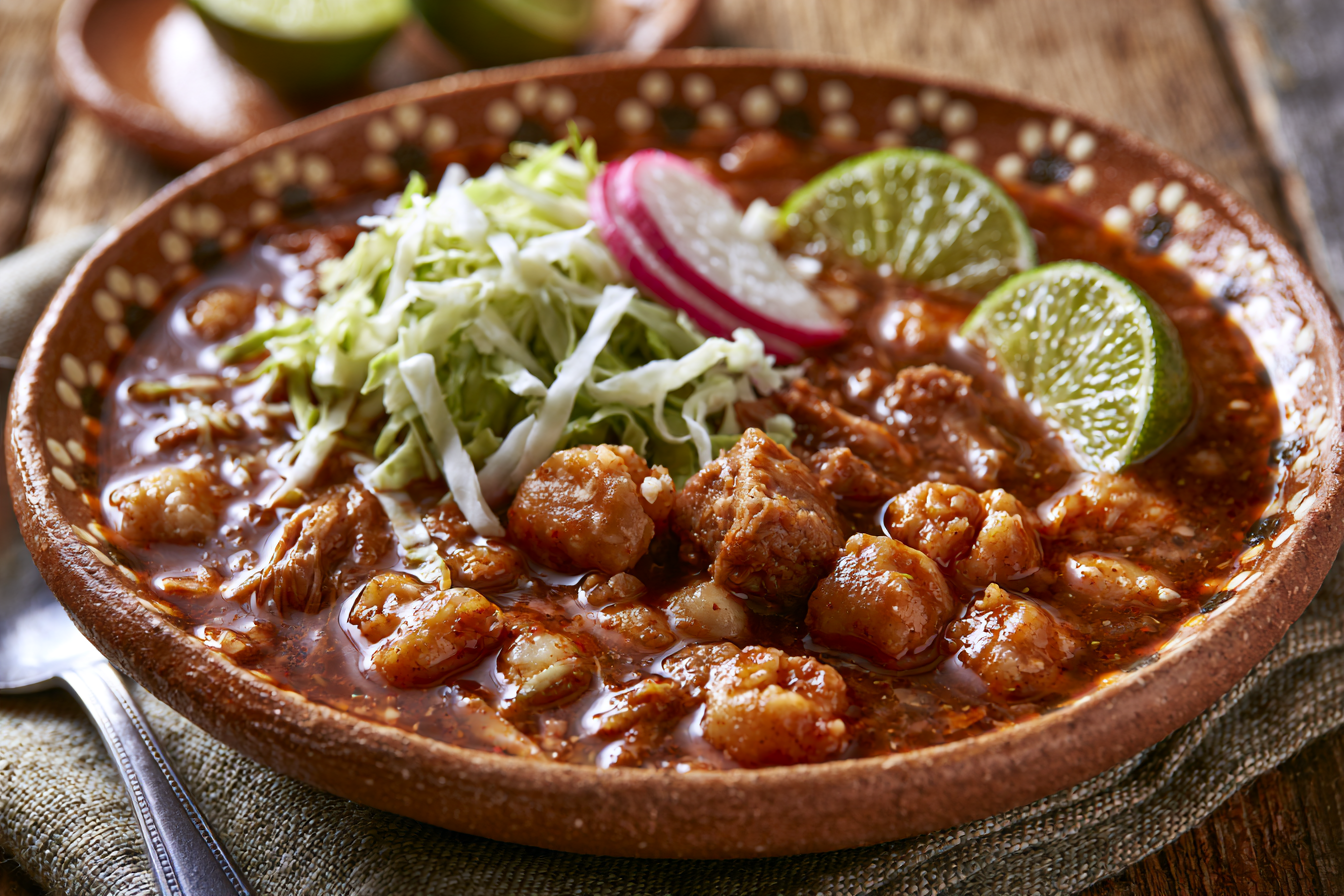
Pozole is a beloved Mexican soup that celebrates simplicity and flavor. Tender pork simmers with giant hominy kernels in a rich, aromatic broth, then gets crowned with crisp cabbage, sliced radishes, fresh lime, cilantro, and crunchy tortilla chips. It’s a complete meal in a bowl—warming, deeply satisfying, and perfect for family gatherings or quiet dinners.

What is pozole?
Pozole is a traditional Mexican soup with roots going back to pre-Hispanic times. The star is hominy—large corn kernels treated with lime (calcium hydroxide), giving them a tender texture and distinctive mild flavor. These are simmered with pork and aromatics until everything becomes silky and flavorful. Served in wide bowls, pozole is customized at the table with fresh toppings: shredded cabbage, sliced radishes, lime, cilantro, oregano, and crispy tortilla chips.
Why you’ll love it
- Deeply flavorful and aromatic broth that develops as the pork simmers alongside hominy
- Highly interactive: guests build their own bowl with favorite toppings, making it fun and personal
- Surprisingly easy to make once you source canned hominy—no exotic skills required
Ingredients (serves 6)
| Ingredient | Amount | Where to find it / Substitutes |
|---|---|---|
| Pork shoulder or butt, cut into 5 cm (2 inch) chunks | 750 g (1.5 lb) | Meat counter; or use pork ribs |
| Onion, halved | 1 large | Produce section |
| Garlic cloves | 4–5 cloves | Fresh produce |
| Dried guajillo chiles | 3–4 chiles | International or Hispanic aisle; or use ancho chiles |
| Dried oregano | 1 tbsp | Spice aisle |
| Ground cumin | 1 tsp | Spice aisle |
| Salt and black pepper | To taste | Pantry staples |
| Chicken or pork broth | 2 liters (8 cups) | Broth aisle or homemade |
| Canned hominy (white or yellow), drained and rinsed | 2 cans (800 g / 28 oz total) | International or canned vegetable aisle |
| For serving: shredded cabbage, sliced radishes, lime wedges, fresh cilantro, dried oregano, tortilla chips | As desired | Produce, fresh herbs, snack aisle |
Allergens: Pork must be cooked through completely to internal temperature of 70℃ (160℉). Corn (hominy). Chile may contain sulfites.
How to make it
-
Brown the pork: Heat a large, heavy-bottomed pot or Dutch oven over medium-high heat. Working in batches, add the pork chunks and brown on all sides, about 8–10 minutes total, stirring occasionally. Season with salt and pepper. Once all pork is browned, push it to the side.
-
Prepare the chiles: Meanwhile, stem and seed the dried guajillo chiles. Tear them into small pieces and place in a dry skillet over medium heat. Toast for 1–2 minutes, stirring constantly, until fragrant (do not burn). Transfer to a bowl and cover with 240 ml (1 cup) of hot water. Let soak for 10 minutes, then blend the soaked chiles with their soaking liquid until smooth. Pass the mixture through a fine-mesh sieve to remove any solids.
-
Build the broth: Add the onion halves and garlic cloves to the pot with the browned pork. Pour in the chile puree, then add the broth, oregano, and cumin. Stir well. Bring to a simmer, then reduce heat to low. Cover and simmer gently for 45–60 minutes, until the pork is very tender.
-
Add the hominy: Add the drained and rinsed canned hominy to the pot. Stir, then continue simmering uncovered for 15–20 minutes more, until the hominy is heated through and the flavors have melded. Taste and adjust seasoning with salt and pepper as needed.
-
Serve: Ladle the hot pozole into wide, deep bowls. Arrange small bowls of toppings on the table—shredded cabbage, sliced radishes, lime wedges, fresh cilantro, dried oregano, and tortilla chips. Invite guests to customize their bowls by adding toppings to taste. A squeeze of fresh lime juice brings everything together.
Tips for success
- Don’t skip browning the pork: This step adds depth and richness to the broth through the Maillard reaction.
- Toast the chiles: Toasting brings out their complex flavors and aromas. Don’t burn them, but a light char is beneficial.
- Use hominy, not regular corn: Hominy has a distinct soft texture and mild, almost sweet flavor that regular corn lacks. Canned is convenient and reliable.
- Simmer gently: A rolling boil can toughen the pork. Low and slow is the key to tender meat and clear broth.
- Customize at the table: Part of pozole’s charm is building your bowl. Set out toppings and let guests adjust heat, texture, and freshness to their preference.
Variations / Storage
- Red pozole (pozole rojo): Use dried guajillo or ancho chiles as in this recipe for a deeper, earthier flavor.
- White pozole (pozole blanco): Omit the chiles and chile puree; instead, season with cumin, oregano, garlic, and a pinch of cayenne for a lighter, broth-forward version.
- Chicken pozole: Substitute diced chicken thighs for pork. Reduce simmering time to 30–40 minutes.
- Extra vegetables: Add diced zucchini, carrots, or potatoes in the final 20 minutes of cooking for added texture and nutrition.
- Storage: Pozole may be refrigerated in an airtight container for 3–4 days — storage life varies with conditions. Reheat gently over medium-low heat before serving. Toppings should be added fresh each time. Pozole also freezes well for up to 3 months; thaw overnight in the refrigerator and reheat gently.
FAQ
Q. Where do I find hominy, and can I make it from scratch?
A. Canned hominy is available in most supermarkets’ international or Hispanic sections. Hominy from scratch requires special treatment of dried corn kernels with calcium hydroxide, which is time-intensive and best left to commercial producers.
Q. What if I can’t find dried guajillo chiles?
A. Ancho, pasilla, or mulato chiles all make good pozole. Avoid very hot varieties like habanero unless you love intense heat. You can also use good-quality dried chili powder (about 2 tbsp) mixed with water, though the flavor is less complex.
Q. Can I make pozole in a slow cooker?
A. Yes. Brown the pork first as described, then transfer to a slow cooker with the broth and seasonings. Cook on low for 6–8 hours. Add the hominy in the final hour to prevent it from breaking down.
Q. Is pozole traditionally red or white?
A. Both are authentic and traditional. Red pozole (with chiles) is more common in some regions, white in others. Personal preference and family tradition determine the choice.
Q. Can I prepare everything ahead and just reheat?
A. Absolutely. Make the complete pozole 1–2 days ahead, refrigerate in an airtight container, and reheat gently on the stove. Add fresh toppings just before serving.