cook
cook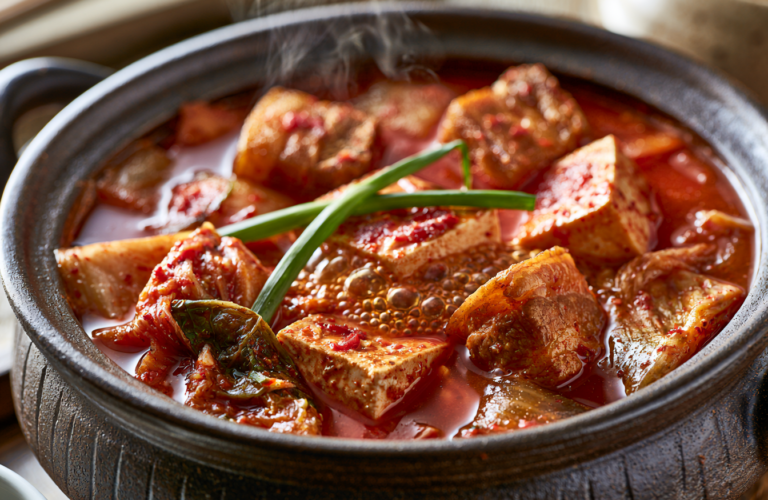

Kimchi jjigae is the ultimate Korean comfort food—a spicy, savory stew that brings together tender pork, silky tofu, and tangy fermented kimchi in a bubbling broth. It’s the kind of dish that warms you from the inside out, perfect for a weeknight dinner or when you want something hot and deeply satisfying.

What is kimchi jjigae?
Kimchi jjigae is a beloved Korean stew built around fermented kimchi as the star ingredient. The kimchi adds both spice and umami depth to the broth, while pork and tofu provide protein and texture. It’s traditionally served hot, bubbling in a stone pot (called a dolsot), and eaten with steamed rice and banchan (Korean side dishes).
Why you’ll love it
- Deeply aromatic and warming with a gentle heat that builds as you eat
- Simple ingredients that come together quickly into a complex, layered flavor
- Versatile: use different proteins or add vegetables to make it your own
Ingredients (serves 4)
| Ingredient | Amount | Where to find it / Substitutes |
|---|---|---|
| Napa cabbage kimchi, chopped | 300 g (about 1.5 cups) | Asian grocery or online; slightly fermented (not too aged) works best |
| Pork belly or pork shoulder, sliced thinly | 250 g (0.5 lb) | Meat counter; ask for thin slices, or partially freeze and slice yourself |
| Firm tofu, cut into cubes | 300 g (about 10 oz) | Produce or Asian aisle; press gently before use |
| Korean fish sauce (jeotgal) | 1 tbsp | Asian grocery or online; adds umami (optional but recommended) |
| Gochugaru (Korean red chili flakes) | 1 tsp | Asian grocery or online; adjust to taste for desired heat |
| Onion, sliced | 0.5 medium | Produce section |
| Garlic, minced | 3 cloves | Fresh produce |
| Water or dashi stock | 750 ml (3 cups) | Tap water works; dashi adds depth |
| Soy sauce | 1 tbsp | Pantry staples or Asian aisle |
| Sesame oil | 1 tsp | Asian aisle; adds nutty finish |
| Green onion (scallions), chopped | 2 stalks | Produce section; for garnish |
| Gochujang (Korean red chili paste) | 1 tbsp | Asian grocery or online; deepens flavor (optional) |
Allergens: Pork and seafood (fish sauce, if used). Pork must be fully cooked through; slice thin enough to cook in the simmering broth. Tofu is gluten-free but verify if other ingredients contain soy or cross-contaminants.
How to make it
-
Heat the pot: Bring a large pot or stone bowl (dolsot, if you have one) to medium heat. Add 1 tsp sesame oil and let it warm for 1 minute until fragrant.
-
Cook the aromatics: Add the sliced onion and minced garlic to the hot oil. Stir for 2–3 minutes until softened and fragrant.
-
Add the pork and kimchi: Increase heat to medium-high. Add the thinly sliced pork and cook for 3–4 minutes, stirring occasionally, until the meat is mostly cooked through (no longer pink at the center). Add the chopped kimchi and gochujang if using. Stir well and cook for 2 minutes to release the kimchi’s flavors.
-
Build the broth: Pour in the water or stock and bring to a simmer. Add the fish sauce, soy sauce, and gochugaru. Stir to combine. Gently add the tofu cubes and simmer for 10–12 minutes, allowing flavors to marry. The broth should be bubbling gently; do not boil aggressively or the tofu may break apart.
-
Finish and serve: Taste and adjust seasonings (more gochugaru for heat, more soy sauce for saltiness). Drizzle with a few drops of sesame oil and top with chopped green onion. Serve hot in bowls with steamed rice on the side.
Tips for success
- Slice the pork thin: Thin slices cook quickly in the simmering broth and distribute flavor evenly.
- Don’t skip the kimchi juice: Add a splash of the kimchi liquid when you add the chopped kimchi—it adds tang and depth.
- Use medium heat for simmering: Gentle heat keeps the tofu intact and allows the flavors to develop slowly.
- Adjust the heat level: Gochugaru can overpower if you add too much at once. Start with 1 tsp and increase gradually.
- Serve with rice: Scoop the stew over warm steamed rice to soak up the flavorful broth.
Variations / Storage
- Add vegetables: Mushrooms, zucchini, or spinach can be added in the final few minutes of simmering.
- Use different protein: Beef brisket, chicken thigh, or seafood (shrimp, squid) work well in place of pork.
- Extra spicy: Add a touch of gochujang paste or increase the gochugaru if you prefer maximum heat.
- Vegetarian: Omit the pork and fish sauce; use vegetable stock and add more mushrooms for umami.
- Storage: Transfer leftovers to an airtight container and refrigerate for up to 3 days. Reheat gently on the stovetop over medium heat—storage life varies with conditions. The stew tastes even better the next day as flavors deepen.
FAQ
Q. What type of kimchi should I use?
A. Napa cabbage kimchi (baechu-kimchi) is traditional. It should be slightly fermented and tangy but not so aged that it’s overly soft. About 1–2 weeks old is ideal.
Q. Can I make this vegetarian?
A. Yes. Skip the pork and use vegetable stock instead of water. Use miso paste or extra gochujang for umami depth, and add mushrooms (shiitake or enoki) for earthiness.
Q. Is fish sauce really necessary?
A. No, but it adds authentic umami depth. If you don’t have it or prefer to omit it, your jjigae will still be delicious; just taste and adjust salt levels at the end.
Q. How spicy will it be?
A. The heat comes from fermented kimchi and gochugaru. If you’re sensitive to heat, use less kimchi and reduce the gochugaru to 0.5 tsp. You can always add more at the table.
Q. Can I make this ahead?
A. Cook everything except the final addition of tofu, then refrigerate. When ready to serve, reheat the broth, add the tofu, and simmer for 5 minutes. This keeps the tofu from breaking down during storage.