 cook
cook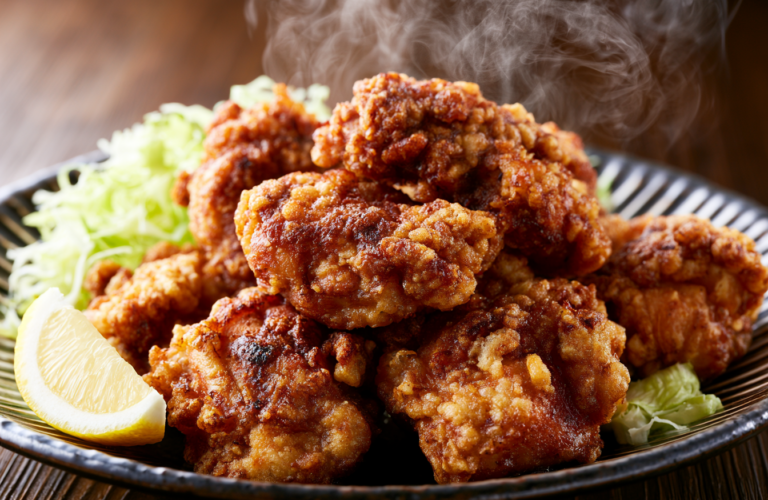
This golden, crispy Japanese fried chicken — karaage — is a beloved appetizer and dinner staple across Japan. Bite-size chicken thighs are marinated in a salty-sweet soy and ginger mixture, dusted with potato starch, then double-fried until the outside shatters and the inside stays juicy. Serve it warm with fresh lemon and creamy Japanese mayo for the authentic experience.
What is karaage?
Karaage is Japan’s answer to crispy fried chicken. Unlike Western fried chicken, which relies on a flour coating, karaage uses potato starch (katakuriko) for a lighter, crispier shell that stays crispy even as it cools. The chicken is marinated in soy sauce, sake, ginger and garlic before frying, giving it a savory-sweet flavor that needs nothing but a squeeze of lemon to shine.
Why you’ll love it
- Unbelievably crispy outside, juicy inside — the double-fry and potato starch create a shatteringly thin crust
- Flavor-forward marinade — soy, ginger and garlic infuse every bite with umami depth
- Quick weeknight dinner or crowd-pleasing snack — ready in 30 minutes, always disappears fast
Ingredients (serves 2)
| Ingredient | Amount | Where to find it / Substitutes |
|---|---|---|
| Boneless, skinless chicken thighs, cut into bite-size pieces | 500 g (1 lb 2 oz) | Regular grocery store. Thighs are fattier and more forgiving than breast. |
| Soy sauce (contains wheat) | 3 tbsp | Asian grocery or supermarket. Regular soy sauce works; low-sodium not recommended. |
| Sake or dry sherry | 2 tbsp | Supermarket liquor section or Asian grocery. Dry sherry or mirin as substitute. |
| Fresh ginger, minced | 1 tbsp | Grocery store produce section. Ginger paste as backup. |
| Garlic cloves, minced | 2 cloves | Grocery store. Garlic powder as substitute (use 1/2 tsp). |
| Potato starch (katakuriko) | 4 tbsp | Asian grocery stores or online. Cornstarch as substitute, though texture differs slightly. |
| Salt | Pinch | Taste and adjust. |
| Oil for frying (vegetable or canola) | ~1 L (32 oz / 4 cups) | Regular grocery store. |
| Lemon wedges | 1 lemon | Grocery store. |
| Japanese mayo (Kewpie) | 2 tbsp | Asian grocery or online. Regular mayo if unavailable. |
Allergen flags: Soy sauce contains wheat and soy. Potato starch is naturally gluten-free. Oil for deep-frying should be fresh; avoid reusing strained oil more than 2–3 times.
How to make it
-
Cut and pat dry. Cut chicken thighs into bite-size pieces (about 1.5 inches / 4 cm). Pat them very dry with paper towels — this is crucial for a crispy crust. Excess moisture is the enemy of crispiness.
-
Marinate. In a bowl, whisk together soy sauce, sake, minced ginger and minced garlic. Add chicken pieces and toss to coat. Cover and marinate for 15–30 minutes at room temperature (longer marinating is fine, but room temperature works well for a quick dinner).
-
Coat with potato starch. In a shallow dish, place the potato starch. Working in batches, remove chicken from the marinade (let excess liquid drip off), and toss in potato starch until lightly and evenly coated. Set coated pieces on a clean plate.
-
First fry. Heat oil in a heavy pot or wok to 160℃ (320℉) — use a thermometer if you have one. Working in batches to avoid crowding, carefully lower coated chicken into hot oil. Fry for 4–5 minutes, until the coating is set and pale golden. Do not stir too much; let them crisp up on each side. Remove with a slotted spoon and drain on a plate lined with paper towels.
-
Second fry for crispiness. Raise the oil temperature to 180℃ (350℉). Return the parcooked chicken to the hot oil in batches. Fry for 1–2 minutes, until golden brown and the interior is fully cooked through (no longer pink in the center). Remove and drain on paper towels.
-
Rest and season. Let the karaage cool for 1–2 minutes. Taste a piece and add a light pinch of salt if needed.
Tips for success
- The double-fry is the secret. The first fry cooks the chicken through; the second blast at higher heat creates the signature crispy crust. Don’t skip it.
- Potato starch over flour. Katakuriko gives a lighter, crisper shell than wheat flour. It’s worth seeking out, especially from an Asian grocery.
- Don’t crowd the pan. If pieces touch, steam traps and the crust won’t crisp. Fry in batches.
- Serve immediately. Karaage is best eaten warm. If you must make it ahead, reheat in a 180℃ (350℉) oven for 5 minutes to re-crisp.
Variations / Storage
- With mayo dipping sauce: Mix Japanese mayo with a squeeze of lemon and a tiny pinch of chili powder for a vibrant dip.
- Spicy karaage: Add 1/2 tsp cayenne pepper or 1 tbsp sriracha to the marinade.
-
Extra crispy: Use a mix of potato starch and cornstarch (3 tbsp + 1 tbsp) for an even lighter crust.
-
Storage: Store in a clean airtight container in the refrigerator and enjoy it soon — storage life varies with conditions.
FAQ
Q. Can I use chicken breast instead of thighs?
A. You can, but thighs are more forgiving. Breast meat dries out quickly, especially if overcooked. If using breast, cut into smaller pieces and monitor carefully during the second fry.
Q. How do I know the oil is the right temperature?
A. Use a kitchen thermometer (most reliable). Alternatively, drop a tiny piece of potato starch into the oil — if it sizzles immediately and floats, you’re close to ready.
Q. Can I make karaage ahead and reheat it?
A. Yes. Cool completely, store in an airtight container, and reheat in a 180℃ (350℉) oven for 5–7 minutes to restore crispiness. A brief toss in a hot, empty pan also works.


