cook
cook

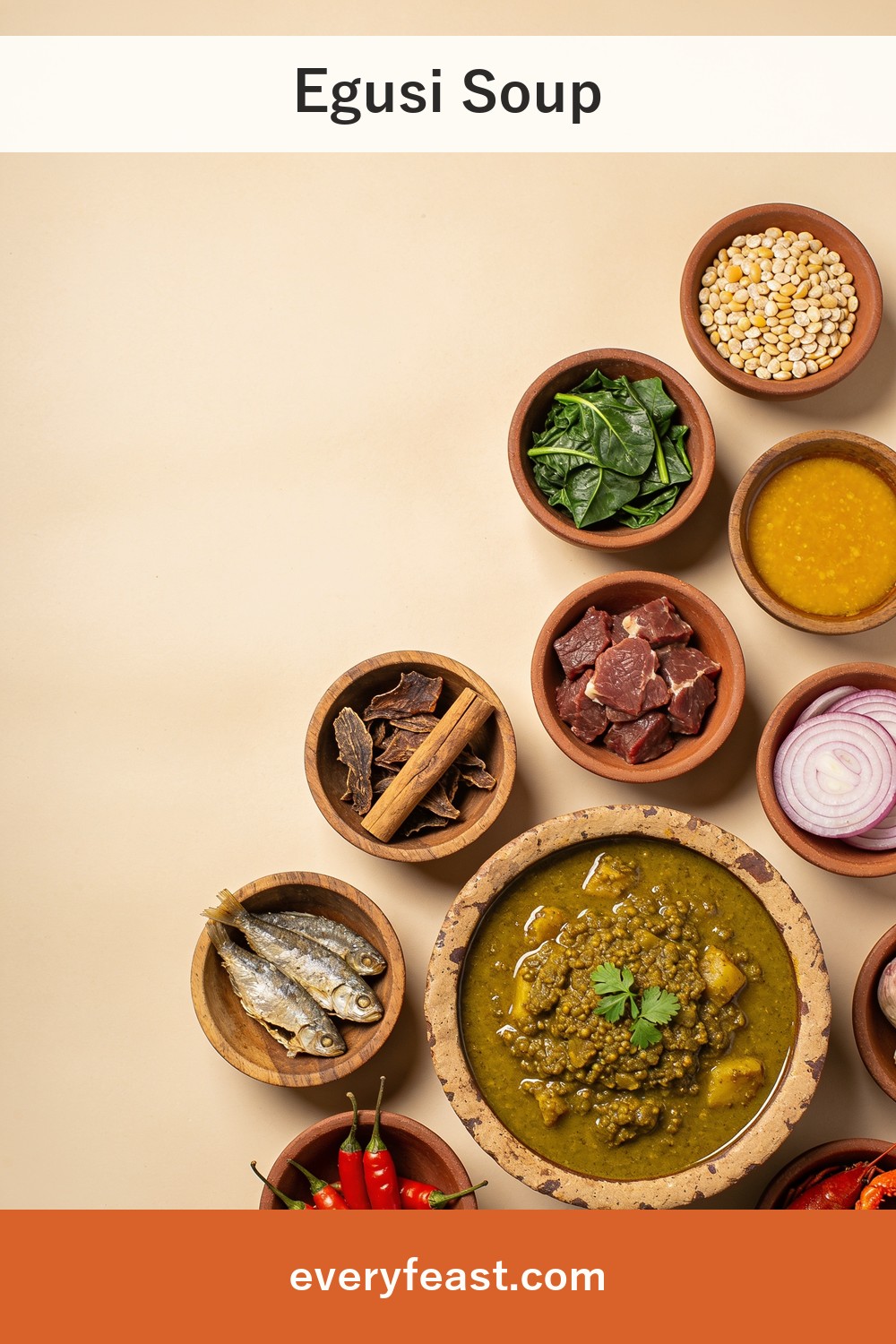
Egusi soup is a beloved Nigerian classic—a rich, aromatic stew built on a foundation of ground melon seeds (egusi) that thickens into a luxurious base, studded with dark leafy greens, chunks of protein, and a bold blend of spices. The soup is deeply savory, complex, and utterly craveable, best served with swallows like fufu, gari, or simply white rice. One spoonful and you understand why this dish defines comfort in West Africa.
What is egusi soup?
Egusi soup hails from Nigeria and the broader West African region. “Egusi” refers to melon seeds—a staple protein-rich ingredient in West African cooking. The seeds are ground into a fine powder and cooked with tomatoes, onions, aromatic spices, and leafy greens (usually spinach or bitter leaf). The result is a thick, savory soup that’s served alongside starches like cassava fufu, pounded yam, or white rice. It’s a dish of layers—the melon seed base is nutty and creamy, the greens add earthiness, and spices bring warmth and complexity.
Why you’ll love it
- Deeply nourishing and protein-rich from the melon seeds and optional protein additions
- Complex spice profile that tastes far more elaborate than the ingredient list suggests
- A complete meal in one pot; serve with a starch and you have dinner
Ingredients (serves 4)
| Ingredient | Amount | Where to find it / Substitutes |
|---|---|---|
| Egusi (ground melon seeds) | 150 g (1 cup) | African markets or specialty online retailers. DO NOT confuse with pumpkin seeds. Substitute: mix 100 g sunflower seed butter + 50 g ground almonds, though flavor differs |
| Canned crushed tomatoes | 400 g (1.5 cup can) | Canned vegetables aisle; or 600 g fresh tomatoes, blended |
| Tomato paste | 2 tbsp | Canned vegetables aisle; or concentrated tomato |
| Onion, diced | 1 medium | Produce section |
| Garlic, minced | 3 cloves | Fresh produce |
| Fresh spinach or bitter leaf (or kale) | 200 g (about 4 cups loosely packed) | Produce section; bitter leaf preferred for authenticity but hard to source |
| Beef or vegetable stock | 1 liter (4 cups) | Homemade or store-bought |
| Palm oil (red oil) or vegetable oil | 3 tbsp | African markets or online; optional but traditional. Vegetable oil is a neutral substitute |
| Scotch bonnet chili pepper (or habanero) | 1–2 whole | Produce or specialty markets. For less heat, use 1 tsp crushed red pepper flakes |
| Locust beans (dawadawa) or fish powder | 1 tsp | African markets; adds umami depth. Substitute: 1 tbsp fish sauce or skip |
| Salt and black pepper | To taste | Pantry staples |
| Protein option: ground beef, beef chunks, or shrimp | 250 g (optional) | Meat counter or frozen aisle |
Allergens: Egusi (melon seeds) may trigger allergies in some individuals—test cautiously. This soup contains capsaicin from chili peppers. Palm oil may be a concern for some diets; use neutral oil if preferred. All ingredients should be fully cooked. Greens and any protein must reach safe internal temperatures.
How to make it
-
Prepare the egusi paste: In a large, dry skillet over medium heat, toast the ground egusi (melon seeds) for 2–3 minutes, stirring constantly, until fragrant and slightly darker. This step deepens the flavor. Set aside to cool slightly. In a bowl, mix the toasted egusi with about 120 ml (0.5 cup) of warm stock to form a thick, pourable paste. Set aside.
-
Sauté the base: Heat the palm oil (or vegetable oil) in a large pot or Dutch oven over medium heat. Add the diced onion and cook for 3–4 minutes until softened. Add the minced garlic and cook for 1 minute until fragrant. Stir in the tomato paste and cook for 2 minutes, allowing it to caramelize slightly and deepen in color.
-
Add tomatoes and stock: Pour in the canned crushed tomatoes and the remaining stock (about 850 ml / 3.5 cups). Stir well. Add the whole Scotch bonnet chili pepper (leave it whole so you can remove it if the heat gets too intense), locust beans (if using), salt, and black pepper. Bring to a gentle simmer over medium heat.
-
Incorporate the egusi: Slowly pour the egusi paste into the simmering broth, stirring constantly to avoid lumps. The soup will thicken noticeably. Simmer for 15–20 minutes, stirring occasionally, to allow the egusi to fully cook and flavor the broth.
-
Add protein and greens: If using ground beef, brown it separately in a skillet, drain, and add to the pot. If using beef chunks, add them now and simmer for an additional 10 minutes. Add the fresh spinach (or kale) in batches, stirring to wilt each addition. Simmer for 5 more minutes. Taste and adjust seasoning—remove the whole chili pepper if the heat is sufficient, or leave it in for more intensity.
-
Serve: Ladle the soup into bowls. Serve hot with a starch of choice: white rice, cassava fufu, pounded yam, gari, or even bread. Squeeze fresh lime juice over the top if desired.
Tips for success
- Toast the egusi: This deepens the nutty flavor and prevents a raw, gritty texture.
- Make a paste first: Combining egusi with warm stock before adding it to the pot prevents clumping and ensures smooth, even distribution.
- Use palm oil if possible: It adds authentic flavor and color. Red palm oil is rich and nutty; don’t confuse it with lower-quality versions.
- Keep the chili whole: Leaving the Scotch bonnet intact means you can remove it if the heat becomes overwhelming. Pierce it to release more heat gradually.
- Don’t skip locust beans (if available): This ingredient adds a savory depth that’s hard to replicate. A small amount goes a long way.
Variations / Storage
- Seafood egusi: Add prawns or fish chunks in the last 5 minutes of cooking, or use fish stock instead of beef stock.
- Milder version: Reduce or omit the Scotch bonnet chili, and use a milder pepper like bell pepper instead.
- Beef and kidney egusi: Add diced beef kidney or liver for extra richness (requires thorough cooking, 20–25 minutes for chunks).
- Vegetarian egusi: Skip the protein and double the vegetables. Add mushrooms and extra spinach for body and umami.
- Storage: Egusi soup keeps well and often tastes better the next day as flavors meld. Store in an airtight container in the refrigerator for up to 3 days, or freeze for up to 2 months. Reheat gently on the stovetop, adding a splash of stock if it has thickened too much — storage life varies with conditions.
FAQ
Q. Where do I find egusi (melon seeds)?
A. African markets, international grocery stores, or online retailers specializing in West African ingredients. Some health food stores carry ground sunflower or pumpkin seeds as a substitute, though the flavor will differ.
Q. Can I use pumpkin seeds instead of egusi?
A. Pumpkin seeds are different and will not give the same result. Sunflower seed butter mixed with ground almonds is a closer (if imperfect) substitute.
Q. What if the soup is too thick?
A. Thin it with additional warm stock or water, a splash at a time, until you reach your preferred consistency.
Q. What if the soup is too thin?
A. Make another small egusi paste with 2 tbsp ground egusi and 4 tbsp warm stock, stir it in, and simmer for 3–5 minutes. This also intensifies the egusi flavor.
Q. Is this soup supposed to be very hot (spicy)?
A. Traditional egusi can be quite spicy. Start with one Scotch bonnet chili and adjust to your tolerance. Remember, you can always add more heat; you can’t remove it once it’s in.
Q. Can I make egusi soup in a slow cooker?
A. Yes. Brown the aromatics and tomato paste in a skillet first, then transfer all ingredients (except fresh greens) to a slow cooker. Cook on low for 6–8 hours, adding the greens in the last 30 minutes.