 cook
cook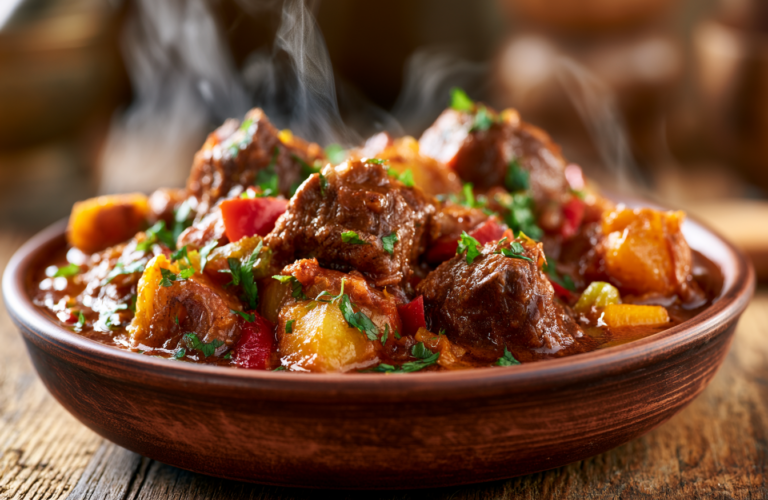
Hungarian goulash is the kind of stew that fills a kitchen with warmth and the deep, dusty aroma of paprika. Beef braised for hours with onions, garlic, and plenty of sweet paprika becomes so tender it dissolves on your tongue. This is not a cream-laden casserole — it’s a paprika-forward broth that tastes like tradition.
What is goulash?
Hungarian goulash (gulyás) is the national dish of Hungary, a stew built on three pillars: beef, onions, and paprika. Paprika is not a garnish here — it is the structure of the dish. The beef is simmered low and slow in its own juices, aromatics, and paprika-spiced broth until it becomes meltingly tender, often with the addition of tomato and bell pepper for balance and complexity.
Why you’ll love it
- Deep, complex flavor: Paprika does the heavy lifting, giving the stew a savory, slightly sweet warmth
- Make-ahead friendly: Tastes even better the next day, and reheats beautifully
- Feeds a crowd: This recipe serves 4 with leftovers, and scales easily
Ingredients (serves 4)
| Ingredient | Amount | Where to find it / Substitutes |
|---|---|---|
| Beef chuck or stewing beef, cubed (1.5 inch / 4 cm) | 800 g (1.75 lb) | Butcher counter; ask for stewing meat |
| Yellow onions, diced large | 3 medium (about 500 g / 1.1 lb) | Any supermarket |
| Garlic, minced | 4 cloves | Fresh from any grocery store |
| Sweet paprika (Hungarian, if available) | 3 tbsp (20 g) | Spice aisle or online; do not use hot paprika alone |
| Tomato paste | 2 tbsp (30 g) | Canned or tube, any supermarket |
| Red bell pepper, diced | 1 large | Any sweet pepper color; red or yellow |
| Beef stock or broth | 1 L (4 cups / 32 oz) | Carton or can, any supermarket; use low-sodium |
| Bay leaf | 2 | Spice aisle, any supermarket |
| Thyme, dried | 1 tsp (1 g) | Spice aisle, any supermarket |
| Salt and black pepper | To taste | Any supermarket |
| Vegetable oil | 2 tbsp (30 ml) | Any neutral oil |
| Sour cream (for serving, optional) | 4 tbsp (60 g) | Dairy aisle; or omit |
Allergen summary: None major; sour cream contains dairy
How to make it
-
Brown the beef. Heat oil in a large heavy pot over medium-high heat. Working in batches so as not to crowd the pan, sear the beef cubes on all sides until browned (about 2–3 minutes per side), then transfer to a plate. The meat should be caramelized on the outside, though not fully cooked inside.
-
Build the base. Add the diced onions to the same pot and cook for 5–7 minutes, stirring often, until soft and beginning to caramelize. Add minced garlic and cook for 1 minute until fragrant. Stir in the paprika and tomato paste, cooking for another 1–2 minutes to bloom the spices.
-
Braise low and slow. Return the beef to the pot. Add diced red pepper, beef stock, bay leaves, and thyme. Bring to a simmer, then reduce heat to low. Cover and simmer gently for 1.5–2 hours, until the beef is fully cooked through and so tender a fork easily breaks apart the meat. Stir occasionally.
-
Taste and adjust. After 1.5 hours, taste the broth and season with salt and black pepper as needed. The flavors should be deep and savory, with the paprika front and center.
-
Serve. Ladle into bowls, top with a dollop of sour cream if desired, and serve with crusty bread for soaking up the broth.
Tips for success
- Use sweet paprika, not hot or smoked. Hungarian sweet paprika (sometimes labeled “Noble Sweet”) is the classic choice. Smoked or hot paprikas will throw off the balance.
- Don’t rush the cooking. Two hours is not arbitrary — it takes time for collagen in the beef to break down and the flavors to meld. A faster simmer will yield tougher meat and less developed flavor.
- Brown the beef in batches. Crowding the pan drops the temperature and causes the meat to steam rather than sear, losing color and flavor.
- Make it a day ahead. Goulash almost always tastes better on day two, when the flavors have integrated fully. Reheat gently on the stovetop.
Variations / Storage
- Add sauerkraut: Stir in 200 g (7 oz) sauerkraut in the last 15 minutes for a tangier profile.
- Substitute vegetables: Carrots, parsnips, or potatoes can be added in the last 30 minutes of cooking if desired.
- Skip the sour cream: Serve the goulash plain, or with crusty bread, for a more traditional presentation.
- Store in a clean airtight container in the refrigerator and enjoy it soon — storage life varies with conditions.
FAQ
Q. What’s the difference between goulash and beef stew?
A. Goulash is paprika-forward and broth-based; it is lean and aromatic rather than rich. Beef stew is often thickened with flour and relies on beef and broth alone. Goulash tastes lighter and more complex.
Q. Can I use a slow cooker?
A. Yes. Brown the beef and sauté the aromatics as directed, then transfer to a slow cooker with all other ingredients. Cook on low for 6–8 hours, or until the beef is fully cooked through and fork-tender.
Q. The paprika is overpowering. What went wrong?
A. You may have used hot or smoked paprika instead of sweet. Start over with sweet Hungarian paprika and adjust the amount to taste; 3 tbsp is a guide, not a law.


