cook
cook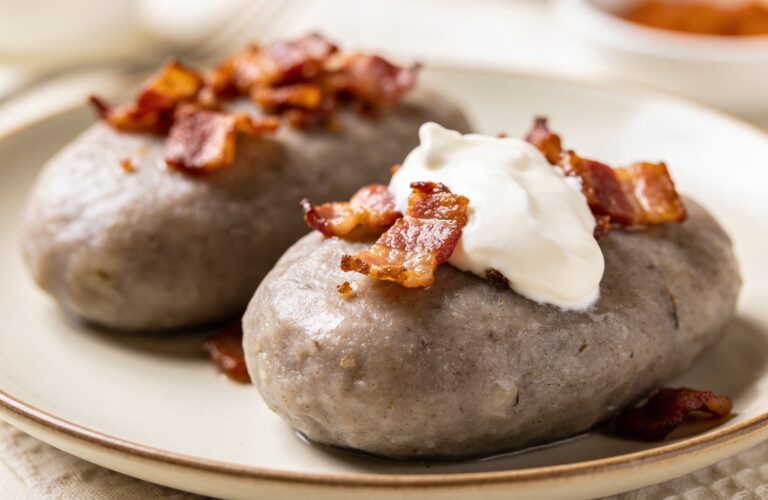
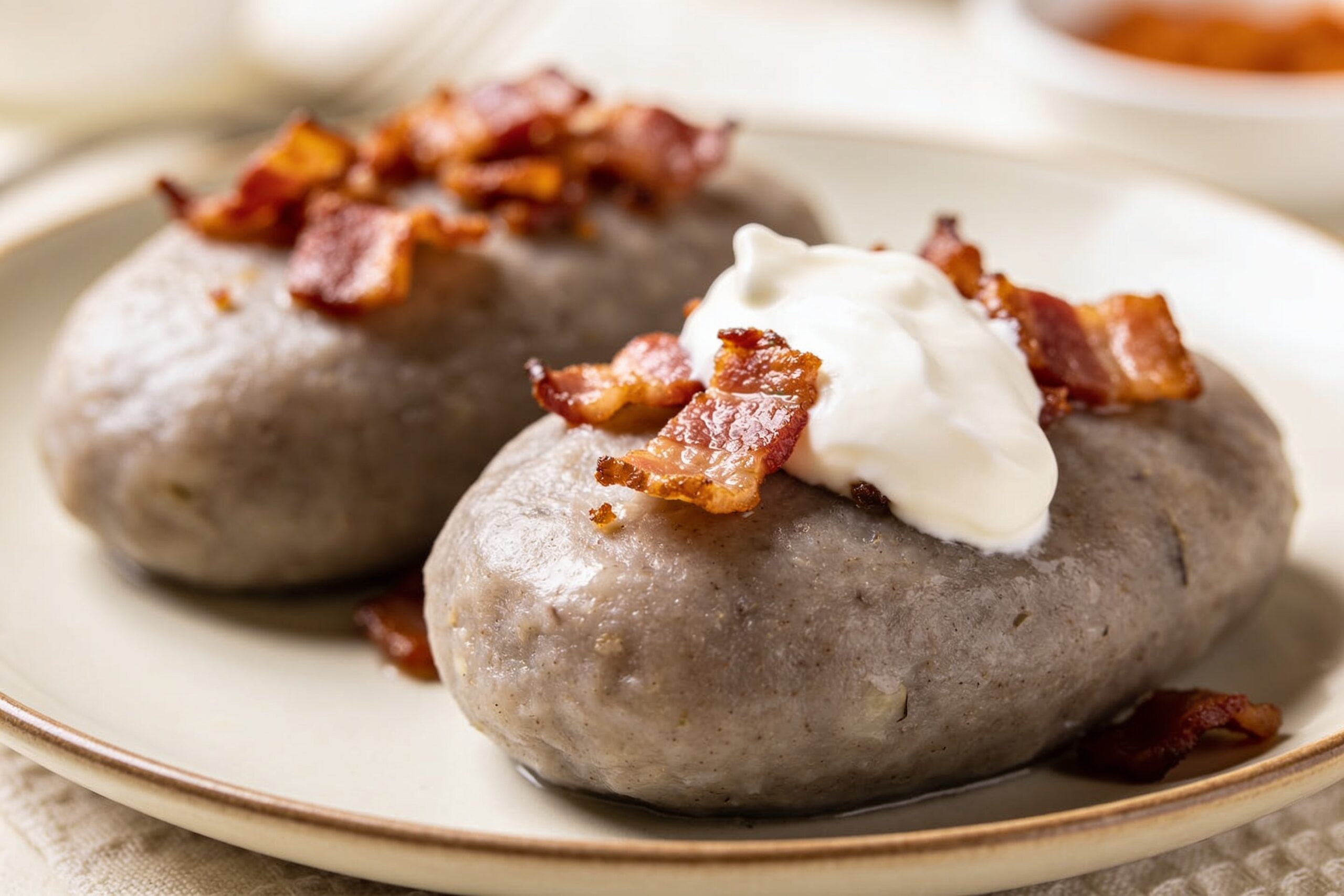
Cepelinai are generous Lithuanian potato dumplings—tender, pillowy pockets of grated potato dough stuffed with seasoned ground pork and onion. They’re boiled until they float to the surface, then crowned with crispy bacon pieces and dollops of cool sour cream. This is comfort food at its finest: hearty, humble, and deeply satisfying.

What is cepelinai?
Cepelinai are large potato dumplings (their name roughly translates to “zeppelins” for their distinctive elongated shape) that are a staple of Lithuanian home cooking. The dough is made from finely grated raw potatoes mixed with potato starch or flour to bind them, then stuffed with a savory filling of ground pork, onion, and spices. They’re boiled in salted water and served hot, topped with crispy bacon bits, fried onions, and a generous spoonful of sour cream.
Why you’ll love it
- One generous dumpling is a complete meal—filling, comforting, and deeply savory
- The contrast of creamy potato exterior, spiced meat filling, and cool sour cream is irresistible
- Simple ingredients and straightforward technique; no exotic equipment needed
Ingredients (serves 4)
| Ingredient | Amount | Where to find it / Substitutes |
|---|---|---|
| Russet or starchy potatoes | 1 kg (2.2 lb) | Produce section; waxy potatoes don’t work as well |
| Potato starch or all-purpose flour | 100 g (0.75 cup) | Baking aisle; use cornstarch in a pinch |
| Ground pork (lean or 80/20 blend) | 300 g (0.65 lb) | Meat counter; ground beef works too |
| Yellow onion, finely diced | 1 large | Produce section |
| Salt and black pepper | To taste | Pantry staples |
| Water | 2.5 liters (10 cups) | For boiling |
| Bacon strips | 150 g (5-6 slices) | Meat counter |
| Sour cream (or crème fraîche) | 200 g (0.85 cup) | Dairy aisle |
Allergens: Dairy (sour cream). If you use all-purpose flour instead of potato starch, this also contains wheat. Pork and bacon must be fully cooked through with no pink remaining.
How to make it
-
Prepare the potato dough: Peel and coarsely grate the potatoes into a large bowl of cold water to prevent discoloration. Let them sit for 5 minutes, then drain through a fine-mesh strainer, pressing gently to remove excess water. Transfer the drained potatoes to a clean kitchen towel and squeeze out as much moisture as possible. Place the dried potatoes in a large mixing bowl, add the potato starch and 1 teaspoon of salt, and mix until well combined and the mixture holds together loosely.
-
Prepare the filling: Heat a skillet over medium heat. Add the diced onion and cook for 4–5 minutes, stirring occasionally, until softened and lightly golden. Crumble in the ground pork, breaking it apart with a spoon, and cook for 6–8 minutes, stirring frequently, until fully cooked through and no longer pink. Season with salt and black pepper to taste. Remove from heat and let cool slightly.
-
Shape the dumplings: Wet your hands with cold water to prevent sticking. Take about 100 g (3.5 oz) of potato dough and flatten it into a thin oval disc in your palm. Place about 2 tablespoons of the pork filling in the center, then fold the edges up and over the filling, gently reshaping into a large oval or zeppelin shape about 12 cm (5 inches) long. Place on a parchment-lined baking sheet. Repeat until all dough and filling are used—you should have 8–10 dumplings.
-
Boil the dumplings: Bring the 2.5 liters of salted water to a rolling boil in a large pot. Carefully lower the dumplings into the boiling water. They will sink at first. Once they float to the surface (after 3–4 minutes), continue boiling for another 2–3 minutes to ensure they are cooked through. Remove with a slotted spoon and drain on a clean kitchen towel or paper towels.
-
Prepare bacon and serve: While the dumplings cook, chop the bacon into small pieces and fry in a skillet over medium heat until crispy (about 5–7 minutes). Drain on paper towels. Arrange the hot dumplings on a serving platter, top each with a spoonful of sour cream and a sprinkle of crispy bacon bits. Serve immediately, passing extra sour cream and bacon on the side.
Tips for success
- Don’t skip squeezing the potatoes: Excess moisture is the enemy of a tender dumpling. The drier your grated potatoes, the better the texture.
- Keep your hands wet: Potato dough is sticky. Wetting your hands frequently makes shaping much easier and prevents the dough from sticking to your skin.
- Test one dumpling first: Before cooking the entire batch, boil one test dumpling to check your filling-to-dough ratio and adjust if needed.
- Make sure the filling is cool: Warm filling can burst through the dough during shaping. Let the cooked meat mixture cool for a few minutes before assembling.
- Serve hot: Cepelinai are best enjoyed immediately after cooking. If they cool, reheat them gently in boiling salted water for 1–2 minutes.
Variations / Storage
- Mushroom filling: Replace the pork with finely chopped mushrooms sautéed with onion and garlic for a vegetarian version.
- Cheese and potato: Mix diced cheddar or sharp cheese into the filling along with the cooked meat for extra richness.
- Beef filling: Substitute ground beef for pork using the same method and seasonings.
- Storage: Uncooked dumplings can be frozen on a baking sheet and transferred to a freezer bag; boil from frozen (add 3–4 minutes to cooking time). Cooked cepelinai can be stored in an airtight container in the refrigerator—storage life varies with conditions. Reheat by boiling gently in salted water for 2–3 minutes, or pan-fry until warmed through.
FAQ
Q. Can I make cepelinai ahead of time?
A. Yes—shape them and freeze uncooked on a tray, then transfer to a freezer bag. Boil directly from frozen, adding a few minutes to the cooking time.
Q. What if my dumplings fall apart during boiling?
A. This usually means the dough is too wet or the filling leaked out during shaping. Squeeze your potatoes more thoroughly and make sure the potato-to-starch ratio is even.
Q. Can I use all-purpose flour instead of potato starch?
A. Yes, but use slightly less (about 80 g / 0.65 cup) as flour absorbs more liquid than starch. The texture will be slightly less tender but still delicious.
Q. How do I know when the dumplings are done?
A. They will float to the surface after 3–4 minutes, then cook for another 2–3 minutes. Once they float, they’re nearly done; test one with a fork to confirm the potato is tender.
Q. Can I make the filling with chicken or turkey?
A. Absolutely—use the same weight and seasonings. Ground chicken cooks slightly faster, so check for doneness around the 5-minute mark.