cook
cook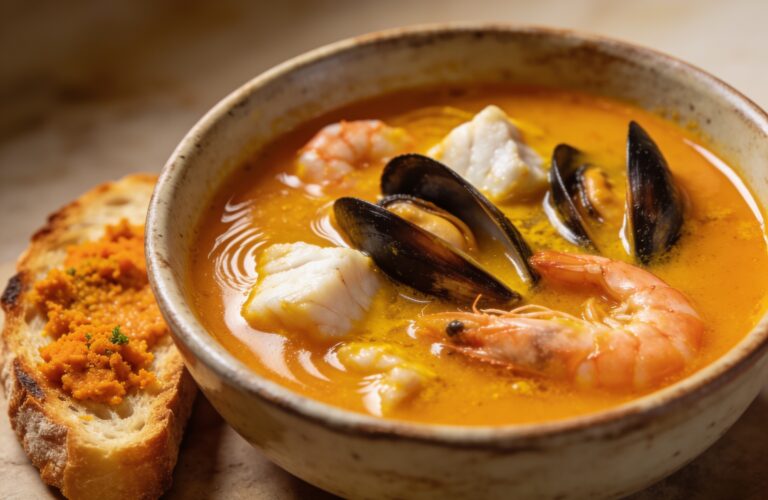
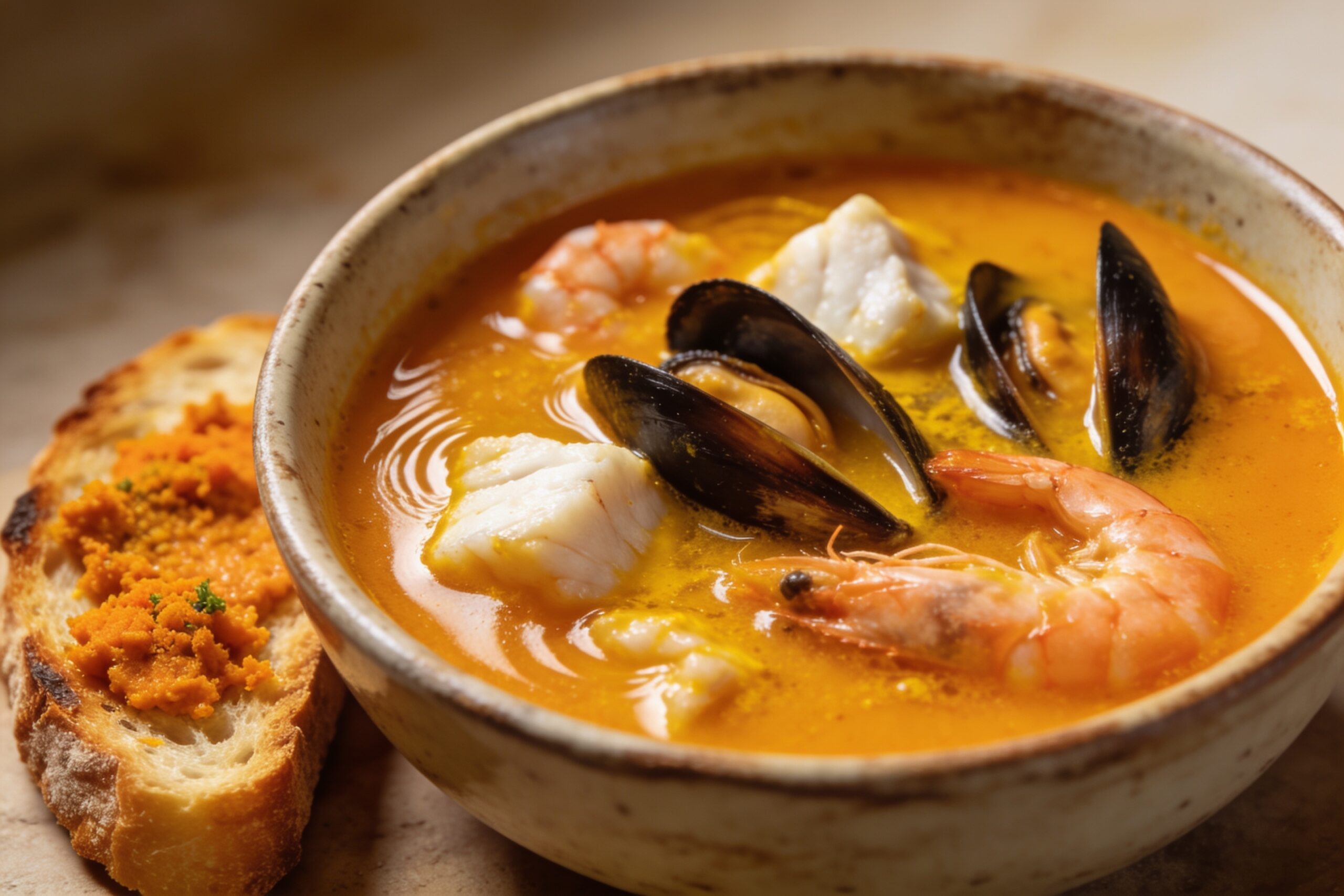
Bouillabaisse is the crown jewel of French seafood cooking—a fragrant, golden stew brimming with mixed fish, mussels, shrimp, and just a whisper of saffron and fennel. Served with rouille-topped toasts and a sprinkling of fresh herbs, it’s elegant enough for a dinner party yet grounded in honest Provençal home cooking. Yes, it takes time, but the reward is a bowl of pure coastal Mediterranean comfort.
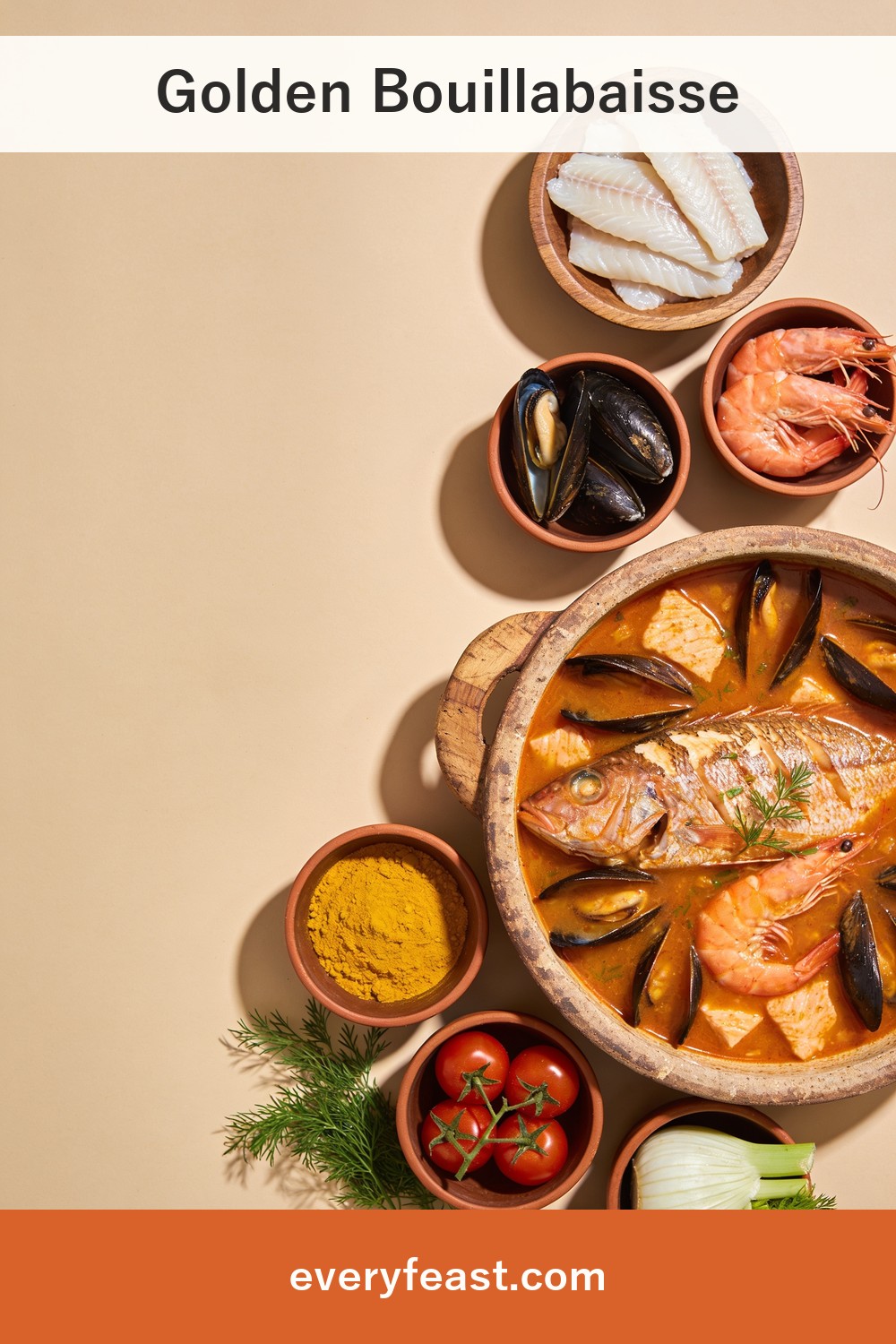
What is bouillabaisse?
Bouillabaisse is a traditional Provençal seafood stew from the coastal region of southern France. Built on a fragrant base of tomatoes, fennel, saffron, and garlic, it’s traditionally made with a variety of local Mediterranean fish and shellfish. The stew is served in deep bowls with crusty bread rubbed with garlic and topped with rouille (a saffron-garlic mayonnaise), making every spoonful rich, aromatic, and deeply satisfying.
Why you’ll love it
- A restaurant-quality dish you can make at home—impressive enough for a dinner party
- Deeply aromatic and golden, with layers of saffron, fennel, and anise flavor
- Endlessly adaptable: use whatever fresh seafood your fishmonger offers
Ingredients (serves 6)
| Ingredient | Amount | Where to find it / Substitutes |
|---|---|---|
| Olive oil | 60 ml (4 tbsp) | Pantry staples; use good quality |
| Yellow onion, sliced | 1 large | Produce section |
| Fennel bulb, sliced (save fronds) | 1 medium | Produce section; can omit if unavailable |
| Garlic, minced | 6 cloves | Fresh produce |
| Canned crushed tomatoes | 400 g (1 can) | Canned vegetable aisle |
| Fish stock (or chicken stock as substitute) | 1 liter (4 cups) | Fresh seafood counter, frozen, or carton in broth aisle |
| Saffron threads | 1 pinch (about 1 g) | Spice aisle or specialty grocery; steep in warm stock first. Substitute: turmeric (less authentic but adds color) |
| Dried thyme | 1 tsp | Spice aisle; or 1 tbsp fresh if available |
| Bay leaf | 1 | Spice aisle |
| Orange zest (1 small orange) | 1 tbsp | Produce section |
| Salt and black pepper | To taste | Pantry staples |
| Mixed firm white fish (rockfish, cod, halibut), cubed | 500 g (1 lb) | Fish counter; ask for firm white fish suitable for stews. Substitute: tilapia or grouper if rockfish unavailable |
| Mussels, cleaned | 300 g (about 12–15 large) | Seafood counter; rinse and de-beard before cooking |
| Large shrimp, peeled and deveined | 250 g (0.5 lb) | Seafood counter; can use frozen |
| Crusty baguette, sliced | 1 small | Bakery section or make your own |
| Garlic clove (for rubbing toast) | 1 | Already counted in ingredient list above |
Allergens: Fish (multiple types), shellfish (mussels and shrimp), and celery/fennel may cause reactions. All fish and shellfish must be fully cooked through. Discard any mussels that do not open after cooking—they are unsafe to eat. Rinse all shellfish thoroughly before cooking.
How to make it
-
Prepare the base: Heat the olive oil in a large, heavy pot over medium-high heat. Add the sliced onion and fennel bulb and cook for 6–8 minutes, stirring occasionally, until softened and lightly golden. Add the minced garlic and cook for 1 minute until fragrant.
-
Build the stew: Stir in the crushed tomatoes, fish stock, saffron threads (steeped in 60 ml of warm stock for 10 minutes before adding), thyme, bay leaf, orange zest, salt, and black pepper. Bring to a gentle simmer, then reduce heat to medium-low and simmer uncovered for 15–20 minutes to allow the flavors to meld. Taste and adjust seasoning as needed.
-
Prepare the bread: While the stock simmers, preheat the oven to 180℃ (350℉). Slice the baguette, lay the slices on a baking sheet, and toast in the oven for 5–7 minutes until golden and crispy. Remove and rub each slice with the cut side of a garlic clove.
-
Add the seafood: Increase the heat to medium and carefully add the cubed firm white fish to the simmering broth. Cook for 4–5 minutes until the fish is just beginning to turn opaque. Add the cleaned mussels and cook for 3–4 minutes, then add the shrimp and cook for another 2–3 minutes until the shrimp are pink and firm and the mussels have opened. Discard any unopened mussels.
-
Serve: Ladle the stew into deep bowls, ensuring each bowl gets a generous mix of fish, mussels, and shrimp. Serve with the garlic-rubbed toasted bread on the side. Optionally, spread a thin layer of rouille (saffron-garlic mayonnaise; see FAQ for a quick version) on each toast and float it on top of the stew.
Tips for success
- Choose fresh, high-quality fish: Visit a busy fishmonger and ask for firm white fish suitable for stews. The fresher the better—bouillabaisse’s flavor depends on the seafood.
- Steep the saffron: Always steep saffron threads in warm (not boiling) stock for 10 minutes before adding to the pot. This releases the color and flavor without making the threads bitter.
- Cook the fish gently: Don’t boil the stew vigorously. A gentle simmer keeps the fish tender and prevents it from falling apart.
- Layer the cooking times: Add firm fish first, mussels second, shrimp last—this ensures everything finishes at the same time without overcooking.
- Discard unopened mussels: Any mussel that doesn’t open during cooking should be thrown away—it’s a sign the mussel was dead before cooking.
Variations / Storage
- Lighter version: Use only shrimp and scallops for a cleaner, brighter broth.
- Heartier version: Add cubed potato to the broth in step 2 and simmer for 20 minutes before adding seafood.
- Rouille toasts: Make a quick rouille by blending 120 ml of good mayonnaise with 1 minced garlic clove and a generous pinch of saffron threads steeped in 1 tbsp warm water.
- No fennel option: If fennel is unavailable, add an extra 1 tsp of dried herbs (thyme, oregano) to compensate for the missing anise flavor.
- Storage: Bouillabaisse is best enjoyed fresh and hot. If you have leftovers, store them in a clean airtight container in the refrigerator and consume within 1–2 days — storage life varies with conditions. Reheat gently over medium heat in a pot to avoid overcooking the seafood.
FAQ
Q. Can I make bouillabaisse with frozen fish?
A. Yes, you can use frozen fish if thawed properly in the refrigerator. However, fresh fish tastes superior. Frozen mussels and shrimp are acceptable and often comparable to fresh.
Q. What if I can’t find saffron or it’s too expensive?
A. A small pinch of turmeric provides color and mild flavor, though it’s not authentic. Alternatively, skip it and rely on the fennel and orange zest for aromatic depth.
Q. Is bouillabaisse supposed to be brothy or thick?
A. It’s traditionally a brothier stew—you serve it in deep bowls with plenty of flavorful liquid. If it becomes too thick, thin it with a bit more fish or vegetable stock.
Q. Can I make the broth a day ahead?
A. Yes. Prepare the base broth up to step 2, then refrigerate overnight. Reheat gently and add the seafood just before serving.
Q. What do I do with the fennel fronds?
A. Chop them finely and sprinkle over each bowl just before serving for a pop of fresh anise flavor and a hint of green color.