
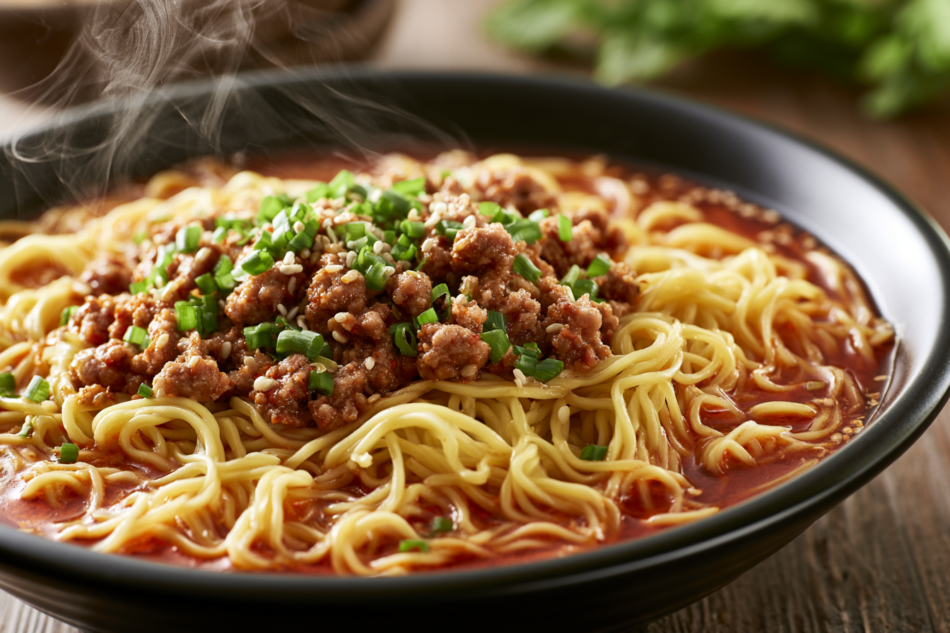
Spicy dan dan noodles: wheat noodles under a rich, nutty sesame-and-chili sauce topped with stir-fried pork, scallion and crushed peanuts. Authentic Sichuan flavor.
Dan dan noodles are a Sichuan classic: slippery wheat noodles plunged into a complex, fiery sauce built on sesame paste, chili oil, and the signature ma la (numbing-spicy) tingle of Sichuan pepper. Topped with savory minced pork, scallion and crushed peanuts, they’re the ultimate noodle hit when you crave something bold and warming.
What is dan dan noodles?
Dan dan noodles originate from Sichuan Province in southwest China. The name refers to the pole (“dan dan”) historically used by street vendors to carry noodles and sauce. They’re a street-food staple, built on the region’s love of bold, fiery flavors and the numbing heat of Sichuan pepper.
Why you’ll love it
- Deep, layered heat: sesame, chili oil, and Sichuan pepper create a complex, mouth-tingling finish
- Quick weeknight dinner: ready in 30 minutes, minimal skill needed
- Adaptable: serve hot or chilled, swap the protein, adjust heat to your taste
Ingredients (serves 2)
| Ingredient | Amount | Where to find it / Substitutes |
|---|---|---|
| Wheat noodles (fresh or dried) | 200 g (7 oz) | Any grocery store; ramen or spaghetti in a pinch |
| Pork shoulder or butt, ground | 150 g (5 oz) | Supermarket ground pork section |
| Sesame paste (or tahini) | 3 tbsp | Asian grocery stores or online; tahini as substitute |
| Sichuan pepper, whole | 1 tsp | Asian grocery stores or online (essential for authentic ma la) |
| Chili oil (or neutral oil + chili flakes) | 2 tbsp | Asian grocery stores or online |
| Soy sauce | 2 tbsp | Any grocery store |
| Black vinegar (or rice vinegar) | 1 tbsp | Asian grocery stores; substitute apple cider vinegar |
| Garlic, minced | 2 cloves | Supermarket produce |
| Ginger, minced | 1 tbsp | Supermarket produce |
| Scallion, sliced | 1 bunch | Supermarket produce |
| Roasted peanuts, crushed | 30 g (1 oz) | Supermarket snack aisle; or crush unsalted roasted whole peanuts |
| Water or broth | 100 ml (⅓ cup) | Tap water or store-bought broth |
| Sesame oil | 1 tsp | Any grocery store |
Allergens: wheat (noodles), sesame, peanuts, soy. Sichuan pepper (numbing agent) is a spice, not a common allergen, but note it for guests sensitive to capsaicin.
How to make it
For the sauce:
1. Toast the Sichuan peppercorns in a dry skillet over medium heat for 1–2 minutes until fragrant. Grind roughly in a spice grinder or with a mortar and pestle; you want a coarse powder with some texture.
2. In a bowl, whisk together the sesame paste, soy sauce, black vinegar, and water until smooth and pourable (the mixture should be thick but pourable). Stir in the minced garlic, ginger, ground Sichuan pepper, and chili oil. Set aside.
For the pork:
3. Heat a wok or large skillet over high heat until smoking. Add a splash of neutral oil, then add the ground pork. Stir-fry, breaking it into small pieces, for 4–5 minutes, until no longer pink in the center and cooked through. Transfer to a plate.
Assembly:
4. Bring a large pot of salted water to a boil. Cook the noodles according to package directions until al dente (usually 3–4 minutes for fresh, 7–9 for dried). Drain and shake off excess water.
5. Divide the noodles between two bowls. Drizzle the sesame sauce over each portion, then scatter the cooked pork, crushed peanuts, and sliced scallion on top. Drizzle a final splash of sesame oil over each bowl.
6. Toss at the table and eat immediately.
Tips for success
- Toast your Sichuan pepper: this releases the essential oils that create the authentic “ma” (numbing) sensation. Don’t skip it.
- Sesame paste vs. tahini: sesame paste (made from roasted seeds) has more depth, but tahini (made from hulled seeds) works and tastes lighter.
- Adjust heat to taste: Sichuan pepper creates a unique tingle—it doesn’t burn like chili alone. If you prefer pure heat, add more chili flakes or chili oil.
- Cook the pork thoroughly: coarse ground pork needs high heat and full doneness; don’t undercook.
Variations / Storage
- Cold dan dan: chill the noodles and sauce, then pour cold sauce over chilled noodles for a summer version. Store covered in the refrigerator.
- Chicken or shrimp: substitute stir-fried chicken breast or shrimp for pork; cook until fully cooked through.
- Extra vegetables: stir-fry bok choy, mushrooms, or bell pepper alongside the pork.
- Storage: Store leftover sauce and cooked pork in clean airtight containers in the refrigerator and enjoy them soon — storage life varies with conditions. Reheat gently; cook fresh noodles for best texture.
FAQ
Q. What exactly is that numbing sensation from Sichuan pepper?
A. Sichuan pepper contains hydroxy-alpha sanshool, a compound that triggers touch-sensitive nerve fibers on your tongue, creating a tingling, almost electric sensation. It’s not heat—it’s a different flavor dimension entirely.
Q. Can I make this without Sichuan pepper?
A. You can, but it won’t be authentic dan dan. The “ma” (numbing) is half the identity. If you can’t find it, skip this recipe or order online; it’s worth seeking out.
Q. Can I use smooth peanut butter instead of sesame paste?
A. Peanut butter is too sweet and will throw off the balance. Tahini is a better substitute; sesame paste is ideal.